March 1, 2026 · 8 min read · By Tim
The Koh Samui Bridge: A 37-km Expressway That Could Change Everything
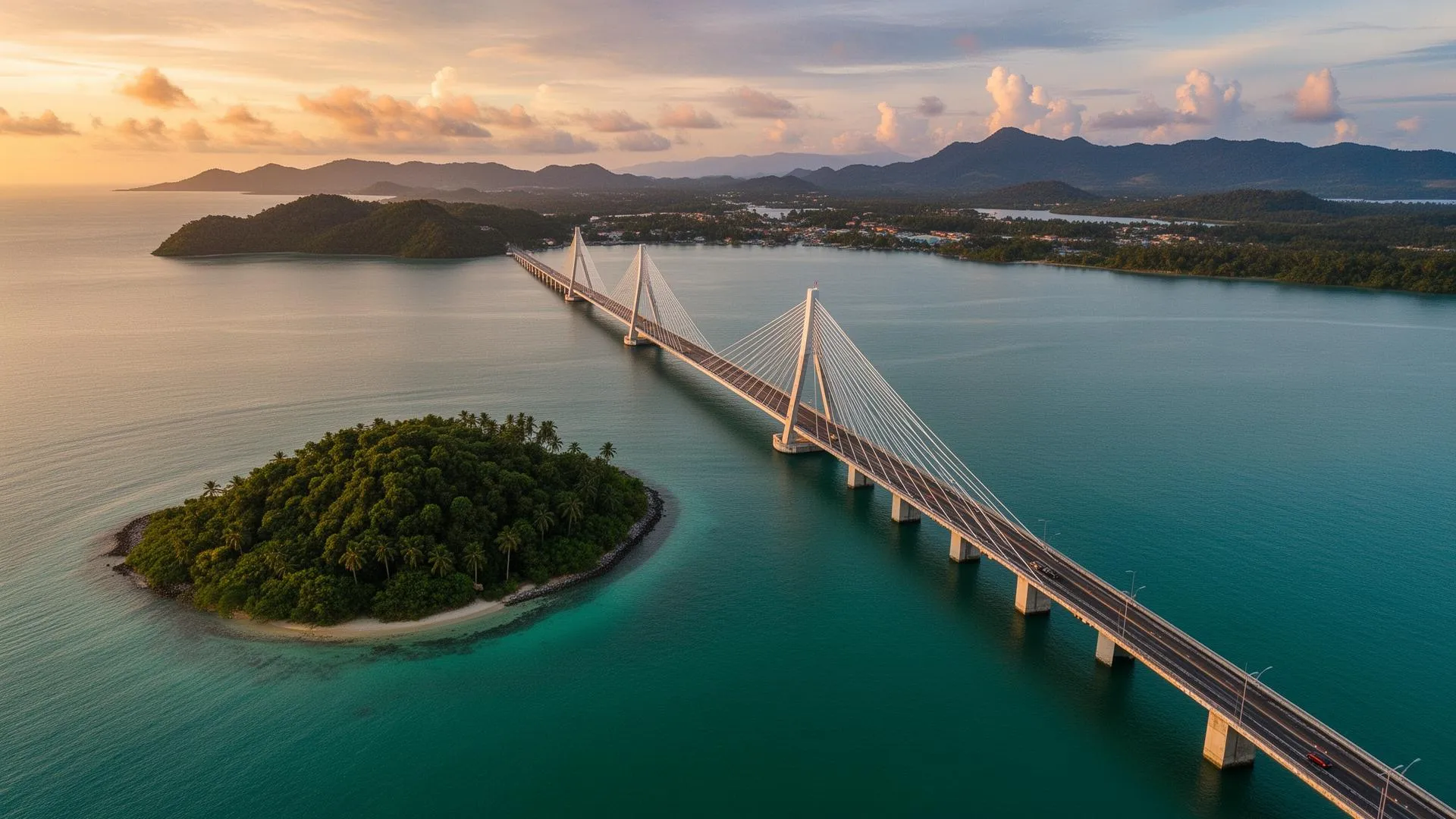
It's the infrastructure project that has been debated for over a decade, and in February 2026 it moved closer to reality than ever before. The Expressway Authority of Thailand (EXAT) held its third public consultation for the Samui Island Expressway — a 37.4-kilometre bridge-expressway that would connect Koh Samui directly to the mainland for the first time in the island's history.
For anyone who lives on, invests in, or regularly visits Koh Samui, this project demands attention. A fixed road link to the mainland would fundamentally alter the island's character, economy, and — inevitably — its luxury villa market. Here's what we know, what it means, and how we see it shaping the future of the island we call home.
The Project: Facts and Figures
The Samui Island Expressway is not a simple bridge. It's a full expressway system with a total estimated cost of THB 74 billion (approximately USD 2 billion). The project encompasses:
- Total length: 37.41 km from Highway 4142 in Don Sak District, Surat Thani Province, to Highway 4170 in Taling Ngam, Koh Samui
- Sea crossing: Approximately 22 km over the Gulf of Thailand
- Design: Four-lane expressway with fenced barriers, service roads, and a 70-metre construction corridor
- Toll booth: Located at Km 8+500 with fees of THB 1,000 per car, THB 2,000 for 6–10 wheel vehicles, and THB 3,000 for larger vehicles
- Estimated completion: Late 2033, with toll collection beginning in 2034
The route would begin on the mainland near Don Sak — currently the main ferry departure point — pass through Khuan Thong and Thong Nian subdistricts in Nakhon Si Thammarat Province, and arrive at Taling Ngam on Koh Samui's quieter western coast.
Timeline: Where We Stand in 2026
The project has been in various stages of study and discussion for years, but the current timeline is the most concrete yet:
- 2023–2026: Feasibility study and detailed design (currently underway)
- 2026–2027: Submission for approval to the Ministry of Transport and Cabinet
- 2028–2029: Land acquisition (affecting 277 private plots and 54 buildings)
- 2029–2033: Construction
- 2033–2034: Opening and toll collection begins
Cabinet approval is the critical next milestone. If the project receives the green light in 2027 as planned, construction could begin within two years. However, Thai infrastructure projects of this scale frequently experience delays, and local opposition remains a factor.
What This Means for Getting to Koh Samui
Currently, reaching Koh Samui requires either a flight to the island's private airport (operated by Bangkok Airways) or a ferry crossing from Don Sak or Donsak Pier, which takes 60–90 minutes depending on the operator and weather conditions.
The expressway would reduce the mainland-to-island travel time to approximately 15–20 minutes by car — a transformative change. For the first time, visitors could drive directly from Surat Thani airport, from Bangkok (approximately 9 hours), or from anywhere on the Thai mainland without relying on ferry schedules or flight availability.
This has enormous implications:
- Flexibility: No more rushing for the last ferry or booking expensive Bangkok Airways flights
- Cost: A THB 1,000 toll is significantly cheaper than ferry tickets for a family, and a fraction of flight costs
- Accessibility: The island becomes reachable by private car, tour bus, and commercial transport at any hour
For luxury villa guests, the bridge would open the possibility of seamless self-drive arrivals — something currently impossible. Imagine driving from a Bangkok meeting directly to your villa on Koh Samui without a single transfer.
The Debate: Progress vs. Preservation
The proposed expressway is one of the most polarising topics on the island. Proponents and opponents both make compelling arguments, and the outcome will shape Koh Samui's identity for generations.
The Case For
Supporters argue that a fixed link would reduce the cost of living for Samui's residents. Currently, virtually everything consumed on the island — food, building materials, fuel — must be shipped by ferry, adding significant cost. A road connection would lower transport expenses, potentially reducing prices for locals and businesses alike.
The expressway would also improve emergency services. Currently, serious medical emergencies require helicopter evacuation or a lengthy ferry transfer. A 15-minute drive to mainland hospitals could save lives.
For the villa rental market, increased accessibility could broaden the visitor base, attract long-stay residents, and support year-round tourism rather than the current seasonal pattern.
The Case Against
Opponents fear that a road link would destroy the island character that makes Koh Samui special. The ferry crossing acts as a natural filter — it keeps the island from becoming an extension of the mainland, preserving a sense of arrival and separation that is fundamental to the island experience.
Environmental concerns are significant. A 22-kilometre sea crossing through the Gulf of Thailand raises questions about marine ecosystems, coral reefs, and coastal erosion. The construction phase alone would be enormously disruptive.
There's also the question of overdevelopment. Koh Samui already faces challenges with traffic, waste management, and water supply. A bridge that makes the island as accessible as any mainland town could accelerate development beyond the infrastructure's capacity to cope.
Many in the luxury villa community worry that mass accessibility would erode the exclusivity that underpins premium rental rates. The island's appeal as a tropical escape depends partly on the sense that you've left the mainland behind.
Impact on the Luxury Villa Market
Whatever your position on the bridge, its market implications are worth considering carefully.
Taling Ngam: Ground Zero
The expressway's Samui-side terminus at Taling Ngam would transform one of the island's quietest areas. Currently a peaceful stretch of western coastline known for spectacular sunsets and a laid-back atmosphere, Taling Ngam would become the island's new front door.
This could mean significant property value appreciation in the short term, followed by the kind of commercial development that typically clusters around transport hubs. For villa owners in the area — and guests seeking tranquillity — the change could be profound.
Property Values Island-Wide
Infrastructure connectivity generally drives property values upward. A bridge to the mainland would likely:
- Increase land values across the island, particularly in the south and west
- Attract new development investment, both Thai and international
- Support the long-stay market, as residents could more easily commute to mainland obligations
- Broaden the rental guest base, potentially increasing occupancy rates
However, the picture isn't uniformly positive. If overdevelopment damages Koh Samui's environment and character, the very qualities that command premium villa rates could diminish.
The Villa Experience
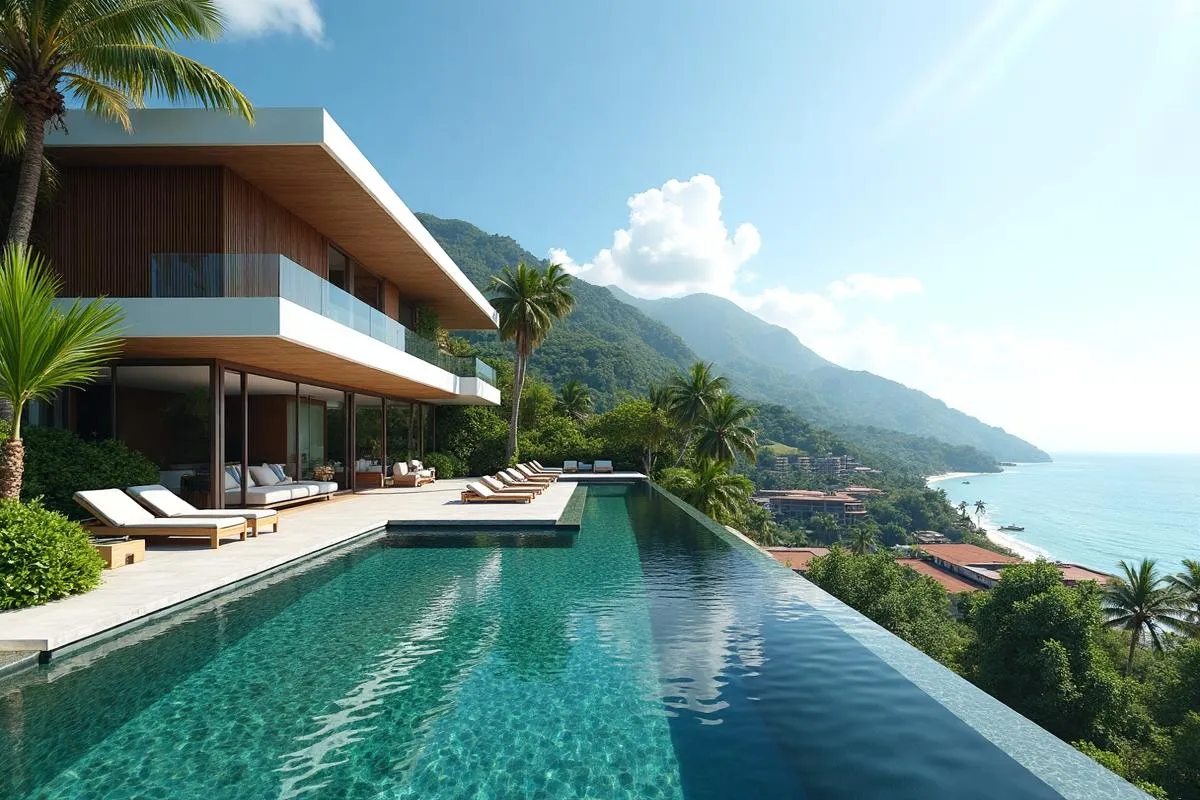
For our guests at properties like Sky Dream Villa or Villa Orise, the practical impact would be mixed. Easier access is undeniably convenient, but the bridge's western arrival point and potential traffic changes would reshape the island's rhythm.
We believe the most significant impact would be psychological. Part of the magic of a Koh Samui villa stay is the sense of island isolation — the feeling that you've crossed water to reach a different world. A bridge, however practical, would change that narrative.
Our Perspective
We approach this topic as people who live on Koh Samui, run a business here, and care deeply about the island's future. Our view is nuanced.
We recognise the genuine benefits a bridge would bring to local residents — lower living costs, better emergency access, and economic opportunity. These matter enormously for the Thai community that has called this island home for generations.
At the same time, we believe Koh Samui's long-term value — both cultural and economic — depends on preserving the qualities that make it extraordinary. The island's relative isolation isn't a limitation to overcome; it's a defining feature to protect.
The challenge is finding a path that delivers infrastructure benefits without sacrificing character. Thoughtful toll pricing, development controls, and environmental protections would be essential if the project proceeds.
What Happens Next
The Cabinet decision expected in 2026–2027 will be the defining moment. We'll be following the project closely and sharing updates as they develop.
In the meantime, Koh Samui remains the extraordinary island it has always been — accessible by ferry and flight, surrounded by the Gulf of Thailand, and home to some of Southeast Asia's most stunning luxury villas. Guests at Paradise Villa Eden in Chaweng Noi already enjoy the best of both worlds — close to the airport and easily connected to ferry piers, yet immersed in the island's tropical charm. Whether or not a bridge arrives in 2033, the beauty of this place is not going anywhere.
For the latest on the island and our villa collection, explore Koh Samui as a destination or get in touch with our team to start planning your stay.
Frequently Asked Questions
The Expressway Authority of Thailand (EXAT) is actively studying and designing a 37.4 km expressway connecting Surat Thani to Koh Samui via Taling Ngam. Cabinet approval is expected in 2026–2027. If approved, construction would begin in 2029 with a target completion of late 2033.
Proposed toll fees are THB 1,000 per car, THB 2,000 for 6–10 wheel vehicles, and THB 3,000 for vehicles with more than 10 wheels. Toll rates are set to be reviewed every five years after the 2034 opening.
The total expressway length is 37.41 km, of which approximately 22 km would cross open water in the Gulf of Thailand. It would be a four-lane expressway with service roads and rest areas.
Infrastructure connectivity generally drives property values upward, and the Taling Ngam area (the bridge's Samui terminus) would likely see the most significant impact. However, concerns about overdevelopment and changes to the island's character mean the long-term effect on premium villa values is debated.
Currently, Koh Samui is accessible by flight (Bangkok Airways operates the island's airport) or by ferry from Don Sak or Donsak Pier on the Surat Thani coast, which takes 60–90 minutes. The proposed expressway would reduce mainland-to-island travel time to approximately 15–20 minutes by car.