June 21, 2026 · 11 min read · By Tim
Thailand Visa for Koh Samui: DTV, Tourist Exemption & Extensions
Most guests we host on Koh Samui spend more time thinking about flights than visas — and for a short holiday, that is often the right instinct. For longer stays, or for travellers who want to combine a villa week with work from the pool, the visa picture matters more.
This guide collects the options Koh Samui guests most often ask us about: the 60-day exemption, the Tourist Visa, the Destination Thailand Visa (DTV), and the practicalities of extending a stay. It is written to be useful, not to replace the official sources. Rules change — sometimes at short notice — so for anything that affects your booking, please verify with the Royal Thai Embassy in your country or with the Ministry of Foreign Affairs before you fly.
The short version
For most of our guests, the visa side of a Koh Samui trip looks like this:
- Short holiday (up to about two months): the visa exemption is usually enough.
- A longer single stay: a Tourist Visa from a Thai embassy, often with an in-country extension.
- Months at a time, or repeated long stays: the DTV is worth a serious look.
Everything below is the longer version of that.
Visa exemption: the 60-day rule
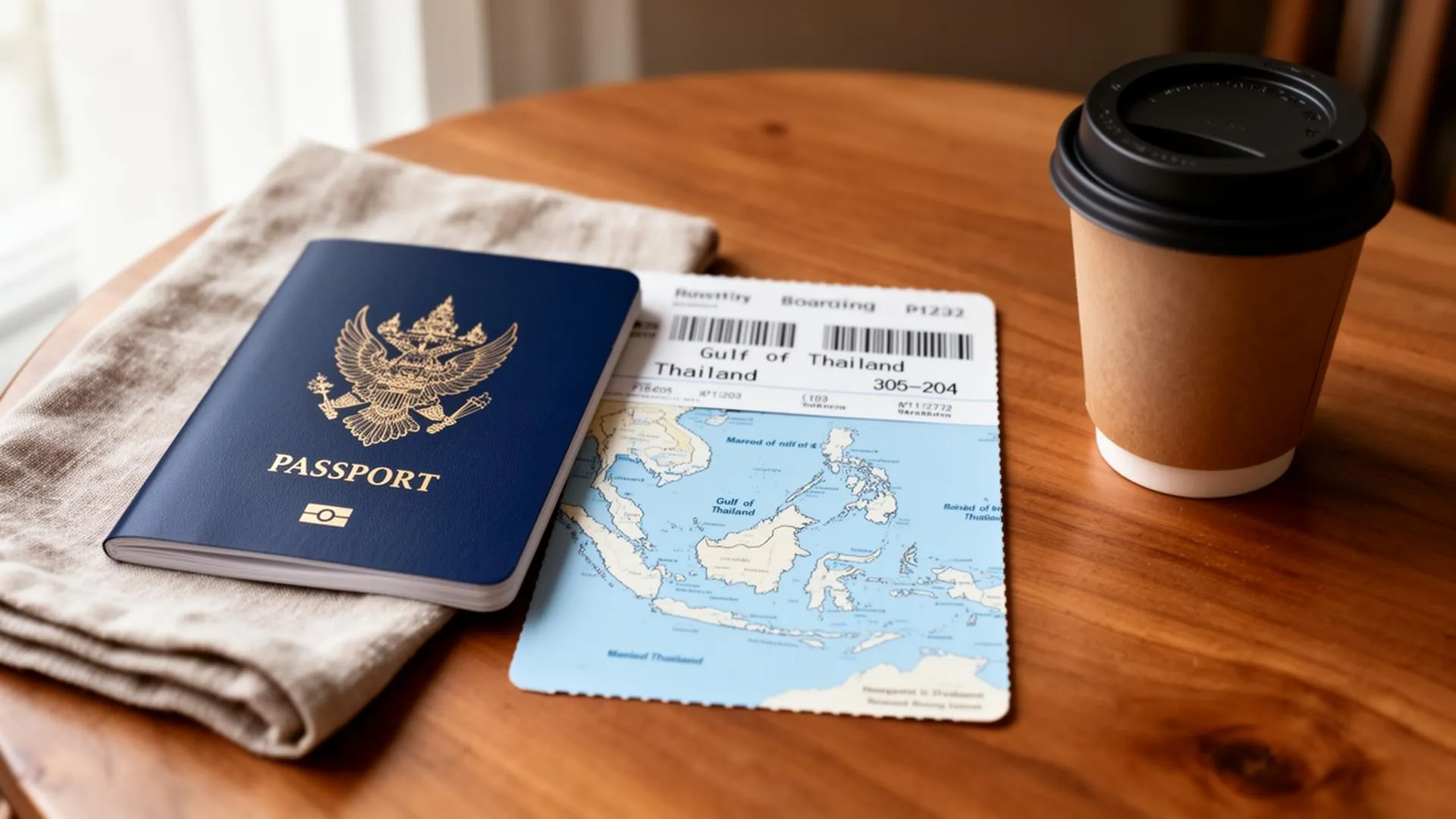
The visa exemption scheme is what most European, British, American, Canadian and Australian passport holders use for a normal villa holiday. At the time of writing, it allows eligible travellers to enter Thailand without a pre-arranged visa and stay up to 60 days per entry by air, with the option of a 30-day extension at a local immigration office.
Practical points:
- The 60 days are calendar days from the date of entry, not 60 nights.
- The exemption is granted on arrival; the stamp in your passport is the binding document.
- An onward or return ticket is sometimes asked for at check-in or immigration; have it accessible.
- Passport validity should comfortably exceed your stay — six months from entry is the standard benchmark.
For travellers landing first in Bangkok and connecting onwards, our Bangkok to Koh Samui and airport, flights and ferry guides cover the practical side of the same day.
Tourist Visa (TR)
The Tourist Visa is the more formal cousin of the exemption — applied for in advance at a Thai embassy or consulate, usually for travellers who know they want a longer single stay or whose nationality is not covered by the exemption scheme. It typically permits a single entry of around 60 days, often with the option to extend once at immigration inside Thailand.
The Tourist Visa is also the more comfortable choice if your itinerary is complex, your passport is approaching its renewal window, or you simply prefer to arrive with paperwork already settled. Fees, documents and processing times depend on the embassy.
Destination Thailand Visa (DTV)
The DTV is the most interesting recent addition for the kind of traveller who increasingly stays with us for a month or longer: remote professionals, founders running EU or US businesses from a villa, wellness travellers on extended programmes, and culturally engaged long-stay guests.
At the time of writing it is a multi-entry visa valid for several years, with a generous permitted stay per entry, designed precisely to remove the friction of repeated short visas for people who want to spend serious time in Thailand without relocating formally. Eligibility, financial requirements and supporting documents are set by the Royal Thai Embassy in your country, and the application is made before travel.
For guests considering this route, the WiFi and digital nomad guide is a useful companion — most of our villas are set up for serious remote work, and the longer the stay, the more the choice of villa matters.
Visa on arrival
A separate visa-on-arrival scheme exists for a smaller list of nationalities and grants a shorter stay than the exemption. Most travellers from the markets we host — Europe, the UK, the US, Australia, the Gulf — do not need it, because they are covered by the exemption. If you are not sure whether your passport qualifies for the exemption, check the official list on the Ministry of Foreign Affairs website before you fly.
Extensions on Koh Samui
Both visa-exempt entries and Tourist Visas can, in most cases, be extended once at the Koh Samui Immigration Office in Maenam for an additional period, against a fee and a short list of documents — passport, photo, address proof, completed form. Most of our villa managers can help guests prepare the paperwork and, if useful, accompany them.
Two notes from experience:
- The office is busiest in the morning and in the days immediately before public holidays; mid-week, mid-morning is the calmest window.
- Bring the original passport, a printed photo if you can, and Thai baht in cash for the fee.
What we tell guests before they fly
Three simple habits remove almost all of the visa friction we see:
- Check the rules for your specific passport, on the official Royal Thai Embassy website, within the last two weeks before departure.
- Bring a printed onward ticket and the first night's accommodation confirmation in your hand luggage.
- Treat the date stamped on arrival — not the date you booked — as the date that matters.
How we do it
We do not handle visa applications ourselves, and we are careful not to pretend otherwise. What we can do is point guests to the relevant official sources, share what our long-staying guests have done in practice, and arrange the villa side — extension trips to Maenam, longer stays, flexible arrival and departure days — around whichever visa route you choose.
If you are planning a long season on the island and would like a shortlist of villas that work for one, two or three months at a time, send a message and a real person on Koh Samui will reply within a working day.
Frequently Asked Questions
It depends on your passport. Citizens of many countries — including most of the EU, the UK, the US, Australia, Canada and a number of Asian nations — can usually enter Thailand under the visa exemption scheme for short tourist stays. Always confirm the current list and your permitted length of stay with the Royal Thai Embassy in your country before booking flights.
At the time of writing, the standard visa exemption allows many eligible nationalities to stay up to 60 days per entry by air, with a possible extension of 30 days at a local immigration office. Rules are reviewed regularly, so the safe approach is to check the official guidance from the Ministry of Foreign Affairs or the Thai embassy close to your departure date.
The DTV is a longer-stay visa introduced for remote workers, freelancers, and certain cultural and wellness travellers. It is multi-entry, valid for several years, and typically allows extended stays per entry. It can be a strong fit for guests planning months on Koh Samui rather than weeks. Eligibility, documents and fees are set by the Royal Thai Embassy, and applications are made before travel.
In most cases yes. Both visa-exempt entries and Tourist Visas can usually be extended once at the Koh Samui Immigration Office for an additional period, against a fee and standard paperwork. Your villa manager can advise on documents and accompany guests if helpful. For longer-term stays, a proper visa from a Thai embassy is the cleaner route.
A separate visa-on-arrival scheme exists for a smaller list of nationalities and allows a shorter stay than the visa exemption. Most travellers from Europe, North America and Australia do not need it because they are covered by the exemption. Check the current list on the Ministry of Foreign Affairs website before you fly.
Overstays carry daily fines and, in more serious cases, detention, deportation and entry bans. The system is consistently enforced at Bangkok and at Samui airports. The simplest rule is to plan the exit date conservatively and, if needed, extend or border-run before the stamp expires rather than after.