May 3, 2026 · 14 min read · By Tim
Wildlife on Koh Samui: What to Expect in and Around Your Villa
Koh Samui is a tropical island. That's the appeal — and it's also why a holiday here feels different from a hotel stay in a temperate city. The villas we represent are designed to live with the climate rather than fight it: open pavilions, sliding doors that disappear into walls, gardens that flow into living rooms. It's one of the things that makes the island so memorable, and it's also why a gecko on the wall or a cicada chorus at dusk is part of the experience.
This guide is meant to set honest expectations. Nothing here is a problem — but if you've never stayed in an open-air tropical villa before, knowing what's normal makes the difference between a magical first evening and an anxious one.
What to expect: the reality of a tropical island
A luxury villa on Koh Samui is not a sealed environment. It can't be, and it shouldn't be. The design language across the island — high vaulted roofs, breezy salas, indoor-outdoor bathrooms, terraces that open straight onto the pool — exists because the climate rewards it. Cross-ventilation, natural light, and a sense of being immersed in the garden are exactly what guests come for.
The trade-off is straightforward: small wildlife is part of that openness. A gecko on the bedroom ceiling, a cicada you can hear from the next valley, an ant exploring the kitchen counter — these are not signs of poor maintenance. They're a sign that you're somewhere genuinely tropical, in a home that breathes.
Hotels, by contrast, are usually sealed boxes with central air-conditioning. They feel familiar, but they also feel like everywhere else. Private villas trade that uniformity for atmosphere — and a small amount of negotiation with nature.
The animals you'll most likely meet
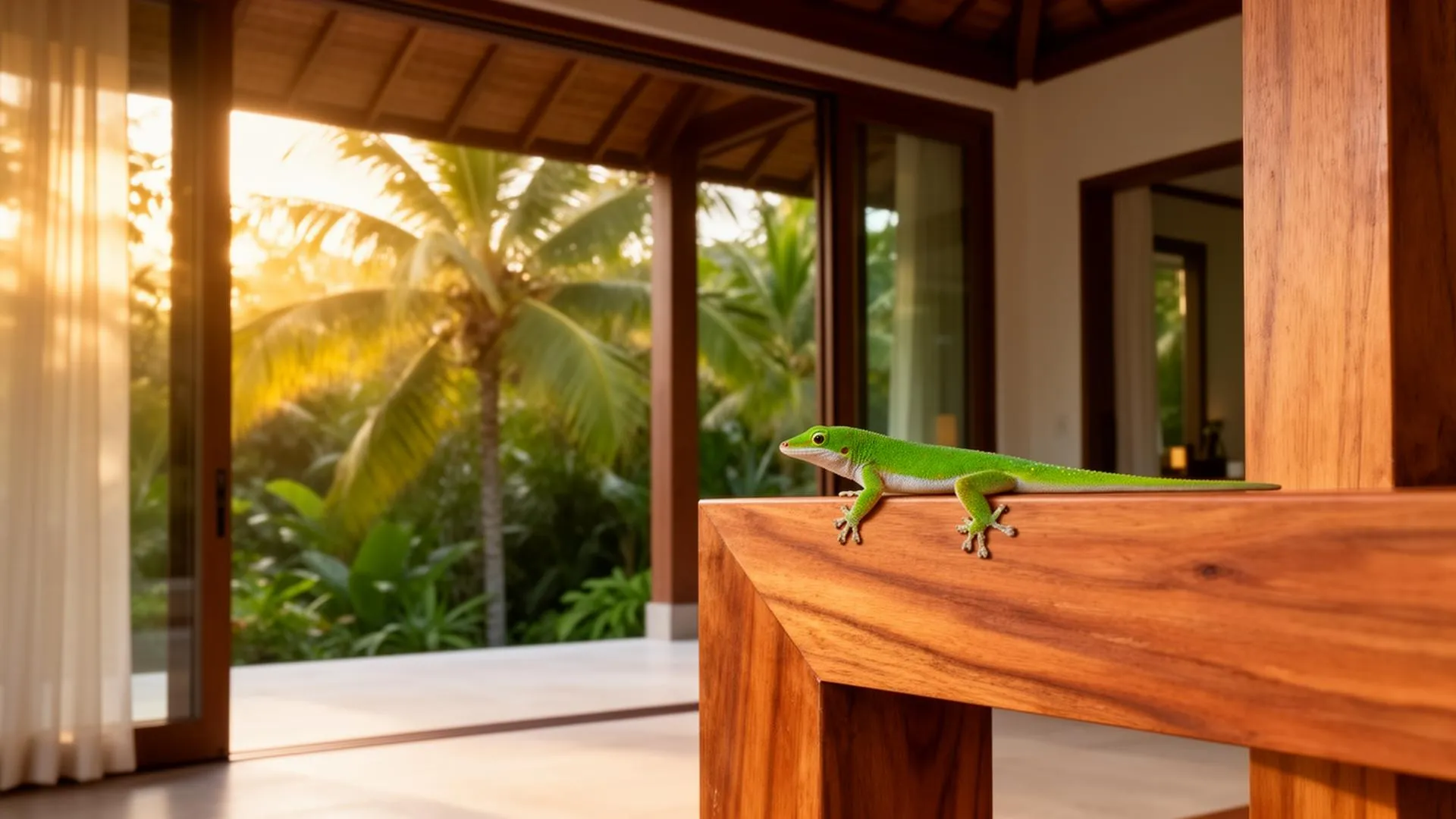
House geckos: Small, pale, almost translucent. They live on walls and ceilings and come out in the evening to hunt insects under lights. They make a soft chk-chk-chk sound. They are completely harmless, eat the mosquitoes you don't want, and will scatter the moment you walk over. Most guests stop noticing them after a day.
Tokay geckos: Larger, blue-grey with orange spots, and famously loud — their call is a deep to-kay! to-kay! repeated several times. They're rare inside villas but sometimes audible from the garden at night. Equally harmless.
Cicadas: A summer-long soundtrack. They build into a wave at sunset and again at dawn, and on hot afternoons they can be surprisingly loud. After a day or two most guests find the sound meditative; the first night, it can be a surprise.
Ants: Small black or brown ants are the most common indoor visitor, almost always drawn by food. Crumbs on a counter, an unsealed bag of fruit, a sweet drink left out — that's all it takes. Tidiness solves it.
Mosquitoes: Present year-round but seasonal in intensity. Most active at dusk, around standing water, and during and after the rainy season. Repellent, long sleeves at sunset, and ceiling fans handle it.
Frogs: A welcome sound after rain, usually staying in the garden or near the pool deck.
Birds: Plenty — kingfishers, mynas, hornbills in some areas, the occasional sea eagle. A reason to leave a coffee on the terrace and just listen.
Dogs: Soi (street) dogs exist across the island, mostly calm and used to people. Some villas have their own friendly resident dogs or quiet guard dogs — we'll always tell you in advance.
Why animals come inside
Open-plan tropical architecture has no perfect seal. Light attracts insects, insects attract geckos, an open door for thirty seconds is enough for a curious visitor. A few practical influences:
- Lighting at night: Bright indoor lights with open doors will pull insects in from the garden. Dimmer warm-white lighting attracts far less.
- Food: Open fruit, sweet drinks, or uncovered snacks are the single biggest invitation to ants.
- Doors and windows: Many villas have screens on bedrooms but open living areas. Closing bedroom doors before sunset keeps sleeping spaces calm.
- Weather: A heavy rain shower often pushes insects (and the geckos that follow them) toward the shelter of the house.
None of this is unique to one villa or another — it's how tropical houses work everywhere from Bali to the Caribbean.
Because of the open design of the villa and the tropical climate, small animals or insects may occasionally enter the interior, especially when doors or windows are open. Our team will help remove them quickly when needed, while always treating the natural environment with respect.
That note appears, in some form, in the welcome materials of several of our villas. It's worth quoting because it captures exactly the right tone: this is normal, the team is there to help, and we don't treat the surrounding nature as something to be eliminated.
Seasonal differences
Wildlife activity shifts with the weather:
- Dry season (January–April): Lower humidity, fewer mosquitoes, louder cicadas in the heat of the afternoon. The most "neutral" wildlife conditions.
- Hot season (April–June): Cicadas peak. Insect activity is moderate. Geckos are very visible at night.
- Green season (July–September): Short afternoon showers, lush gardens, more frogs, more mosquitoes near standing water.
- Rainy season (October–December): Highest insect activity, especially in the days right after heavy rain. Also the most dramatic soundscape — frogs, cicadas, rain on the roof.
For a wider view of the calendar, see our Koh Samui rainy season guide and best time to visit Koh Samui.
The soundscape: what you'll hear
One of the genuine luxuries of an open-air villa is the sound of the island itself. Cicadas at dusk, frogs after rain, geckos chirping softly from the rafters, distant roosters at sunrise, occasional dogs in the valley, the wind through coconut palms. None of it is loud in the way a city is loud, but it is present.
Guests sensitive to nighttime sound usually adapt within a night or two. If you know in advance that you sleep lightly, simple things help: ceiling fan on a low setting (it masks variable sounds with a steady one), bedroom doors closed at sunset, and earplugs as a backup. The villa team can also recommend the quietest bedroom on the property.
Practical handling, on the ground
A short list of habits that make tropical villa life effortless:
- Doors closed at sunset: The single most effective rule. Mosquitoes and moths arrive with dusk; closing screened bedroom doors for thirty minutes around sundown changes the night entirely.
- Warm, low lighting outdoors: Bright cool-white light on terraces is an insect magnet. Most of our villas already use warm, dimmable lighting for exactly this reason.
- Food covered, dishes cleared: Especially fruit, sweet drinks, and anything sticky. Ants find an opening within hours.
- Use the staff: This is what they're there for. If a gecko is in the bedroom, a large insect is in the bathroom, or anything at all makes you uncomfortable — call them. They'll handle it discreetly, quickly, and without harming the animal.
- Repellent in the evening: A light spray on ankles and forearms before sunset is enough for most people. Most villas provide it.
Practical bug handbook
A short field kit for the two questions guests actually ask us on arrival: what repellent should I buy, and what do I do if I get bitten?
Repellent that works on Samui
- DEET 20–30 %: the strongest option, best for evenings outdoors and in the rainy season. Available at any Boots pharmacy in Chaweng, Lamai, Fisherman's Village, and at Bangkok Hospital Samui's pharmacy.
- Picaridin 20 %: nearly as effective as DEET, gentler on skin and safe for children over two years old. Widely stocked at Boots; less common in 7-Eleven.
- Citronella and natural sprays: pleasant, short-lived, best on the terrace at sundowners rather than as your only protection at dusk.
For kids and pregnancy
Picaridin is the usual travel-doctor recommendation for children two and up and for pregnancy — clarify with your own doctor before you fly. Long-sleeved cotton at sunset and a ceiling fan over the cot cover the rest.
After a bite
Wash with soap and water, apply a cool compress, and use an over-the-counter antihistamine cream from Boots if it itches. Watch for high fever, severe headache, or joint pain within two weeks of a bite — that's when you call Bangkok Hospital Samui and mention dengue.
Sand flies at certain beaches
A handful of quieter beaches on the south and west coast — parts of Taling Ngam, Lipa Noi, and the far end of Bang Po at low tide — have occasional sand flies at dawn and dusk. A regular DEET or picaridin spray on ankles and calves is enough. It's rarely an issue on the resort beaches.
Villa setup that actually helps
Fully air-conditioned bedrooms with fly screens on every opening, warm-white outdoor lighting rather than cool-white, and no standing water in garden ornaments are the three details that move a villa from "manageable" to "unnoticeable" on the bug front. If this matters to you, tell us and we'll shortlist accordingly.
For a wider health picture — vaccinations, dengue background, and hospital contacts — see our vaccinations and health guide and the Is Koh Samui safe? overview.
Safety: an honest read
The vast majority of wildlife on Koh Samui is harmless to humans. Geckos, cicadas, ants, frogs, birds, and most insects pose no risk at all.
A few realistic notes:
- Mosquitoes are the only meaningful health consideration. Dengue exists in Thailand at low background levels; the standard precautions (repellent, long sleeves at dusk, no standing water near the villa) are sufficient. See our Is Koh Samui safe? guide for context.
- Snakes exist on the island but are very rarely seen inside villas. Most are non-venomous and shy. The rule is simple: don't approach, give space, and call staff.
- Centipedes and large spiders are occasionally seen, almost always outdoors. Painful if mishandled, never dangerous in a serious sense. Again — call staff, don't try to remove them yourself.
- Stray dogs are part of island life. They're generally calm, but it's wise not to approach unfamiliar dogs, particularly with food.
Bangkok Hospital Samui in Chaweng provides international-standard care for the very rare case anything is needed.
Living with nature, not against it
There's a reason our villa teams remove animals respectfully rather than killing them. Koh Samui's wildlife is part of the ecosystem that makes the island what it is — the geckos that keep mosquito numbers down, the birds that pollinate the gardens, the frogs that signal a healthy environment after rain.
Most guests, by the end of a stay, find the small encounters with wildlife are some of their favourite memories: the gecko that lived above the bathroom mirror, the cicada chorus on the first evening, the kingfisher on the pool fence at breakfast. It's the difference between a holiday and a place.
A final thought
The first evening in an open-air villa on Koh Samui — sliding doors open to the pool, cicadas building outside, a gecko silhouetted on the lantern — is one of the small, distinctive luxuries of staying here. With a few simple habits and a calm villa team in the background, it's also one of the easiest things to enjoy.
If you'd like a villa matched to your comfort level — fully air-conditioned and screened, or open and immersive — tell us what you have in mind and we'll suggest the right home.
Frequently Asked Questions
Yes, and it has nothing to do with cleanliness. Most luxury villas on Koh Samui are designed in an open, indoor-outdoor style — sliding doors, open pavilions, and natural ventilation are part of the architecture. In a tropical climate this means a gecko on the wall or an occasional ant trail is normal, even in the most refined homes. Villa teams clean daily and treat the property regularly, but the building is intentionally not sealed against nature.
No. The small house geckos you'll see are completely harmless and actually beneficial — they eat mosquitoes, moths, and other insects. They're shy and will move away as soon as you approach. The larger Tokay gecko is rarer, very loud at night, but equally harmless. Most guests grow fond of them within a day or two.
Manageable. Mosquito activity is highest at dusk and during the rainy season (October–December). Most villas provide repellent, and many use natural deterrents like citronella in the garden. Long sleeves at sunset, repellent on exposed skin, and keeping doors closed after dark handle the issue for nearly all guests.
Stay calm and call your villa team — that's exactly what they're there for. They'll remove geckos, large insects, or any other visitor quickly and respectfully, without harming the animal. There's no need to handle anything yourself.
Snakes exist on the island as they do throughout tropical Asia, but sightings inside villas are very rare. Most species are non-venomous and shy. If you ever see one, simply step back, give it space, and call the villa team — they know who to contact.
Partly. Villas with full air-conditioning, fly screens on every opening, and more enclosed bedrooms see noticeably fewer insects and geckos indoors. If this is important to you, tell us when enquiring and we'll shortlist villas built that way — but on a tropical island, no home is fully sealed from nature.
No. Cleanliness inside the villa is unrelated to wildlife outside it. The villas are cleaned daily, deep-cleaned regularly, and treated for insects on a routine schedule. A gecko on the wall or an occasional ant trail is a function of tropical climate and open-air architecture, not of how the home is maintained.
Yes. There's no threshold — the team would much rather you call than feel uncomfortable. They'll handle anything quickly, discreetly, and without harming the animal.