July 4, 2026 · 9 min read · By Tim
Drinking Water on Koh Samui: Tap, Bottled & Villa Filtration
Water is one of those quietly important details of an island holiday. Nobody thinks about it until the tap runs slow, the bottle in the fridge is empty, or a child reaches for a glass at breakfast. On Koh Samui the answer is a little more nuanced than in Europe or North America, and worth understanding before you arrive.
This guide covers what actually comes out of the tap, how bottled and refilled water work day-to-day, why the island has occasional water-supply pressure, and how a well-run villa handles the whole question so you rarely have to think about it. For the parallel infrastructure story, our power supply guide is a useful companion.
Is Koh Samui Tap Water Safe to Drink?
The short answer: not straight from the tap. The longer, fairer answer is that the water leaving the Provincial Waterworks Authority (PWA) plant is treated to a reasonable standard, broadly aligned with WHO guidance for microbial safety. What happens between the plant and your glass is the issue.
Three things typically change the water on its way to you:
- Older sections of the island's distribution pipes, some running through areas that see heavy rain and root intrusion.
- Roof or ground-level storage tanks at almost every property — necessary because pressure isn't constant, but they need regular cleaning to stay hygienic.
- Long, hot pipe runs inside villas and hotels, which can affect taste and, in poorly maintained systems, microbial quality.
The practical result is that residents, expats and hospitality staff treat tap water as safe for washing, showering and cooking, and use bottled or filtered water for drinking and, in most households, for brushing teeth. That is the local norm, and following it will keep your stay uneventful.
What About Ice and Cooked Food?
Ice served in reputable restaurants, cafés, and villas is made from filtered or purified water and is fine. The cylindrical ice with a hole through the middle you see in every drink is industrially produced — treat it as safe. Food cooked at temperature, including rice and soups, is not a concern.
Bottled Water: Brands, Prices, and Habits
Bottled water is everywhere on Koh Samui and remarkably cheap. A 1.5-litre bottle at any 7-Eleven costs around 14 baht; a 6-litre jug for the villa is closer to 40 to 60 baht. Trusted brands include Singha, Chang, Nestlé Pure Life, Crystal and Minere (the local sparkling and still mineral water). All are widely available and consistent in quality.
A few small habits make life easier:
- Keep two chilled bottles in the fridge and one at room temperature — cold water in tropical heat sometimes feels harsher on the throat than tepid.
- If you're on the beach or scooter for the day, buy an extra litre with breakfast; shops around remote beaches can be sparse.
- Ask your villa team to leave bottles on the bedside — a simple thing, but easy to forget when jet lag hits.
Villa Filtration: What "Filtered Water" Actually Means
"Filtered" covers a broad spectrum, and it's worth knowing what you're getting. In our collection and among comparable properties on Koh Samui, we usually see one of three setups:
- Point-of-use kitchen filter — a cartridge system under the sink, giving one dedicated tap safe filtered water for drinking and cooking. Reliable, easy to service, and what most upper-tier villas offer as a minimum.
- Whole-house multi-stage system — sediment filter, carbon filter, softener and a UV lamp at the mains inlet, so every tap in the villa produces water clean enough to drink. This is common in newer luxury builds and standard in Sky Dream Villa.
- Private well plus treatment train — a dedicated borehole on the property, feeding through iron and sediment removal, then softening, carbon and UV. The villa is effectively independent of the municipal supply. This is the setup at Paradise Villa Eden and Paradise Villa Elysium in Chaweng Noi.
If drinking water quality genuinely matters to you — for a young family, a health-conscious guest, or a longer stay — ask before booking. We can share the specific filter type, service interval and last replacement date for each villa in our collection.
The Water Scarcity Question
Koh Samui is, at the end of the day, a small tropical island — roughly 228 square kilometres, with a permanent population and a much larger seasonal one. Fresh water comes from a mix of on-island reservoirs, groundwater and, during shortfalls, a submarine pipeline and tanker deliveries from the mainland. It is not an unlimited resource.
In practice, the island manages well for most of the year. Pressure and continuity issues concentrate in a few specific windows:
- Late dry season, February to April — the reservoirs are lowest, tourism is high, and inland or elevated properties can see reduced pressure or short daytime interruptions.
- Around major holidays — Songkran in April and the Christmas–New Year peak both add sudden demand.
- After heavy storms — turbidity spikes at the treatment plant can lead to brief precautionary shutoffs.
For a broader seasonal picture, our rainy season guide explains how the wet months actually recharge the island's water supply.
Why Private Wells Matter
A number of established villas — including Paradise Villa Eden and Paradise Villa Elysium — draw from their own on-property wells, treated on site. During a dry-season pressure drop that has neighbouring rentals calling for water trucks, these villas simply continue as normal: pools full, showers strong, filtered water at every tap. It's the sort of infrastructure detail you never notice when it works, and immediately notice when it doesn't.
Large underground cisterns, sometimes 20,000 litres or more, are the second line of defence. They give a villa several days of buffer even if the mains supply is briefly interrupted.
Refill Stations and Reducing Plastic
Bottled water is convenient but the plastic waste is real. Two straightforward alternatives:
- Refill stations — small kiosks with reverse-osmosis machines that dispense filtered water for 1 to 2 baht per litre. You'll find them in most residential streets and outside larger supermarkets. Bring an empty 5 or 6-litre jug.
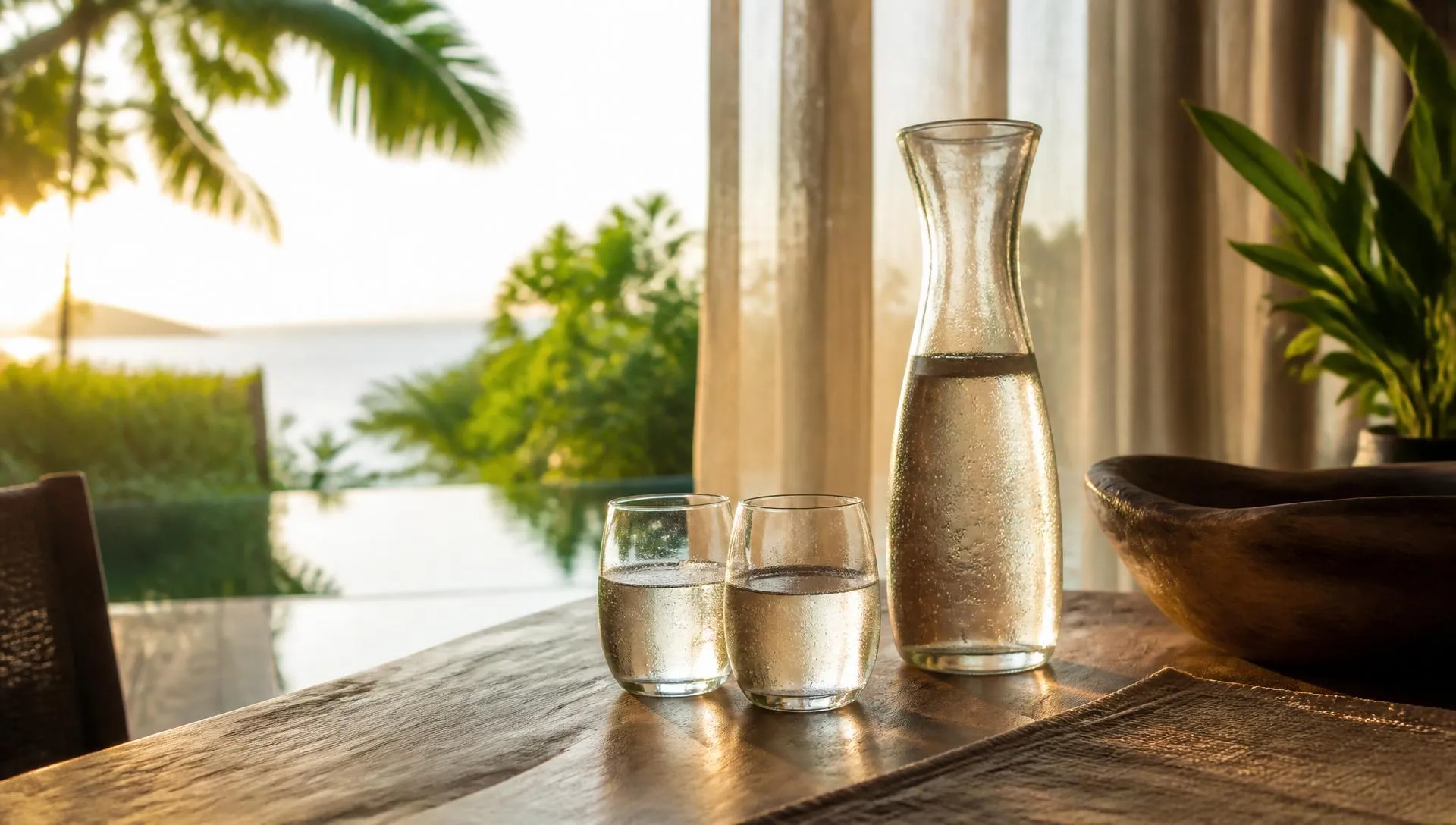
- Villa dispensers — most villas will happily provide a large glass carafe of filtered water at your dining table, refilled throughout the day. Just ask your host.
A reusable bottle and one of these two habits removes almost all of the disposable plastic from a week-long stay. For more small choices that add up, see our packing list.
Health, Children, and Sensitive Travellers
For travellers with young children, immune-sensitive guests, or anyone recovering from illness, the sensible rule is simple: drinking, brushing, rinsing produce and preparing baby formula all get filtered or bottled water; showering and dishwashing are fine on the mains. That is what most Thai families we know do at home, and it removes the small residual uncertainty around tank hygiene.
For any specific medical concern, speak to a doctor on the island rather than relying on an article — our medical care guide covers the reliable clinics and hospitals.
How We Do It
Before we accept a villa into the collection, water is one of the checks we run in person — where the supply comes from, whether there is a well, what treatment sits on the line, how much cistern buffer the property holds, and how recently the filters were serviced. It's not glamorous, but it's the sort of thing that quietly separates a great villa from a beautiful one.
If you would like a shortlist based on how a villa handles water — a family with a toddler, a longer stay in the dry season, or simply a preference for filtered water at every tap — send us a message. A real person on the island will reply within a working day.
Frequently Asked Questions
As a rule, no. The municipal supply from the Provincial Waterworks Authority is treated at the plant, but the island's older pipe network, private storage tanks and long dry stretches mean tap water is generally not considered safe to drink untreated. Locals, expats and hotels almost universally use bottled water, refill stations or a filter system for anything they drink or brush teeth with.
Yes. Sealed bottled water is sold in every 7-Eleven, Family Mart, Tesco Lotus, Makro and small local shop, typically for 7 to 20 baht per litre. Trusted Thai brands include Singha, Chang, Nestlé Pure Life, Crystal and Minere. Most villas stock complimentary bottles on arrival and restock daily on request.
Showering and washing are fine for the vast majority of visitors. For brushing teeth, most residents still use bottled or filtered water as a habit, especially with children. If you have a sensitive stomach or are travelling with an infant, stick to filtered water for brushing as well.
Yes, occasionally. Koh Samui is a small island with limited natural fresh water, and demand from tourism and villa construction has grown faster than infrastructure. In the driest months, typically February through April, some inland and hillside areas experience reduced pressure or short interruptions. Villas plan for this with large private cisterns, and the better ones also have their own well.
In our collection, Paradise Villa Eden and Paradise Villa Elysium in Chaweng Noi both draw from private wells with on-site filtration, which keeps them fully independent during dry-season pressure drops. Sky Dream Villa runs a full multi-stage filter and UV system on the mains supply. We're happy to share the exact setup for any villa before you book.
Bring or ask your villa host for a refillable bottle. Most villas offer filtered drinking water from the kitchen tap or a dispenser, and public refill stations exist across the island, usually 1 to 2 baht per litre. It's the single easiest way to reduce the plastic footprint of a Koh Samui stay.