May 19, 2026 · 10 min read · By Tim
The Koh Samui Packing List: What to Bring, What to Buy There
Packing for Koh Samui is less about quantity and more about choosing carefully. The island is warm year-round, dress is relaxed, and most everyday items — from sunscreen to swimwear — are easy to buy locally. The mistake we see most often is overpacking: heavy luggage, bulky toiletries, and clothes that never come out of the suitcase.
This guide is built from years of welcoming guests to our villas. It separates what's genuinely worth bringing from home, what you can comfortably buy on the island, and how the list shifts depending on the season and the kind of trip you're planning.
The principle: pack lighter than you think
If you're staying in a private villa, assume that towels (including beach towels), toiletries, hairdryers, slippers, umbrellas, beach bags, and basic kitchen supplies are already provided. Our villas, like most premium properties on Koh Samui, include all of this as standard. There's no need to pack a hotel-sized toiletry bag.
Thailand also has excellent retail. Tesco Lotus, Makro, Tops, Boots, and Watsons are all on the island, alongside hundreds of small pharmacies and convenience stores. Anything you forget can almost certainly be replaced within 20 minutes of arriving at your villa — and usually for less than you'd pay at home.
What to bring from home
These are the things that are either hard to find on the island, significantly more expensive locally, or important enough not to leave to chance.
- Prescription medication in original packaging, with a copy of the prescription and a doctor's note for anything controlled (sleep aids, ADHD medication, strong painkillers). Bring at least 1–2 weeks more than you'll need.
- A small personal first-aid kit — plasters, blister patches, antiseptic wipes, anti-diarrhoeal tablets, rehydration salts, motion-sickness tablets for boat trips, and any allergy medication you rely on.
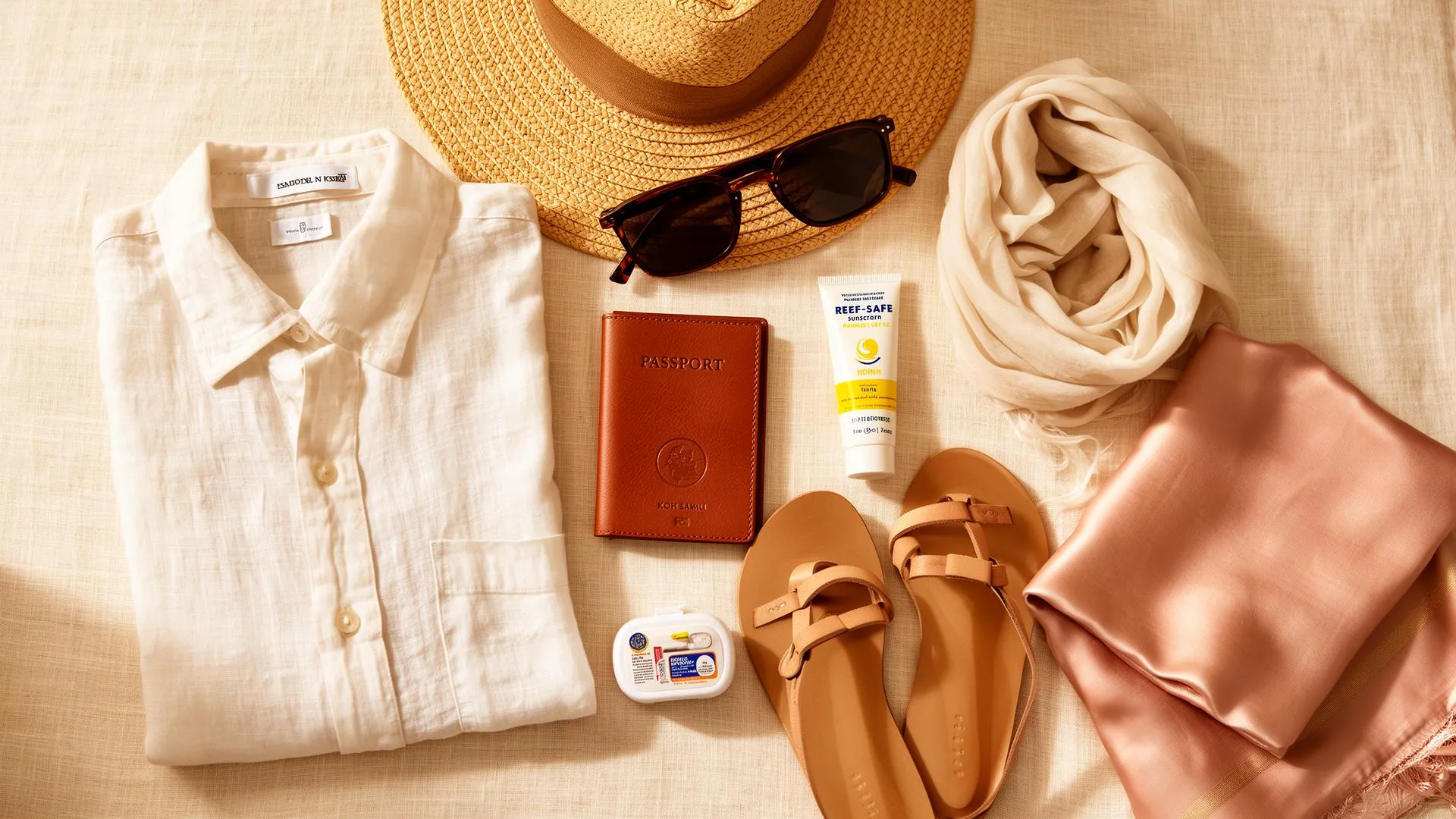
- High-SPF reef-safe sunscreen — available locally but expensive and often limited in brand choice. Bring enough for the first few days at minimum.
- A high-quality insect repellent (DEET or picaridin-based). Local repellents work but are weaker.
- A universal travel adapter — Thailand uses Type A, B, and C sockets, often mixed within the same villa.
- Sunglasses you actually like — local copies are cheap but quality is variable.
- Comfortable walking sandals broken in before you arrive.
- One smart-casual outfit per person for beach clubs, fine dining, or sunset venues.
- A light scarf or sarong — useful for temples, air-conditioned restaurants, and impromptu beach cover-up.
- Specialist gear if relevant: dive computer, GoPro, prescription snorkel mask, running shoes for trail use, yoga mat (most villas have basic mats but serious practitioners prefer their own).
- Copies of your travel documents — both digital (cloud and offline on your phone) and one printed set kept separately from the originals.
What you can safely buy on the island
Skip these from your suitcase — they take up space and are easily, often more cheaply, available locally.
- Toiletries and cosmetics — shampoo, conditioner, shower gel, deodorant, razors, basic skincare, sanitary products. Boots and Watsons stock most international brands.
- Beachwear and flip-flops — Bophut, Chaweng, and Fisherman's Village have endless options, from tourist markets to designer beach boutiques.
- Basic clothing — linen shirts, cotton dresses, shorts, light trousers. Tailors in Chaweng and Bophut can also make custom pieces in 24–48 hours.
- Umbrellas and ponchos — every 7-Eleven sells them for 100–200 THB.
- Snorkel sets, beach toys, and inflatables — available cheaply at supermarkets.
- SIM cards and data plans — AIS, True, and DTAC kiosks at the airport offer tourist eSIMs in minutes.
- Fresh fruit, snacks, bottled water, and basic groceries — your villa manager can stock the kitchen on request before arrival.
- Over-the-counter medicines — paracetamol, ibuprofen, antihistamines, antacids, and oral rehydration salts are all inexpensive and widely available.
Packing by season
Koh Samui has two broad weather patterns — and they should change what's in your bag. For a full breakdown, see our best time to visit Koh Samui guide and the rainy season guide.
Dry and hot season (January to September)
This is the dominant pattern. Expect long sunny days, warm sea, and short afternoon showers in some months. Pack:
- Lightweight, breathable fabrics — linen, cotton, technical performance wear.
- High-SPF sunscreen, lip balm with SPF, and a wide-brimmed or packable sun hat.
- A refillable water bottle (your villa will have filtered water).
- Light long sleeves for sun protection on boat trips and snorkelling days.
- Minimal layers — air conditioning indoors is the only time you'll want a light cardigan.
Rainy and shoulder season (October to mid-December)
The Gulf of Thailand monsoon brings short, intense showers — usually in the afternoon or overnight. It's not the wash-out many fear, but a few additions help:
- A packable rain jacket or lightweight shell — more useful than an umbrella in tropical wind.
- Quick-drying clothing and an extra pair of sandals you don't mind getting wet.
- A dry bag or waterproof phone pouch for boat days and beach walks.
- One pair of closed-toe shoes — pavements can flood briefly after heavy rain.
- Slightly warmer evening layers for breezy nights, especially in November.
Packing for couples
A couples' trip to Koh Samui — honeymoon, anniversary, or a quiet escape — calls for a slightly more considered wardrobe. The island has genuinely beautiful sunset venues, beach clubs, and private dining settings that reward dressing up.
- Two or three smart-casual evening outfits each — linen suits and shirts for men, light dresses or jumpsuits for women.
- Quality swimwear (multiple sets, so one is always dry).
- A handheld camera or compact mirrorless if you want photos beyond your phone.
- A small gift or treat from home if you're celebrating — your villa team can arrange flowers, cake, and decorations on request, but a personal touch is always thoughtful.
- Comfortable footwear for walks on Maenam or Lipa Noi beach at low tide.
If you're planning a proposal, wedding, or vow renewal, see our honeymoon villa guide and wedding villa guide — both have specific gear and document recommendations.
Packing for families with children
Families benefit most from the "buy it there" principle — but a few items are worth packing carefully. See our full Koh Samui with kids guide for broader logistics.
- Children's prescription medication and a thermometer — paediatric doses of common medicines are sold locally, but brand names differ.
- Swim nappies and UV rash vests — both harder to find in children's sizes locally.
- A lightweight, foldable stroller suited to uneven pavements — or rely on a soft carrier for infants.
- Favourite snacks, formula, or weaning foods if your child is particular — most international brands are sold at Tops or Villa Market, but selection is narrower.
- A nightlight, familiar comfort toy, and travel blackout blinds for jet-lag and unfamiliar rooms.
- Reef-safe kids' sunscreen in stick form for faces.
- Water shoes for rocky beaches and pool play.
Standard nappies, wipes, baby toiletries, and high chairs are easy to find — and most family villas in our collection can arrange cots, baby monitors, and high chairs on request.
Packing for a luxury stay
If you're staying in one of the island's signature villas, the wardrobe shifts upward. Private chefs, in-villa spa treatments, and yacht charters are part of the rhythm — and what you pack should match.
- Smart-casual evening wear for fine dining at venues like Dining on the Rocks, Drift, or your own villa's chef table.
- Linen tailoring — Koh Samui's heat punishes synthetic fabrics. A linen suit, well-cut shirts, and tailored shorts go further than anything else.
- A quality swimwear rotation — three to four sets per person.
- A leather weekend bag or refined beach tote — useful for island-hopping day trips and yacht charters.
- Jewellery and accessories in a small lockable case — most luxury villas have in-room safes; use them.
- Sun protection that doesn't compromise on skin care — mineral SPF, after-sun serums, a wide-brimmed hat.
- Reading material, a journal, a film camera — luxury stays are about slowing down. Pack accordingly.
Documents, money, and the emergency kit
This is the section most guests underestimate. A small amount of preparation here removes a great deal of friction if something goes wrong.
Documents to bring
- Passport valid for at least six months beyond your departure date, with at least two blank pages.
- Printed copy of your e-visa or visa exemption confirmation, plus a digital copy.
- Return or onward flight confirmation — occasionally checked at immigration.
- Travel insurance policy with the 24-hour emergency line saved in your phone. Confirm it covers scooter use only if you actually hold a valid motorcycle licence — many policies exclude unlicensed riders, which is the single most common claim refusal on Koh Samui.
- Driving licence and International Driving Permit if you intend to rent a car or scooter. Police checkpoints do ask, and your insurance depends on it.
- Your villa's address and contact details in both English and Thai — your villa manager can send this in advance for taxi drivers.
- Copies of all of the above, stored separately from the originals and backed up to the cloud.
Money and cards
- Bring two payment cards from different networks (Visa and Mastercard ideally), stored separately.
- A small amount of cash in your home currency for the airport, plus enough THB for the first day. ATMs are everywhere on Koh Samui but charge a 220 THB fee per withdrawal.
- Notify your bank of your travel dates to avoid fraud blocks on first use.
Health, safety, and pharmacies
Koh Samui is well served medically. Bangkok Hospital Samui and Thai International Hospital both offer international-standard care, English-speaking staff, and direct billing with many travel insurers. Pharmacies are on virtually every corner, open late, and stock most common medications without prescription.
That said, two specific items are worth packing:
- A 1–2 week buffer of any prescription medication you depend on, in original labelled packaging. Bring a copy of the prescription. For controlled substances, also carry a signed doctor's letter — Thailand's rules on certain medications (including some sleep aids and ADHD treatments) are stricter than in Europe or North America.
- A small personal first-aid kit for minor issues you'd rather handle in the villa: plasters, antiseptic, blister patches, anti-diarrhoeal tablets, rehydration salts, antihistamines, motion sickness tablets, and any allergy medication.
Save the following in your phone before you fly:
- Tourist Police: 1155 (English-speaking, 24/7).
- Bangkok Hospital Samui: +66 77 429 500.
- Your embassy's Bangkok number and 24-hour emergency line.
- Your travel insurance emergency line.
- Your villa manager's direct mobile (we send this in your pre-arrival pack).
A final word
The best Koh Samui suitcase is a half-empty one. Pack the few things that are genuinely difficult to replace, leave room for what you'll inevitably bring home — a tailored linen shirt, a sarong, a bottle of mango sticky rice sauce — and trust the island to provide the rest.
If you'd like a pre-arrival note tailored to your villa, your dates, and your travel style, our team is happy to send one. It's the simplest way to pack with confidence.
Frequently Asked Questions
Prescription medication in original packaging with a doctor's note, your preferred contact lenses, high-quality reef-safe sunscreen (widely sold but expensive), a universal travel adapter, and any specialist gear like dive computers or underwater cameras. Everything else — toiletries, beachwear, flip-flops, basic clothing, even smart outfits — is easy to buy locally and often cheaper than at home.
Yes, slightly. From October to mid-December bring a light rain jacket or packable shell, quick-drying clothing, and waterproof phone pouches. Umbrellas are provided in most villas and sold cheaply at any 7-Eleven, so don't bother packing one. Showers tend to be short and warm — the rainy season is far less disruptive than most visitors expect.
Yes — pharmacies are on virtually every corner in Chaweng, Lamai, Bophut, and Maenam, and most are open late. Common medications (paracetamol, ibuprofen, antihistamines, oral rehydration salts, basic antibiotics) are available over the counter and inexpensive. Still, bring a 1–2 week supply of any prescription medication you depend on, in its original labelled box, plus a copy of the prescription.
Bring child-specific prescription medicine, a thermometer, your preferred infant formula or weaning foods if you're particular, swim nappies (harder to find), UV-protective rash vests, and a lightweight carrier or stroller suited to uneven pavements. Standard nappies, baby toiletries, and snacks are widely sold at Tesco Lotus, Makro, and Tops supermarkets.
Koh Samui is relaxed, but temples require covered shoulders and knees — pack one light scarf or sarong (women) and a pair of long shorts or linen trousers (men). Beach clubs and finer restaurants lean smart-casual in the evening: linen shirts, light dresses, leather sandals. Formal wear is almost never needed.