July 20, 2026 · 8 min read · By Tim
Snakes on Koh Samui: What Villa Guests Should Know
Snakes are one of the questions guests almost never ask before they arrive, and occasionally ask once — usually after a friend has forwarded them a dramatic Instagram clip filmed on a completely different island. The honest answer is that snakes exist on Koh Samui, as they do everywhere in tropical Asia, and that encounters with villa guests are genuinely rare. This guide sets out what's actually here, what to do in the unlikely event you see one, and why your villa manager is the right first call rather than the internet.
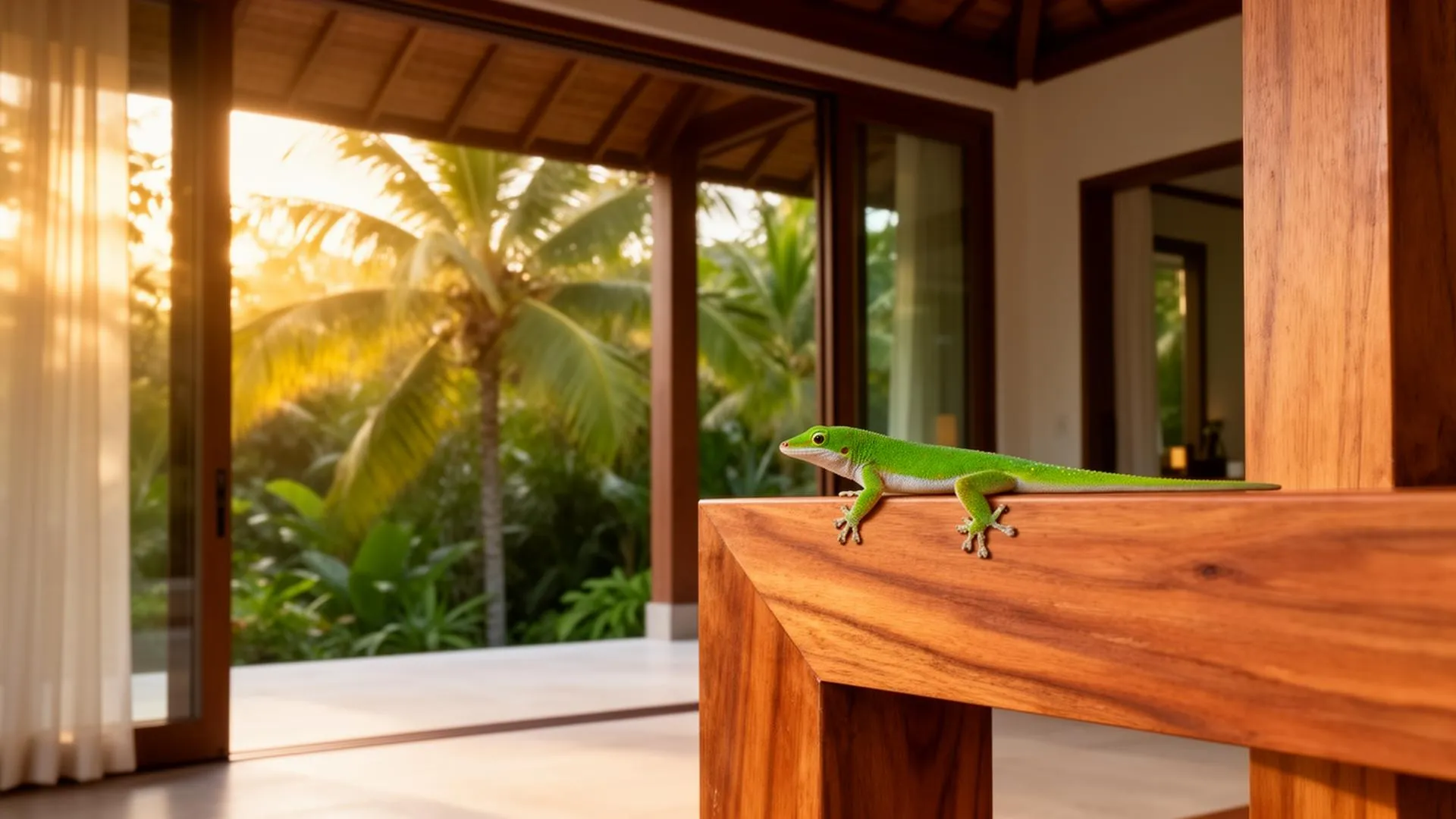
For the broader picture of what open-air tropical living actually looks like — geckos, cicadas, ants, and the everyday small wildlife of a Koh Samui villa — start with our wildlife guide. This piece stays focused on snakes.
How likely is it, really?
Very unlikely, is the short version. In the day-to-day life of a well-managed private villa on Koh Samui, most guests never see a snake at all. The reason is straightforward: snakes prefer dense undergrowth, cool shade, and undisturbed ground. A luxury villa is almost the opposite environment — trimmed lawns, raked paths, open decks, chlorinated pools, lighting at night, and people moving through the property all day.
That doesn't mean it never happens. The island has jungle interior, rubber and coconut plantations, and streams that snakes use as corridors. A garden that backs onto forest is more likely to see an occasional visitor than a beachfront plot. But "occasional" here means once or twice a year at most, not a weekly event — and the visitor is almost always a non-venomous species passing through.
The species you might actually meet
Thailand has an impressive snake list — well over 200 species — but only a handful are realistically relevant to villa guests on Koh Samui.
Non-venomous, most of the time
- Common rat snake and Indochinese rat snake — long, fast, brown or olive, completely harmless. Genuinely useful; they eat rodents.
- Golden tree snake — slender, patterned, often seen briefly moving through a tree line. Mildly venomous to prey, no medical risk to humans.
- Reticulated python — spectacular to see, occasionally moves through gardens near water. Non-venomous. Adults are large and should always be handled by professionals, not guests.
Venomous, but rarely encountered
- Monocled cobra — the species most people picture. Prefers rice fields, plantations, and low-lying wet areas rather than manicured villa gardens.
- King cobra — much rarer than its reputation suggests. Shy, usually deep in forest.
- Malayan pit viper — small, patterned, well-camouflaged in leaf litter. The most common cause of snake bites in southern Thailand, almost always to people walking barefoot in undergrowth at night.
A calm way to think about it: the venomous species that exist here have every reason to avoid you, and almost always do. Nearly all bites in Thailand happen to people working in agriculture, walking rural paths after dark without a torch, or trying to catch or kill a snake themselves.
What to do if you actually see one
A short, boring checklist is more useful than any story:
- Stop moving — Snakes react to motion, not to people standing still.
- Step back slowly — Aim for three metres or more of distance.
- Do not try to identify it up close, photograph it from close range, or move it — Species identification is not your problem — it's the handler's.
- Keep children, dogs, and other guests out of the area — Close a door if you can.
- Call your villa manager immediately — They know the property, know the local handler, and know how to reach the fire brigade if needed.
That's the entire protocol. Everything else — securing the snake, relocating it, checking whether it slipped under a piece of furniture — is a job for people who do it every week.
Why the villa manager is your first call
On Koh Samui, snake removal is handled by trained local handlers and, in more serious cases, the fire brigade (199), who relocate the animal rather than kill it. A villa manager who has worked on the island for years already knows which handler covers which area, which number actually picks up, and how to get someone to the property quickly.
That is far more useful than a search engine result at 10pm. It's also the reason we consistently recommend calling the villa team first for anything unexpected — from a snake in the garden to a leaking tap.
Medical care and antivenom on Koh Samui
In the very unlikely event of a bite, the destination is Bangkok Hospital Samui. Their emergency department stocks antivenom for the species relevant to southern Thailand and has the anaesthetic and monitoring capacity to treat serious envenomations on site. For anything beyond routine, an air ambulance to Bangkok is about an hour away, but for snake bites this is almost never necessary.
Practical first-aid rules worth remembering, even though you're overwhelmingly unlikely to need them:
- Keep the bitten limb still and roughly at or below heart level.
- Remove rings, watches, and tight clothing near the bite before swelling starts.
- Do not apply a tourniquet, cut the wound, apply ice, or try to suck out venom — all of these make outcomes worse.
- Do not try to catch the snake. A single clear photo from a safe distance, if you already have one, is enough.
- Go directly to Bangkok Hospital Samui, or have the villa team arrange transport.
How villa design and location change the odds
Not every villa is the same in this respect, and it's a reasonable thing to weigh at booking:
- Beachfront and open-plot villas with mowed lawns and clear sightlines see fewer snakes than jungle-edge properties.
- Fully enclosed, air-conditioned bedrooms with tight fly screens and door sweeps essentially remove indoor encounters.
- Villas backing onto rainforest or plantations have a slightly higher — still low — frequency of garden sightings, particularly during the rainy season when snakes move to higher, drier ground.
- Nighttime paths matter more than the villa itself. If a garden is dark and unlit, a torch is the single most useful precaution when walking to a sala or plunge pool after dinner.
If you're travelling with young children, are unusually cautious, or simply want the most enclosed setup we represent, tell us at inquiry. It's a normal request and it narrows the shortlist quickly.
The honest bottom line
Snakes are part of the ecosystem on Koh Samui, and pretending otherwise would be dishonest. What's also true is that a well-managed private villa is one of the least likely places on the island to encounter one, and that the systems for dealing with a sighting — trained handlers, the fire brigade, Bangkok Hospital Samui with antivenom on hand — are quietly excellent.
The right posture is neither anxiety nor bravado. Keep to lit paths after dark, wear closed shoes in the garden at night, don't reach into dense undergrowth, and call the villa team if anything unexpected turns up. That covers it.
To plan the trip itself, get in touch — we're on the island, we know the properties, and we'll tell you honestly which villas suit which travellers.
Frequently Asked Questions
No. Snakes exist on the island as they do throughout tropical Asia, but sightings inside a well-maintained luxury villa are very rare. Villa gardens are trimmed, undergrowth is kept short, and pools and terraces are lit at night — all of which makes them unattractive to snakes, which prefer dense, undisturbed vegetation.
The large majority of snakes on Koh Samui are non-venomous and shy. A small number of venomous species exist — most notably the monocled cobra, king cobra, and Malayan pit viper — but encounters with guests are exceptionally uncommon. Serious envenomations of tourists on the island are rare and, thanks to Bangkok Hospital Samui, treatable.
Step back calmly, keep at least three metres of distance, do not try to identify or photograph it up close, and call your villa manager. They will secure the area, keep children and pets away, and contact a local snake handler or the fire brigade (dial 199) to relocate the animal safely.
Almost never. Snakes actively avoid open, exposed spaces, chlorinated water, and human activity. The very occasional sightings inside villas are usually in garden edges, storage areas, or under outdoor furniture — not on the pool deck or in the living room.
Stay calm, keep the bitten limb still and below heart level, remove tight jewellery, and go straight to Bangkok Hospital Samui — their emergency department stocks antivenom for the species found in southern Thailand. Do not apply a tourniquet, do not try to suck out venom, and do not attempt to catch the snake. A clear phone photo from a safe distance is enough for identification.
To a degree, yes. Villas with fully enclosed, air-conditioned bedrooms, tight fly screens, sealed door sweeps, and short-cut garden edges see even fewer wildlife encounters than the average open-air property. If this matters to you, tell us at inquiry stage and we'll match you accordingly.