23 avril 2026 · 9 min lire · Par Tim
Koh Samui Guide de la saison des pluies : activités intérieures, sécurité et lieux de séjour
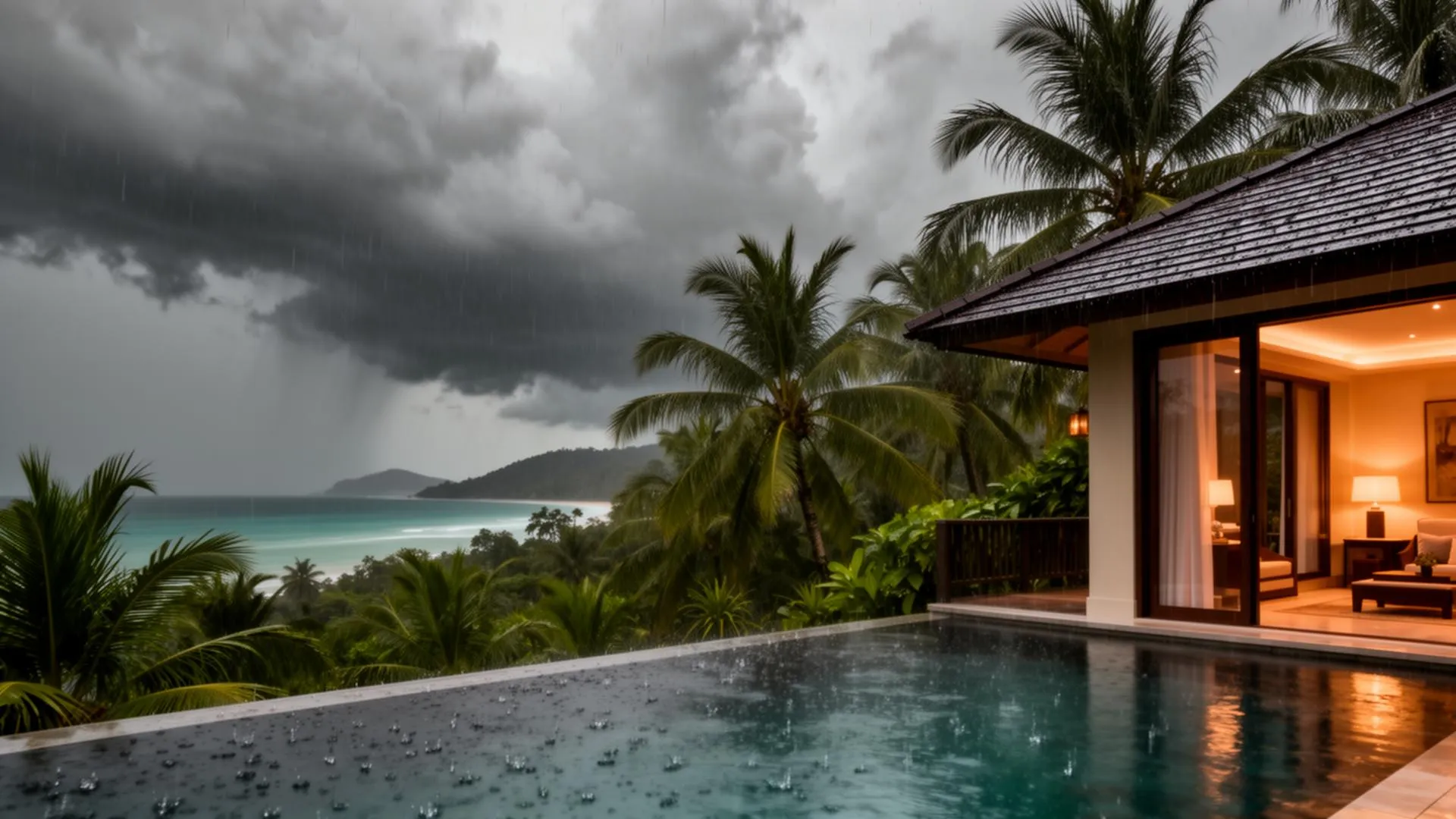
La saison des pluies de Koh Samui a une réputation qu'elle ne mérite pas tout à fait. Oui, le ciel devient dramatique, les collines brillent d'un vert presque lumineux, et il y a des après-midi où la pluie tombe avec une intensité tropicale. Mais les mois humides de l'île offrent aussi les tarifs de villa les plus bas de l'année, les plages les plus calmes, et un rythme que beaucoup de nos hôtes les plus expérimentés préfèrent.
Ayant vécu et travaillé sur Koh Samui pendant plus d'une décennie, nous avons appris qu'un voyage réussi pendant la saison des pluies se résume à deux choses : choisir la bonne villa et comprendre comment naviguer sur l'île en toute sécurité lorsque le temps change... Ce guide couvre les deux.
Quand la saison des pluies arrive vraiment
Koh Samui se trouve dans le golfe de Thaïlande, ce qui signifie qu'elle suit un schéma météorologique différent de celui de Phuket et de la côte d'Andaman. La principale saison des pluies de l'île s'étend d'octobre à la mi-décembre, novembre étant généralement le mois le plus humide.
Les mois intermédiaires de juillet, août et septembre — souvent appelés "mousson" par les voyageurs — sont beaucoup plus secs sur Samui que ne le suggère leur nom. Les matinées sont généralement ensoleillées, et toute pluie a tendance à tomber sous forme de courtes averses d'après-midi qui rafraîchissent l'air plutôt que de perturber ta journée.
Même au plus fort du mois de novembre, la pluie dure rarement toute la journée. Les tempêtes ont tendance à arriver en rafales concentrées d'une à trois heures, souvent pendant la nuit ou en fin d'après-midi. Pour un tableau saisonnier plus complet, voir notre guide mois par mois de la meilleure période pour visiter Koh Samui. Les fortes pluies poussent également plus de grenouilles, d'insectes et les geckos qui les suivent vers l'abri des villas en plein air — notre guide de la faune dans et autour de ta villa explique ce qui est normal et comment le personnel s'en occupe.
À quoi ressemble vraiment un jour de pluie sur Koh Samui ?
Une journée typique de la saison humide peut se dérouler comme suit : une matinée lumineuse et humide, parfaite pour un petit déjeuner sur la terrasse et une baignade dans la piscine de la villa. En début d'après-midi, des nuages sombres se forment au-dessus des collines derrière Chaweng Noi ou Lamai. Les premières grosses gouttes arrivent vers 15 heures, et en quelques minutes, la pluie est si forte sur le toit que tu ne peux pas entendre la conversation. Une heure ou deux plus tard, c'est fini — l'air est purifié, le jardin brille, et le coucher de soleil qui suit est souvent le plus spectaculaire de tout le voyage.
L'erreur que commettent la plupart des visiteurs qui viennent pour la première fois est d'essayer de lutter contre ce rythme. L'approche la plus intelligente consiste à planifier autour de lui : activités en plein air le matin, plaisir à l'intérieur l'après-midi, et dîner sur une terrasse couverte pendant que la tempête se déchaîne.
Sécurité : routes mouillées et pourquoi les scooters sont une mauvaise idée
Les routes mouillées de Koh Samui sont vraiment dangereuses, et les accidents de scooter représentent la grande majorité des blessures subies par les touristes sur l'île pendant les mois pluvieux.
Quelques éléments rendent les routes de Samui particulièrement traîtresses lorsqu'il pleut :
- Les pluies tropicales se mélangent à la poussière et à l'huile cuites sur la route pendant la saison sèche, créant un film aussi glissant que de la glace quelques minutes après les premières gouttes.
- La plupart des itinéraires les plus pittoresques de l'île — en particulier les montées vers les points de vue Chaweng Noi, Lamai et la crête au-dessus de Bophut — sont raides, étroits et non éclairés.
- L'eau stagnante cache des nids de poule et des bords cassés, en particulier le long du périphérique après une pluie soutenue.
- La visibilité diminue fortement pendant les fortes averses, et les véhicules venant en sens inverse n'utilisent pas toujours les phares.
Notre conseil est simple : ne loue pas de scooter pendant la saison des pluies. Utilise un chauffeur privé, le service de transfert de ta villa ou l'une des applications de taxi affiliées à l'aéroport. Si tu dois absolument conduire une voiture toi-même, ralentis considérablement, évite les routes en pente après la tombée de la nuit et n'essaie jamais de traverser des sections inondées — la route en dessous peut avoir été emportée par les eaux. Pour en savoir plus sur les moyens de transport sûrs, consulte notre guide pour se déplacer à Koh Samui.
Coupures d'électricité : à quoi s'attendre et comment se préparer
De courtes coupures de courant peuvent se produire lors de fortes tempêtes, en particulier dans les zones de villas les plus éloignées de Taling Ngam, Lipa Noi et les crêtes supérieures de Chaweng Noi. La plupart des coupures durent de quelques minutes à quelques heures.
La bonne nouvelle : la plupart des villas de notre collection sont équipées d'un générateur de secours, d'une protection contre les surtensions et d'un éclairage d'urgence, de sorte que les clients ne ressentent généralement rien de plus qu'un bref clignotement. Cela dit, cela vaut la peine de prendre quelques précautions simples :
- Confirme avec le responsable de ta villa à ton arrivée où se trouvent l'interrupteur du générateur et les torches d'urgence.
- Garde les téléphones, les ordinateurs portables et les batteries d'appareils photo chargés pendant les heures du matin.
- Évite de remplir la baignoire ou de faire fonctionner le lave-vaisselle lorsqu'une tempête importante est annoncée.
- Si tu travailles à distance, demande à ton gérant de villa quelles sont les options Wi-Fi de secours — la plupart des propriétés de luxe sur l'île proposent maintenant des routeurs de basculement 4G/5G.
Pour approfondir l'infrastructure électrique de l'île, notre article sur l'alimentation électrique sur Koh Samui entre dans les détails techniques.
Activités d'intérieur qui rendent les journées pluvieuses plus agréables
Voici le secret qui échappe à la plupart des guides de voyage : une journée de pluie sur Koh Samui, passée dans la bonne villa, peut facilement devenir la journée la plus mémorable du voyage. Sans la pression de l'exploration, tu ralentisses. Tu cuisines ensemble. Tu regardes un film avec la pluie qui martèle le toit. Tu réserves enfin ce massage de deux heures.
Les options les plus gratifiantes pour les jours de pluie sont presque toutes basées sur des villas :
- Soins de spa dans la villa : la plupart des gérants de villas peuvent organiser la venue d'un thérapeute qualifié dans la propriété en quelques heures. Un massage de couple côte à côte sur une terrasse couverte, avec la pluie qui tombe au-delà des rideaux, est le genre de souvenir dont les invités parlent pendant des années.
- Cours privé de cuisine thaïlandaise : Beaucoup de nos villas ont des chefs internes qui se feront un plaisir de transformer le déjeuner en une séance de cuisine pratique — curry vert à partir de zéro, rouleaux de printemps frais, riz gluant à la mangue.
- Soirées cinéma à domicile : les villas dotées d'une véritable salle de cinéma intérieure prennent tout leur sens lorsque le temps se resserre. Une série de films, du pop-corn du chef, et pas un instant de fièvre de la cabane.
- Séances de gym privées : Une séance d'entraînement sérieuse est l'une des meilleures façons d'utiliser une matinée pluvieuse — et bien plus agréable dans ta propre villa que dans le sous-sol d'un hôtel.
- Salles de jeux et moments en famille : Pour les familles et les groupes d'amis, un espace de jeux dédié avec une table de billard, des jeux de société ou des consoles vidéo transforme un après-midi pluvieux en l'un des moments forts du voyage.
En dehors de la propriété, les options les plus fiables pour les jours de pluie sont les journées de spa dans les grands hôtels, l'aquarium intérieur de Samui près de Lamai, les gymnases couverts de Muay Thai (parfaits pour les enfants qui dépensent de l'énergie), et les cafés-boutiques et les galeries de Fisherman's Village dans Bophut.
Choisir une villa construite pour la saison des pluies
C'est là que le choix de la villa fait la plus grande différence. Une propriété qui n'offre que des aménagements extérieurs peut se sentir restrictive lorsque le temps se referme pendant deux jours consécutifs, ce qui n'est jamais le cas d'une villa conçue pour profiter de l'intérieur.
Deux propriétés de notre collection sont particulièrement bien adaptées à un séjour en saison des pluies :
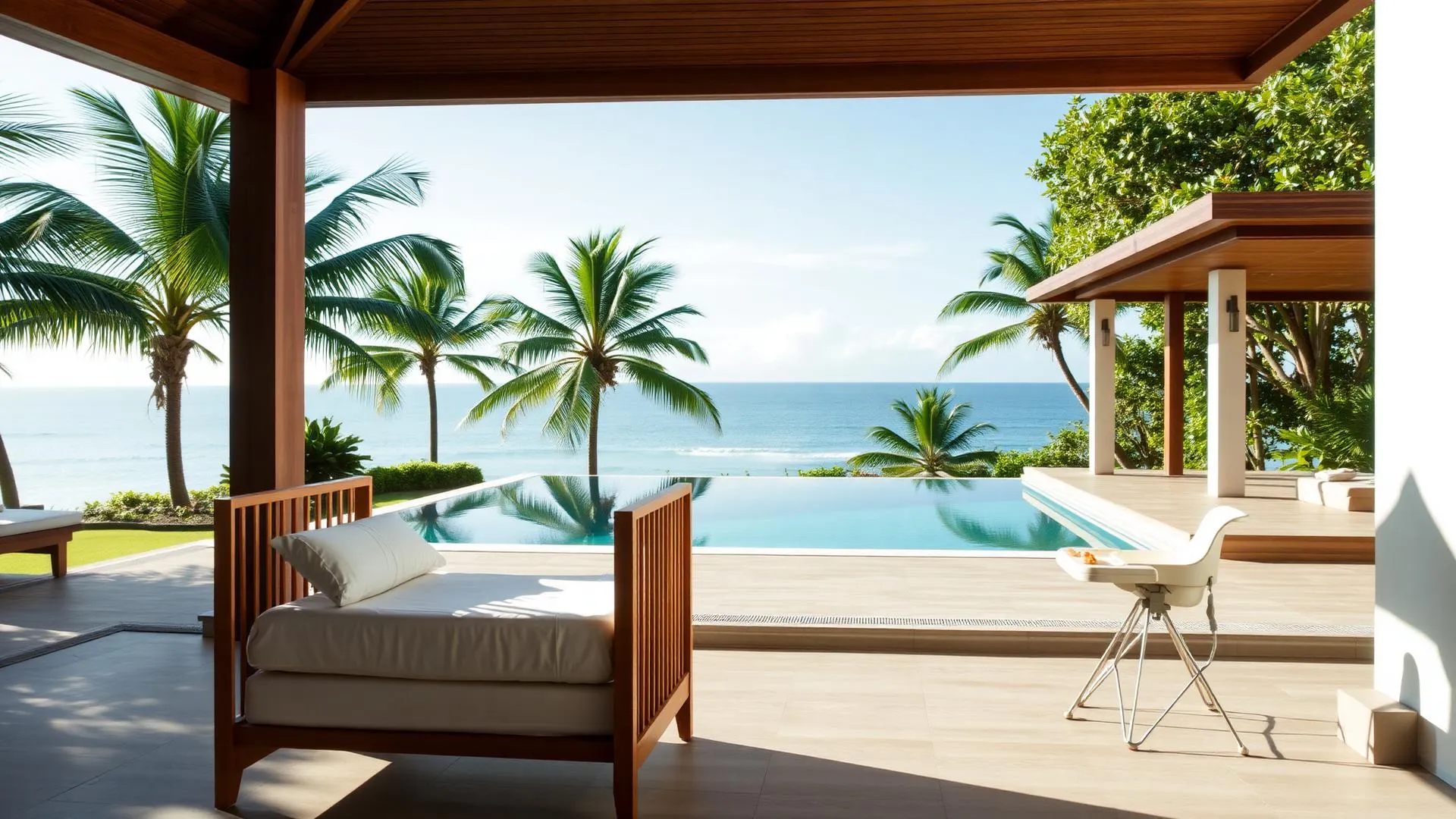
Sky Dream Villa à Chaweng Noi est situé au-dessus de la baie avec une vue panoramique sur l'océan — extraordinaire lorsque les nuages d'orage arrivent par le golfe. Plus important encore, il offre une salle de sport privée entièrement équipée, une salle de cinéma intérieure et un espace de jeu dédié, ce qui signifie qu'une journée complète de pluie n'a jamais l'impression d'être une journée perdue. Les terrasses couvertes et les grands espaces de vie intérieurs te permettent de profiter du temps dramatique sans jamais y mettre les pieds.
Villa Orise, également dans Chaweng Noi, est l'autre propriété que nous recommandons systématiquement pour les voyages à la saison des pluies. La combinaison de salle de cinéma intérieure et d'une salle de sport privée bien équipée signifie que l'expérience ne change pratiquement pas lorsque le temps change. Les clients nous disent souvent que leurs meilleurs souvenirs de voyage se sont produits l'après-midi le plus pluvieux — un long déjeuner du chef, un film le soir, et un orage jouant à l'extérieur des fenêtres.
Pour les familles qui voyagent avec des enfants ou des groupes d'amis, ce type de polyvalence intérieure est le critère le plus important de la villa pendant les mois d'octobre et de novembre.
Conseils pratiques pour l'emballage et la planification
Quelques petites choses font une vraie différence pendant les mois humides :
- Emporte une veste imperméable légère plutôt qu'un parapluie — le vent pendant les tempêtes rend les parapluies presque inutiles.
- Apporte des chaussures qui sèchent rapidement ; les tongs sont glissantes sur le carrelage mouillé, et les baskets mettent des jours à sécher dans l'humidité.
- Utilise des pochettes de téléphone étanches pour les excursions en bateau, qui peuvent être plus humides que la pluie elle-même.
- Fais preuve de souplesse dans ton itinéraire — réserve des excursions sur l'île au début de ton séjour afin de pouvoir les déplacer si le temps se gâte.
- Confirme les arrangements de transfert de villa 24 heures avant tout déplacement ; les chauffeurs se réservent plus rapidement en cas de gros temps.
Le cas silencieux de la saison des pluies
Les tarifs des villas chutent souvent de 30 à 40 % par rapport à la haute saison, les plages sont presque privées, les restaurants prennent leur temps et la beauté naturelle de l'île — les chutes d'eau, la jungle, les collines vertes derrière Maenam et Bophut — est à son apogée.
Les deux choses qui déterminent si un voyage pendant la saison des pluies devient un souvenir ou une frustration sont les mêmes que celles sur lesquelles ce guide s'est concentré : voyager en toute sécurité sur des routes mouillées, et choisir une villa construite pour que le temps passé à l'intérieur soit ressenti comme un privilège plutôt qu'une solution de repli.
Parcourez notre collection de villas pour trouver une propriété adaptée à un séjour pendant la saison des pluies, ou lisez notre guide de destination à Koh Samui pour en savoir plus sur ce que chaque partie de l'île offre lorsque le temps change.
Questions fréquemment posées
La principale saison des pluies sur Koh Samui s'étend d'octobre à la mi-décembre, novembre étant le mois le plus humide. Contrairement à Phuket, Koh Samui se trouve dans le golfe de Thaïlande et est à l'abri de la mousson du sud-ouest, si bien que de juillet à septembre, le temps reste généralement ensoleillé, avec seulement de courtes averses dans l'après-midi.
Rarement. Même en octobre et en novembre, la pluie arrive généralement par grosses rafales d'une à trois heures, souvent en fin d'après-midi ou pendant la nuit. Les matinées sont souvent lumineuses, et de nombreuses journées restent parfaitement utilisables pour la plage, les visites au spa ou de courtes excursions entre les averses.
Les routes mouillées de Koh Samui sont vraiment dangereuses. Les pluies tropicales se mélangent à l'huile routière et créent une surface glissante en quelques minutes, et les accidents de scooter sont très nombreux pendant la saison des pluies. Nous recommandons fortement d'utiliser un chauffeur privé ou un service de transfert de villa plutôt que de louer un scooter. Si tu conduis, ralentis considérablement, évite les routes en pente raide, et ne conduis jamais la nuit pendant les fortes pluies.
De courtes coupures de courant peuvent se produire lors de fortes tempêtes, et durent généralement de quelques minutes à quelques heures. La plupart des villas de luxe — y compris celles de notre collection — sont équipées de générateurs de secours, d'une protection contre les surtensions et d'un éclairage d'urgence, de sorte que les clients ne s'en aperçoivent généralement pas. Nous recommandons toujours de garder les téléphones chargés, de savoir où sont rangées les torches, et de confirmer la couverture des générateurs avec le gérant de ta villa à ton arrivée.
Les options les plus agréables pour les jours de pluie se trouvent dans les villas : un spa ou un massage dans la villa, un cours de cuisine thaïlandaise donné par un chef privé, une soirée cinéma dans un home cinéma, une séance d'entraînement dans une salle de gym privée, ou tout simplement un moment passé à la piscine et dans la salle de jeux avec la famille. En dehors de la propriété, les journées de spa dans les hôtels, l'aquarium de Samui, les salles de gym intérieures de Muay Thai et les cafés de Fisherman's Village à Bophut sont des choix fiables.
Oui — si tu choisis la bonne villa. Le mois de novembre offre les tarifs les plus bas de l'année, des paysages verdoyants, des couchers de soleil spectaculaires et une atmosphère calme et intime. La clé est de réserver une propriété conçue pour profiter de l'intérieur, avec un espace piscine couvert, une salle de sport, un cinéma ou un espace de jeu, afin que le temps ne dicte jamais ta journée.