12 mars 2026 · 11 min lire · Par Tim
Villas de chefs privés sur Koh Samui : ce à quoi s'attendre, ce qu'il faut demander
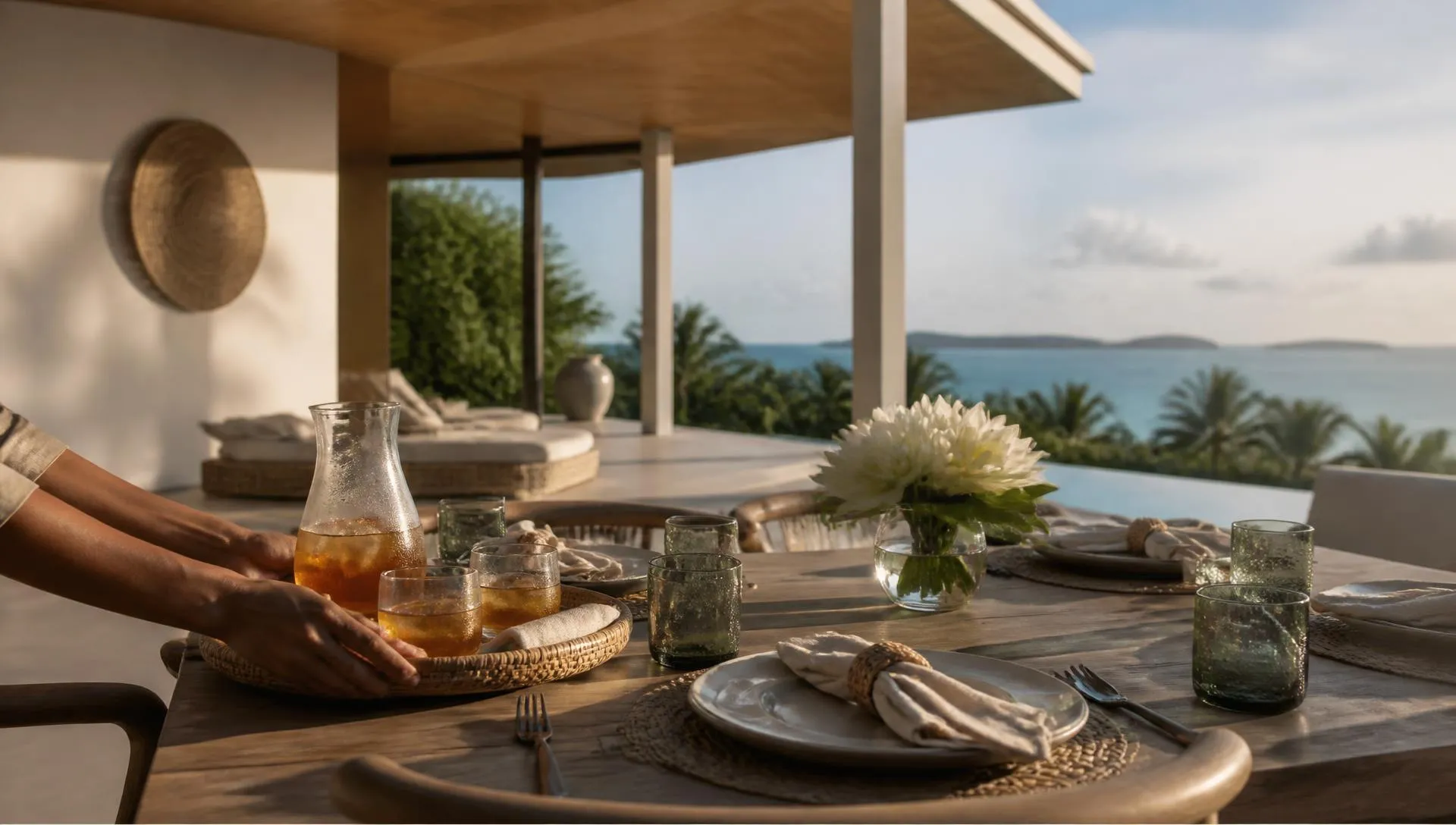
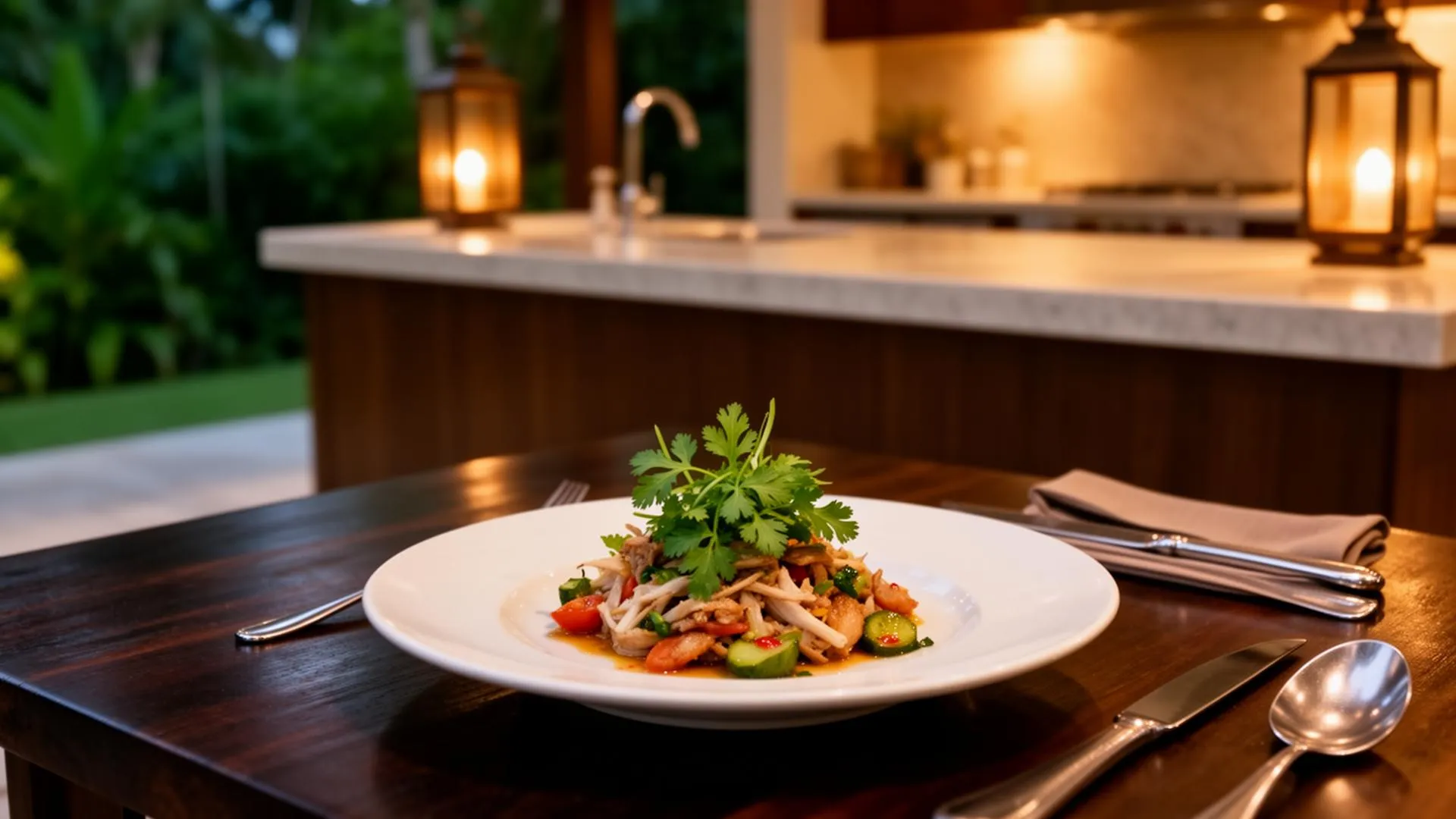
Le plus grand avantage pratique d'une villa privée par rapport à un hôtel sur Koh Samui est la nourriture. Non pas que la nourriture des hôtels soit mauvaise — il y a d'excellents restaurants sur l'île — mais parce que bien manger chez soi, à son propre rythme, avec quelqu'un qui sait ce qu'il fait, est l'un des véritables luxes de la vie en villa. Ce guide est la version honnête de la façon dont cela fonctionne réellement.
Ce qui est généralement inclus
La plupart des villas de notre collection suivent le même grand schéma, avec de petites variations :
- Le petit déjeuner quotidien pour tous les habitants de la villa, préparé sur place. Les options typiques sont les fruits tropicaux, les jus frais, les œufs sur commande, le petit déjeuner thaï (soupe de riz, omelette, saucisse), et les pâtisseries. Le café est inclus ; les machines à expresso spécialisées varient.
- Le cuisinier fait les courses au marché local, tu paies le ticket de caisse plus une majoration de 10 à 25 % selon la villa.
- Un budget cuisine quotidien géré par l'équipe de la villa — tu n'as pas besoin de manipuler de l'argent liquide pour les courses.
- Un service de boissons avec de l'eau, des mélanges de base et du thé/café inclus ; l'alcool est vendu au prix coûtant par la cave de la villa ou tu apportes le tien.
Un petit nombre de villas incluent un chef à plein temps dans le tarif, avec un service complet pour le déjeuner et le dîner pendant toute la durée du séjour. Nous pouvons les mettre en avant si la cuisine est au centre du voyage.
Ce qui est généralement en plus
- Une soirée avec un chef invité: Plusieurs villas peuvent faire appel à un chef spécialisé pour un menu dégustation unique — gastronomie thaïlandaise, méditerranéenne ou française. Prévois entre 80 et 200 USD par invité pour le chef, plus les ingrédients.
- Vin et spiritueux: Les droits d'importation thaïlandais sur l'alcool sont élevés, le vin en particulier est donc cher. Apporter des bouteilles détaxées dans tes bagages permet de faire de réelles économies. L'équipe de la villa peut également faire du pré-stockage à partir d'une liste que tu envoies avant ton arrivée.
- Ingrédients de spécialité: Le bœuf importé, les huîtres, les truffes et autres produits similaires sont tous disponibles sur Koh Samui mais leur prix est celui des produits importés.
- Un barista ou un sommelier: Rare, mais disponible pour les événements et les mariages.
Comment fonctionnent réellement les cuisines des villas thaïlandaises
La cuisine de la villa Koh Samui est basée sur des achats frais et quotidiens plutôt que sur un garde-manger bien garni. Le cuisinier se rend le matin au marché local — généralement le marché de Maenam Walking Street, le marché de Fisherman's Village à Bophut, ou le marché principal de Nathon sur la côte ouest — il achète ce qui est bon ce jour-là et travaille à partir de là. C'est pourquoi la nourriture est tellement meilleure qu'un buffet d'hôtel ; c'est aussi pourquoi il est préférable de planifier les menus le matin même, et non pas des semaines à l'avance.
Quelques implications pratiques :
- Sois flexible: "Tout ce qui est le plus frais" produit presque toujours de meilleurs dîners qu'un menu fixe.
- Parle directement au cuisinier: Une petite conversation matinale sur ce que tu as envie de manger fonctionne mieux que des brèves écrites.
- Fais confiance à leurs défauts : Un cuisinier Koh Samui qui travaille dans la villa depuis des années sait ce en quoi il est brillant. Mange ça.
Planifier les menus
Pour la plupart des séjours, un simple rythme hebdomadaire fonctionne bien :
- Petit déjeuner à la villa, tous les jours :
- Déjeuner à la villa ou sur le pouce, selon le programme de la journée. Un pique-nique à la villa pour la plage est facile à organiser.
- Deux ou trois des sept dîners à la villa sont typiques d'une semaine de détente ; les voyages axés sur la cuisine inversent souvent ce ratio.
Les menus pour les occasions spéciales (anniversaire, fête de fin d'année) fonctionnent mieux lorsqu'ils sont communiqués 24 heures à l'avance — cela permet au chef de s'approvisionner en ingrédients appropriés et de mettre en place une véritable expérience à plusieurs plats.
Ce qu'il coûte réellement
En tant qu'estimation réaliste des repas pris dans la villa sur Koh Samui :
| Repas | Coût typique par personne, tout compris |
|---|---|
| Petit déjeuner thaïlandais dans la villa | Inclus |
| Déjeuner thaïlandais dans la villa (3 plats + riz) | USD 8-15 |
| Dîner thaïlandais dans la villa (4 plats) | 18 À 35 DOLLARS AMÉRICAINS |
| Déjeuner occidental (salade, grillade, dessert) | 15-30 USD |
| Dîner occidental (3 plats) | 30-55 USD |
| Menu dégustation du chef invité | USD 80-200 |
Ces prix sont bien inférieurs à ceux pratiqués dans les restaurants pour une qualité comparable. Pour un contexte de coûts plus large, voir notre Koh Samui ventilation des coûts.
Quelques petites choses qui font une grande différence
- Tip le cuisinier directement à la fin du séjour: C'est culturellement attendu et démesurément apprécié. 1 000-2 000 THB par jour de service dévoué est un point de repère équitable.
- Envoyer un dossier diététique avant l'arrivée : Même un court paragraphe évite au chef de jouer aux devinettes le premier jour.
- Ne commande pas trop : Les repas thaïlandais sont conçus pour être partagés. En commandant "une entrée et un plat par personne", tu obtiendras deux fois plus de nourriture que tu ne peux en manger.
- Teste un cours de cuisine avec ton chef: Une séance matinale de deux heures dans la cuisine de la villa est l'un des meilleurs souvenirs que tu puisses ramener à la maison.
Si tu veux comparer la nourriture thaïlandaise servie dans ta villa avec les meilleurs restaurants de l'île — en particulier les meilleurs endroits de Bophut, Choeng Mon et Chaweng — tu peux consulter les recommandations de Tim pour Koh Samui. Pour une excursion culturelle plus approfondie, notre guide du thé thaï et du chatramue est une petite chose charmante à demander à ton chef pour le petit déjeuner.
Comment nous pouvons t'aider
Lorsque tu te renseignes, dis-nous comment tu manges en vacances — cuisine thaïlandaise quotidienne, brunchs paresseux, menu dégustation occasionnel, dîners à l'extérieur — et nous te trouverons une villa où l'installation du chef est vraiment adaptée. Nous ne prenons pas de frais pour organiser le chef ; cela fait partie du fonctionnement de la villa, organisé directement avec l'équipe sur l'île.
Questions fréquemment posées
La plupart des villas incluent le service de cuisine et de petit-déjeuner dans le tarif. Un petit-déjeuner quotidien thaïlandais ou occidental pour tous les occupants de la villa est standard. Le déjeuner, le dîner et les menus spéciaux sont généralement disponibles sur demande et facturés au coût des ingrédients plus des frais de service modestes. Un petit nombre de villas de notre collection incluent un chef cuisinier dédié à plein temps dans le tarif.
Il y a généralement trois composantes : (1) le travail du chef, souvent inclus si le service du petit déjeuner fait partie du tarif ; (2) les ingrédients, facturés au prix du ticket de caisse ; (3) des frais de service sur le coût des ingrédients, généralement de 10 à 25 % selon la villa. Un dîner thaïlandais de quatre plats pour six invités revient généralement à 25-50 USD par personne tout compris — bien en dessous des prix des restaurants pour des plats comparables.
La plupart des cuisiniers des villas excellent dans les plats avec lesquels ils ont grandi — Massaman, curry vert, Tom Kha, fruits de mer frais, salade de papaye. Pour la gastronomie européenne ou les cuisines diététiques spécifiques (menus dégustation végétaliens, kasher, pâtisserie sans gluten), demande à l'avance — certaines villas peuvent organiser un chef invité pour une seule soirée, moyennant un supplément de prix.
Oui, avec préavis. Communique tes allergies et tes restrictions lorsque tu te renseignes, et non à l'arrivée. Les demandes courantes telles que végétarien, végétalien, sans gluten et pescatarien sont bien traitées. Les allergies graves aux noix, aux crustacés ou au sésame doivent être discutées explicitement à l'avance — de nombreux plats thaïlandais utilisent des arachides, de la sauce de poisson et de la pâte de crevettes comme ingrédients de base, et la contamination croisée dans une cuisine thaïlandaise est une réelle préoccupation.
Non. L'habitude est de discuter du programme de la journée avec le chef chaque matin au petit déjeuner — ce que tu as envie de manger, qui est dans la villa, si tu vas sortir. L'équipe de la villa s'occupe de faire les courses au marché local ce matin-là. Les menus préétablis n'ont de sens que pour les occasions spéciales ou les grands groupes.
Cela dépend du voyage. Pour les familles et les groupes, les repas à la villa sont généralement moins stressants, beaucoup moins chers par personne et évitent la logistique. Pour les couples et les séjours plus courts, le mieux est de mélanger les deux : à la villa pour les journées détendues, dans les restaurants de Bophut, Choeng Mon et Lipa Noi pour les soirées habillées. Nos [Recommandations de Tim pour Koh Samui](/journal/guides/tims-koh-samui-recommendations) répertorient les restaurants que nous utilisons nous-mêmes.