August 31, 2026 · 9 min read · By Tim
Legal Requirements for Getting Married in Thailand
Most couples who write to us about a wedding on Koh Samui have already pictured the day: the terrace, the sea behind them, twenty people at most. What they have not pictured is the part that happens on a weekday morning in an air-conditioned government office in Bangkok, with a folder of translated documents and two witnesses.
That is the actual legal marriage in Thailand. Everything at the villa — vows, flowers, a celebrant, a Buddhist blessing — is symbolic, and beautifully so. This guide explains the legal chain, what it costs in time, and how couples usually sequence it around a stay. It is general information rather than legal advice; embassies and district offices change their practice, so always confirm the current requirements before booking flights.
If you are still deciding on the format, our companion pieces on villa weddings and eloping on Koh Samui cover the ceremony side.
The Two Weddings
It helps to separate them from the start:
- The legal marriage — registration at a Thai district office, called an Amphur. Short, administrative, no atmosphere required. This is what produces a marriage certificate.
- The ceremony — at a villa, on a beach, or in a temple. This is the day you will remember, and it carries no legal weight in Thailand.
Couples take one of three routes. Some marry legally at home before travelling and hold a purely symbolic ceremony on the island. Some do the reverse and register at home afterwards. Some complete the full legal process in Thailand, which is entirely possible for foreigners but demands the document chain below.
The Document Chain
For two foreign nationals, a Thai registration usually requires:
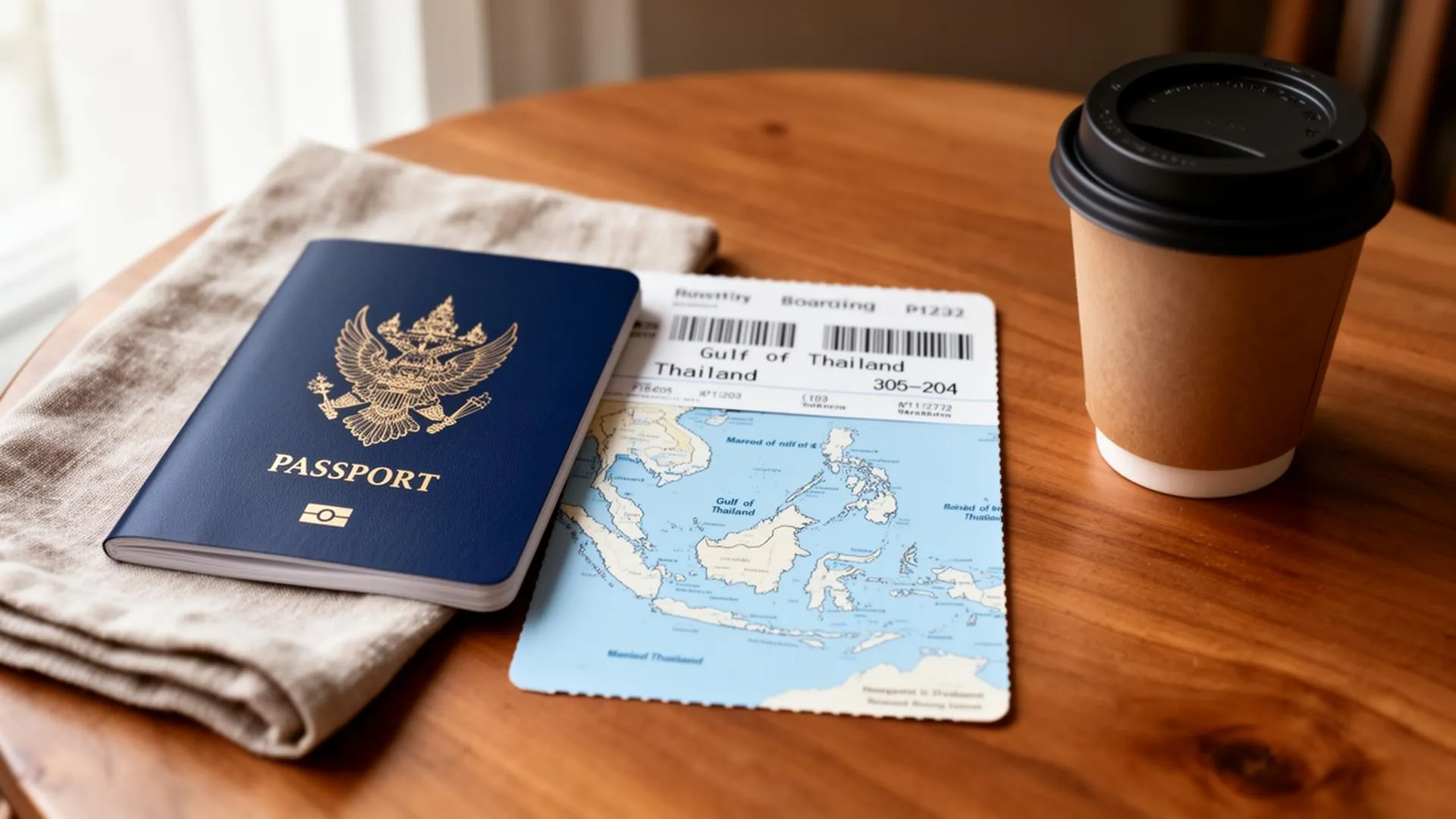
- Passports — valid, with entry stamps.
- An affirmation or affidavit of freedom to marry — issued by your own embassy in Bangkok, confirming you are legally free to marry. Both partners need one, and most embassies require an appointment booked well ahead.
- Evidence of any previous marriage ending — a divorce decree or a death certificate, where relevant.
- Thai translation — of the affirmation and supporting documents, by a recognised translator.
- Legalisation — the translated documents must be certified by the Thai Ministry of Foreign Affairs Legalisation Division before a district office will accept them.
Then, and only then, comes the registration itself at the district office, where two witnesses sign and the marriage certificate is issued.
Requirements vary by nationality. Some embassies interview both partners; some require documents from your home civil registry first; some charge notably more than others. The two sources to trust are your own embassy in Bangkok and the Ministry of Foreign Affairs — not a wedding blog, and not this one.
A Realistic Timeline
The most common mistake is treating the paperwork as a single afternoon. A workable sequence looks like this:
- Weeks before the trip — gather home-country documents, book the embassy appointment in Bangkok, and confirm with the embassy exactly what they will issue and what they will not.
- Day one and two in Bangkok — embassy appointment, then translation of the affirmation into Thai.
- Day two or three — legalisation at the Ministry of Foreign Affairs. Express service is generally available at a higher fee; standard service takes longer.
- Day three to five — registration at a district office with two witnesses, followed by the certificate.
- After — a certified translation of the Thai marriage certificate for use back home, plus legalisation or an apostille depending on your country's rules.
Three to five working days is a sensible planning assumption. Couples who arrive with everything prepared sometimes move faster; couples who arrive during a Thai public holiday do not. Check the dates against the events and holidays calendar before you fix anything.
Costs to Expect
Precise fees change and differ by nationality, so treat the following as structure rather than quotes:
- Embassy affirmation — a consular fee per person, typically the largest single official cost.
- Translation — a modest per-document fee.
- Legalisation — a per-document fee, with a surcharge for express processing.
- District office registration — nominal.
- Agent or planner — optional, and the item most couples find worth it, because it removes the queuing, the courier runs and the guesswork about which counter to use.
Compared with the ceremony budget, the legal side is small. What it consumes is time and attention on days you would rather be on the island.
Where the Villa Fits
Once the certificate exists, the ceremony is free to be exactly what you want it to be. A private villa suits this format unusually well: the grounds are yours, there are no other guests, the staff are already on site, and the sequence of the day — getting ready, ceremony, dinner, morning after — happens in one place without transfers.
Practical points worth raising early with us or the owner:
- Guest numbers — a ceremony for ten sits differently with an owner than a party for forty; larger counts often trigger an event fee.
- External vendors — celebrant, photographer, florist, hair and make-up. Some villas welcome them freely, others want a list in advance.
- Sound and timing — amplified music late into the night is rarely welcome anywhere on the island; a dinner with a small speaker set-up almost always is.
- Season — February and March are the most reliable for an outdoor ceremony; October and November are genuinely wet. Our month-by-month weather guide is the honest version.
If you are also arranging visas around the trip, our Thailand visa guide covers entry rules for the stay itself — a marriage registration does not change your permitted period.
What This Guide Cannot Do
Marriage law touches nationality, previous marriages, name changes and property in ways that vary enormously between countries. Nothing here is legal advice, and requirements at both embassies and district offices are revised without much notice. Before booking anything, verify with your embassy in Bangkok and, for recognition at home, with your own civil registry.
How We Do It
We do not process paperwork, and we would not pretend otherwise. What we do is make the rest of it simple: match you to a villa that genuinely fits your guest count and mood, confirm the owner's position on ceremonies and vendors in writing before you commit, and introduce a local planner we have worked with who handles the Bangkok run and the district office appointment.
If you would like a shortlist for your dates, send a message — a real person on the island will reply within a working day.
Frequently Asked Questions
No. A villa ceremony, a beach ceremony and a Buddhist blessing are all symbolic. In Thailand a marriage becomes legally valid only when it is registered at a district office, known as an Amphur. Many couples do both: the registration on a weekday morning, the ceremony at the villa on another day.
Typically a passport, an affirmation or affidavit of freedom to marry issued by your embassy in Bangkok, and where relevant a divorce decree or death certificate of a former spouse. Those documents must then be translated into Thai and legalised by the Thai Ministry of Foreign Affairs before the district office will accept them. Some nationalities face extra steps, so confirm with your own embassy first.
Allow three to five working days in Thailand for the paperwork chain: embassy appointment in Bangkok, translation, legalisation at the Ministry of Foreign Affairs, then registration at the district office. Couples who prepare home-country documents in advance and use an agent for the legalisation step often compress this, but building in a buffer is wiser than booking a tight schedule.
Registration takes place at a district office, and the surrounding steps — your embassy and the Ministry of Foreign Affairs — are in Bangkok. Practically, most couples handle the embassy and legalisation in Bangkok at the start of the trip and then travel down to the island. A local planner will confirm which office to use and what the current practice is, since procedures vary between offices.
Usually yes, provided the Thai marriage certificate is translated and, depending on your country, legalised or apostilled for use at home. Recognition rules differ by country, so check with your own civil registry or consulate before you travel. This article is general information, not legal advice.
Two witnesses are generally required at the district office; they can be friends, family or, in practice, people arranged by your planner. Thailand does not impose a residency or waiting period on foreigners, which is one reason it remains a straightforward destination for a legal marriage — the complexity sits in the document chain, not in the stay.