September 2, 2026 · 9 min read · By Tim
Marine Life Around Koh Samui: Turtles, Whales & Reef
The sea around Koh Samui is not the Andaman. There are no towering limestone drop-offs and no guaranteed manta lines. What the Gulf of Thailand offers instead is warmer, shallower, gentler water — and a set of animals that rewards patience rather than a booking form. Guests who spend a week here paying attention usually see more than guests who spend one frantic day chasing a checklist.
This is what actually lives out there, where you have a realistic chance of seeing it, and how to be a decent guest in the water. It pairs with our practical guide to snorkeling and diving on Koh Samui and our overview of the wider Samui archipelago.
The reef, and what lives on it
Most of the marine life you will encounter around Samui is small, colourful and entirely unbothered by you.
- Reef fish — parrotfish, butterflyfish, angelfish, sergeant majors, wrasse and the occasional shoal of fusiliers moving through like weather. Shallow coral gardens on the island's rockier headlands hold most of them.
- Coral — hard corals dominate the shallow gulf sites, with soft corals and sea fans on the deeper pinnacles. Health varies enormously by site; the more sheltered and less-visited a reef is, the better it usually looks.
- Invertebrates — sea urchins, anemones with resident clownfish, nudibranchs for anyone who slows down enough to spot them, and sea cucumbers doing quiet janitorial work on the sand.
- Rays — blue-spotted ribbontail rays rest under coral ledges and are one of the most reliably lovely sightings for snorkellers. Give them room; they will leave if you crowd them.
The pattern is worth understanding: gulf reefs are shallow, so they warm quickly, which makes them beautiful and fragile in equal measure.
Turtles
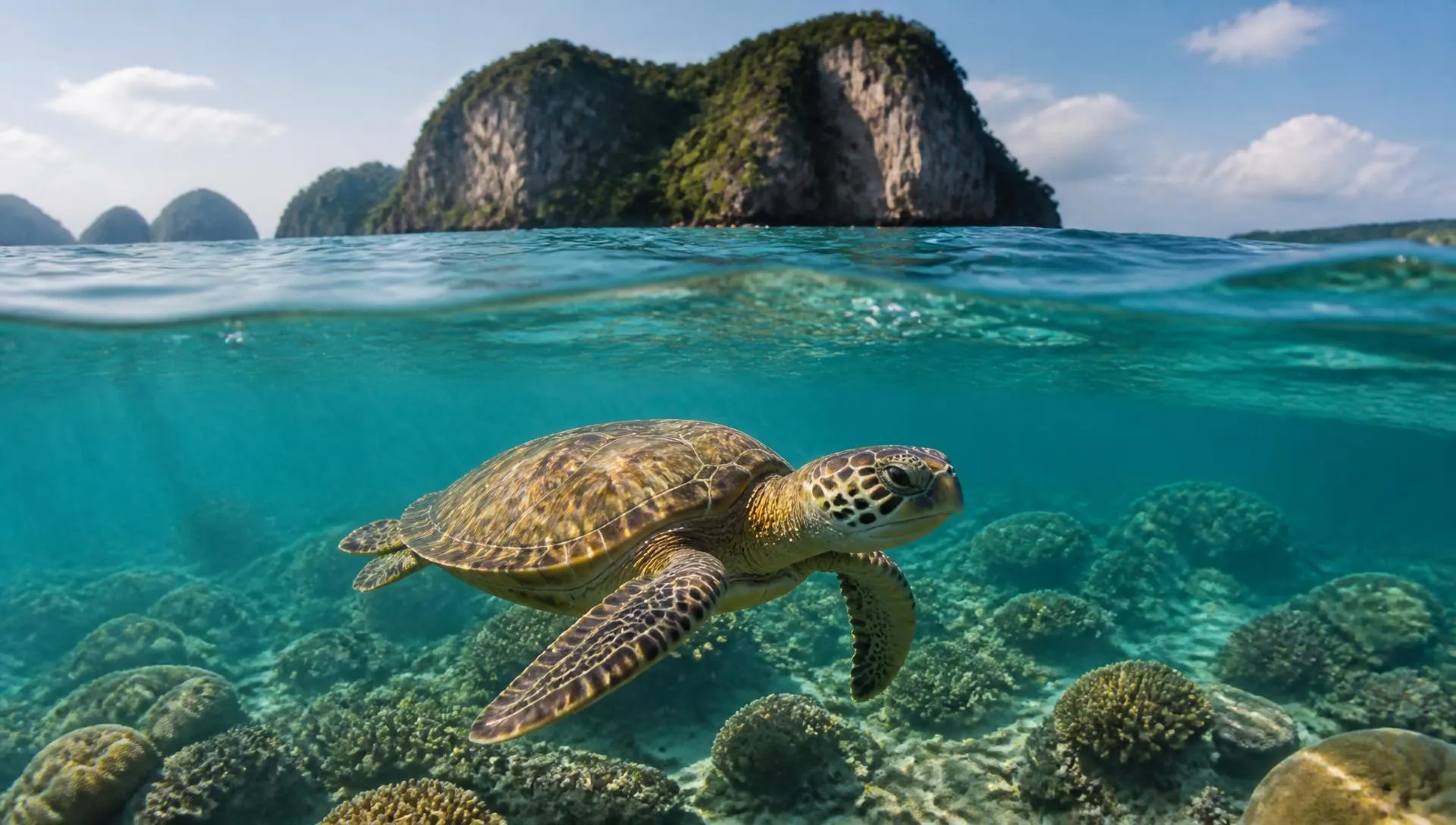
Green and hawksbill turtles are the species most associated with these waters. They graze on seagrass and sponge, which is why they are far more likely over seagrass flats and quiet island reefs than off a busy beach with jet skis on it.
Sightings are genuinely unpredictable. A snorkelling day around the outer islands gives you a chance; a week of boat trips gives you a better one; nothing gives you certainty. Turtle populations in Thai waters have been under pressure for decades from lost nesting beaches, plastic and fishing gear, and conservation programmes now monitor and protect key nesting sites nationally.
If you do meet one, the etiquette is simple and non-negotiable: stay behind and below, never between the turtle and the surface — it has to breathe — and do not touch, ride, feed or chase. A turtle that swims calmly past you is the sighting. A turtle fleeing you is not.
Whale sharks and the big pelagics
Sail Rock, the pinnacle sitting between Koh Samui and Koh Phangan, is the region's headline dive site and the place whale shark sightings are reported most often. They are filter feeders, harmless, and completely unscheduled. The calmer months of roughly March to September stack the odds slightly in your favour, and that is as strong as any honest statement gets.
Around the pinnacle itself the more dependable sights are barracuda, trevally hunting in the blue, and dense bait balls that make the whole rock feel busy.
Bryde's whales are the Gulf of Thailand's resident baleen whale, feeding in the upper gulf nearer the mainland coast and protected under Thai law. They are not a Samui day-trip animal. Dolphins pass through more often, usually briefly, usually when nobody has a camera ready.
When to go looking
Season shapes everything here, and the honest version is short.
- March to September — calmest seas, best visibility, most reliable boat days. This is the window for anything reef- or pinnacle-focused.
- October to December — the wettest stretch on the east coast, with reduced visibility and more cancellations. Our rainy season guide covers what this actually looks like day to day.
- Year-round — shore snorkelling on sheltered rocky headlands works whenever the water is flat, which is often enough in the mornings.
Timing your trip around conditions rather than around a single hoped-for species is the difference between a good week in the water and a disappointing one. Our month-by-month weather guide is the practical companion here.
Watching without doing damage
None of this is complicated, and all of it matters on reefs this shallow.
- Reef-safe sunscreen or a rash guard — a long-sleeved top is better than any lotion, and cooler than you expect.
- No touching, standing or collecting — coral is an animal, a fin kick can undo decades of growth, and shells are somebody's house.
- No feeding — it changes behaviour and concentrates fish unnaturally around boats.
- Keep your distance from large animals — if a whale shark or turtle appears, hold position and let it decide the encounter.
- Choose operators who anchor on buoys — dropped anchors do more reef damage in a minute than a hundred snorkellers do in a season.
- Take your plastic home — the gulf's currents concentrate floating debris, and turtles eat bags.
Where a villa week fits in
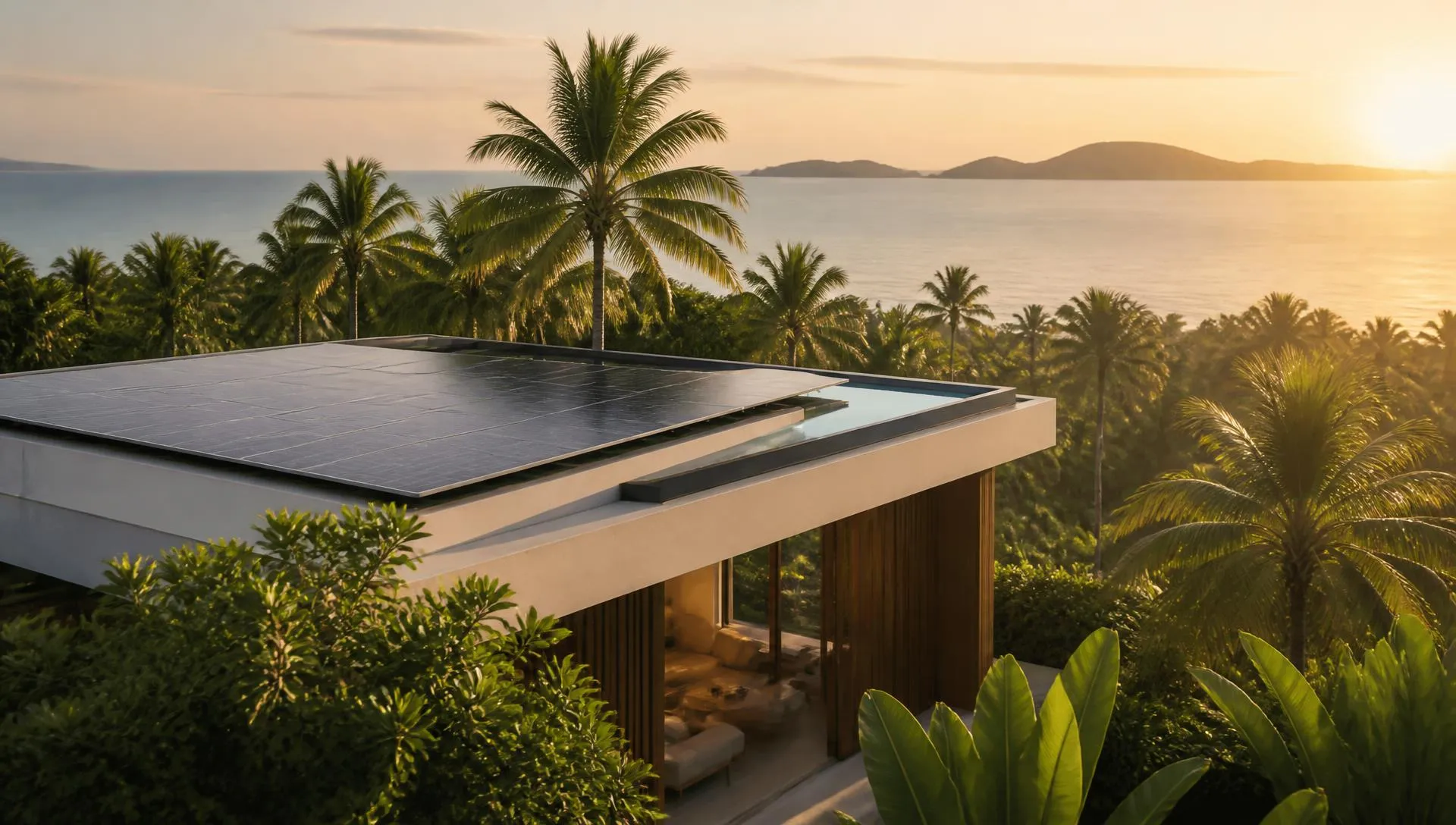
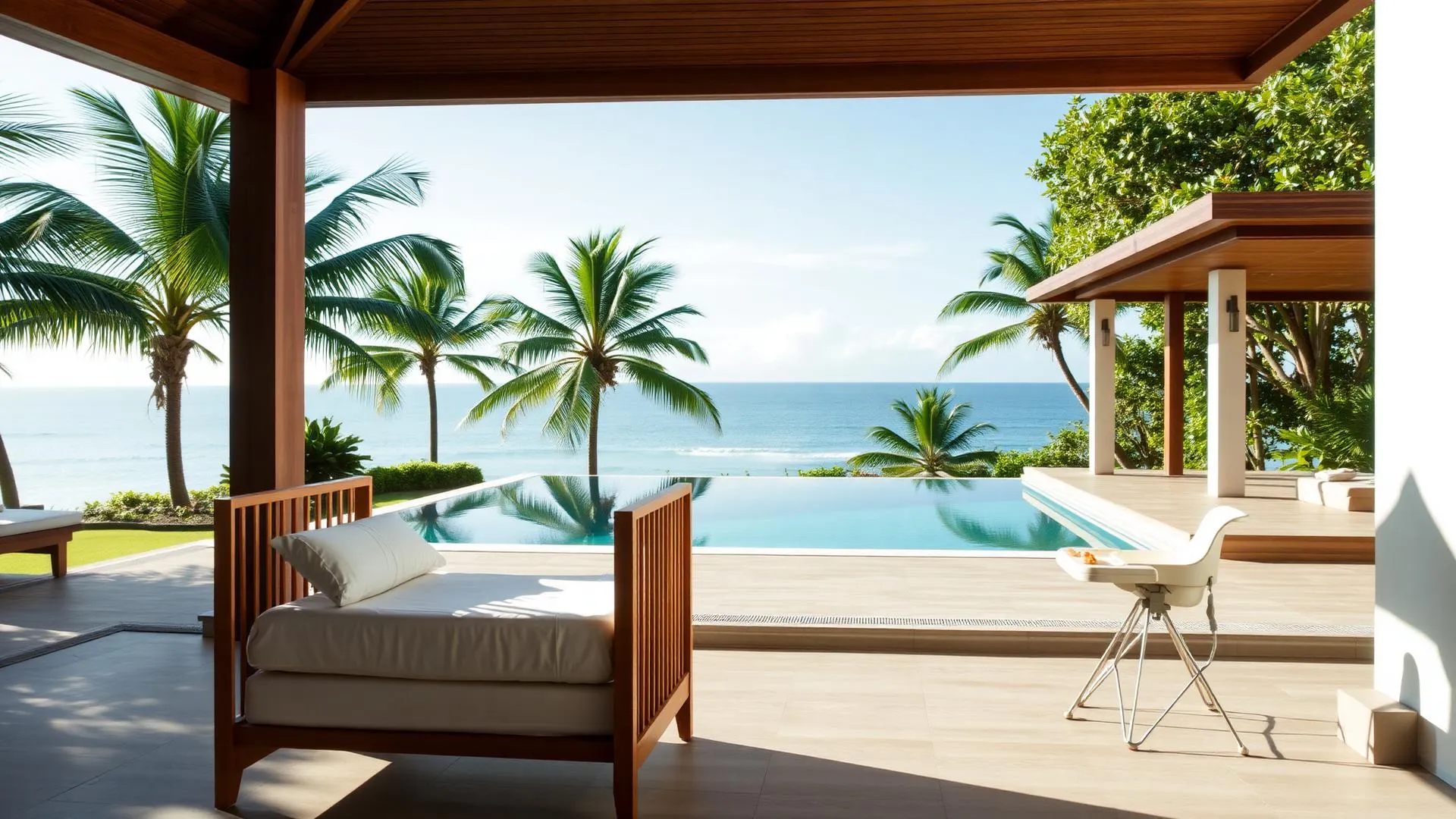
The quiet advantage of a private villa is time. Boat days become optional rather than the entire point, and mornings when the sea flattens out become the ones you use. Several houses in our collection sit above the water on the Chaweng Noi headland, which makes it easy to look at the sea each morning and decide from there.
We know the operators our guests have had good experiences with, and equally the ones we would not send anyone to. Tell us your dates and what you are hoping to see, and we will be straightforward about what the season can realistically deliver — a real person on the island will reply within a working day.
Frequently Asked Questions
Yes, though sightings are a matter of luck rather than schedule. Green and hawksbill turtles are the two species most often reported in the Gulf of Thailand, and they turn up over seagrass beds and coral around the outer islands more often than on Samui's own busy beaches. Most guests who see one see it while snorkelling or on a boat day rather than from the shore.
Whale sharks are seen in the Gulf of Thailand, most famously at the Sail Rock pinnacle between Koh Samui and Koh Phangan, but they are seasonal and unpredictable. Divers report the highest chance in the calmer months around March to September. Nobody can promise a sighting, and any operator who does is selling something.
Yes. Bryde's whales feed in the upper Gulf of Thailand, closer to the coastline north of Samui, and are a protected species in Thai waters. Sightings from Koh Samui itself are rare. Dolphins are seen more often, usually as a brief pass alongside a boat rather than a planned encounter.
March to September generally brings the calmest seas and best underwater visibility around Samui, which is when snorkelling and diving conditions are at their best. The east coast can be choppy from November to January, when visibility drops and boat days are more often cancelled.
Yes, for the animals you are likely to meet. Reef fish, turtles and rays are not a danger to swimmers. The realistic hazards are jellyfish in certain weeks, sea urchins on rocky entries, and boat traffic near busy beaches. Keep distance from any animal, never touch or chase, and wear reef-safe sunscreen.
It varies site by site. Shallow reefs closest to developed beaches show the most wear from sedimentation, anchoring and warm-water bleaching events, while sites around the outer islands and protected areas are in better condition. Thailand periodically closes affected reef areas to allow recovery, so check current site access before planning a trip.