September 15, 2026 · 9 min read · By Tim
The Architecture of Koh Samui Villas: Tropical Modernism Explained
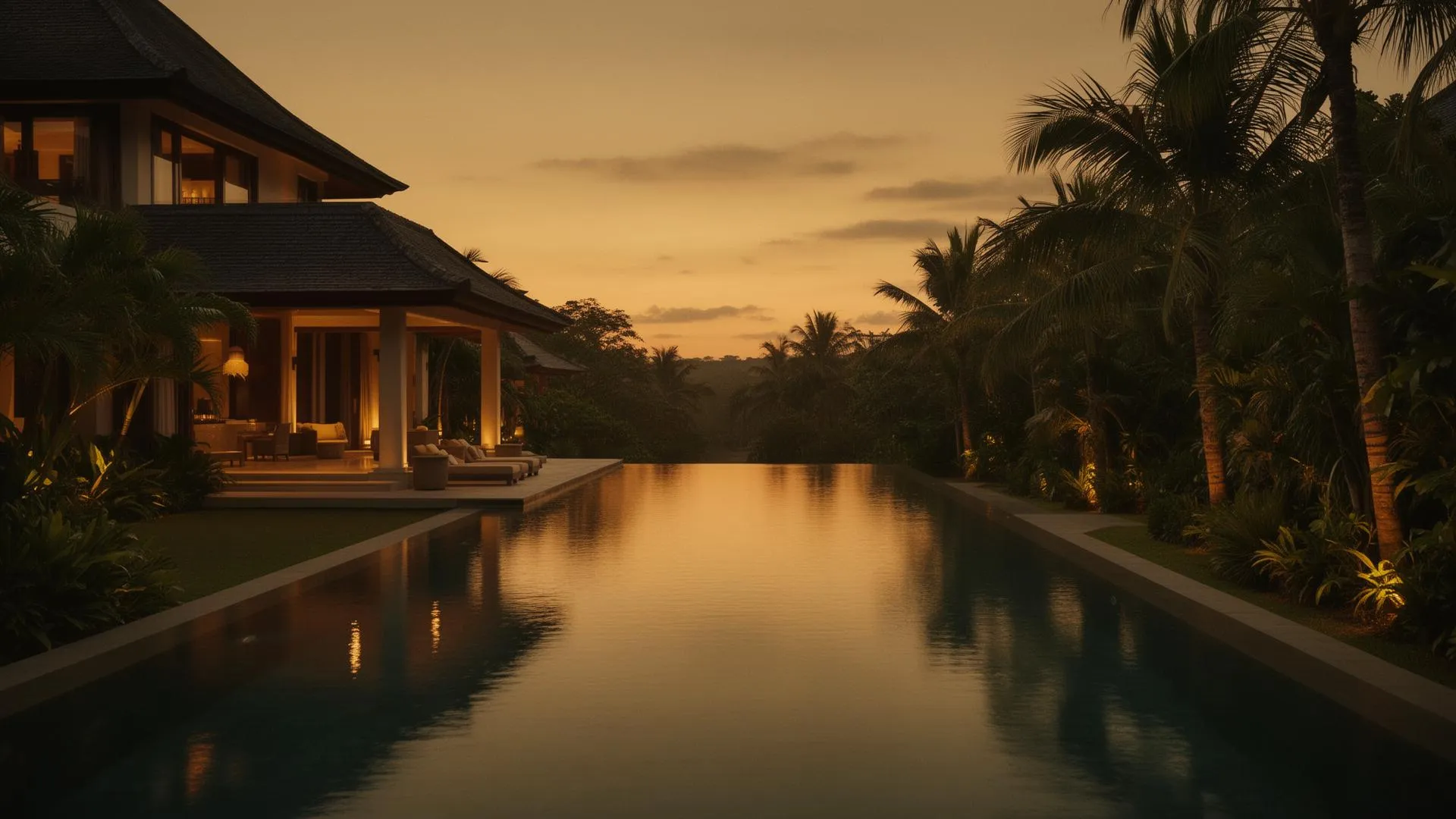
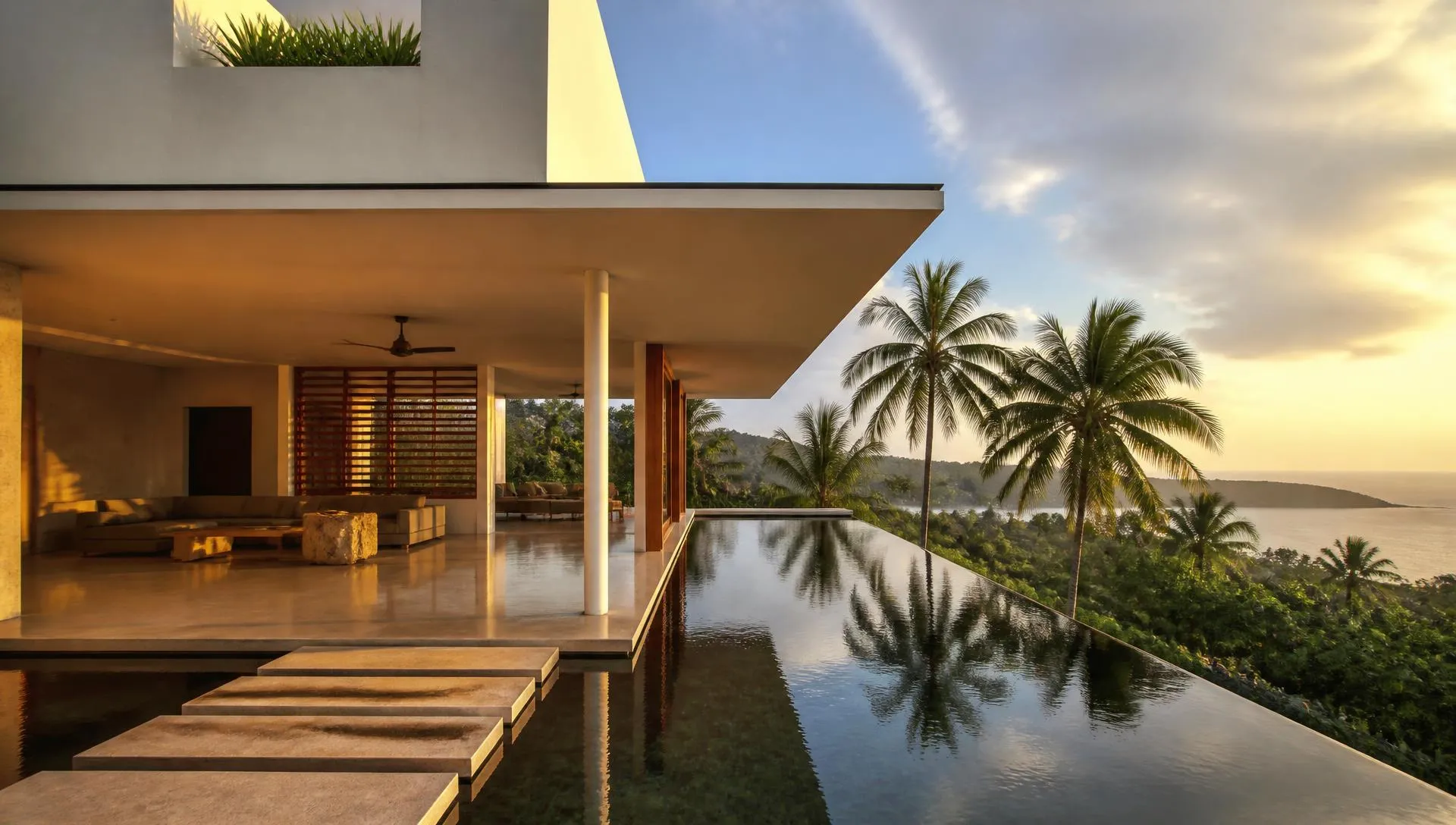
Drive the ring road of Koh Samui and you will spot them on the hillsides: low white volumes hovering above the coconut canopy, razor-thin rooflines, pools that seem to pour into the sea. This is not a coincidence or a passing fashion. Koh Samui has quietly become one of Southeast Asia's most convincing showcases for Tropical Modernism — and understanding the style explains a great deal about why the island's best villas feel the way they do.
We wrote recently about Thai Minimalism, the material and interior philosophy that gives these houses their warmth. This piece looks one layer deeper, at the architectural framework underneath: where the style comes from, how it responds to the island's climate, and what to look for when you choose a design-led villa.
Where Tropical Modernism Comes From
Tropical Modernism emerged in the mid-twentieth century, when architects working in West Africa, South Asia, and later Southeast Asia began adapting modernist principles — open plans, honest materials, geometric clarity — to climates that the glass-and-steel European model handled badly. Names like Geoffrey Bawa in Sri Lanka and the early modernists of Bangkok showed that a house in the tropics should be shaped by sun path, monsoon, and breeze rather than sealed against them.
When Koh Samui's villa building boom began in the early 2000s, its steep hillsides and sea views turned out to be an almost perfect canvas for these ideas. International architects and a growing generation of Thai studios found clients who wanted contemporary design without losing the sense of place. The result, two decades on, is a recognisable Samui vernacular: modernist in structure, tropical in behaviour, Thai in detail.
The Five Hallmarks of the Style
Once you know the vocabulary, you will start reading every villa on the island through it:
- Flat or low-pitched roofs: Thin roof planes with deep overhangs shade the glass below, shed monsoon rain, and keep the building's profile low against the hillside — which local height and slope regulations also encourage.
- Cantilevered volumes: Living rooms and master suites project over the slope, capturing breeze and view while leaving the terrain beneath largely untouched.
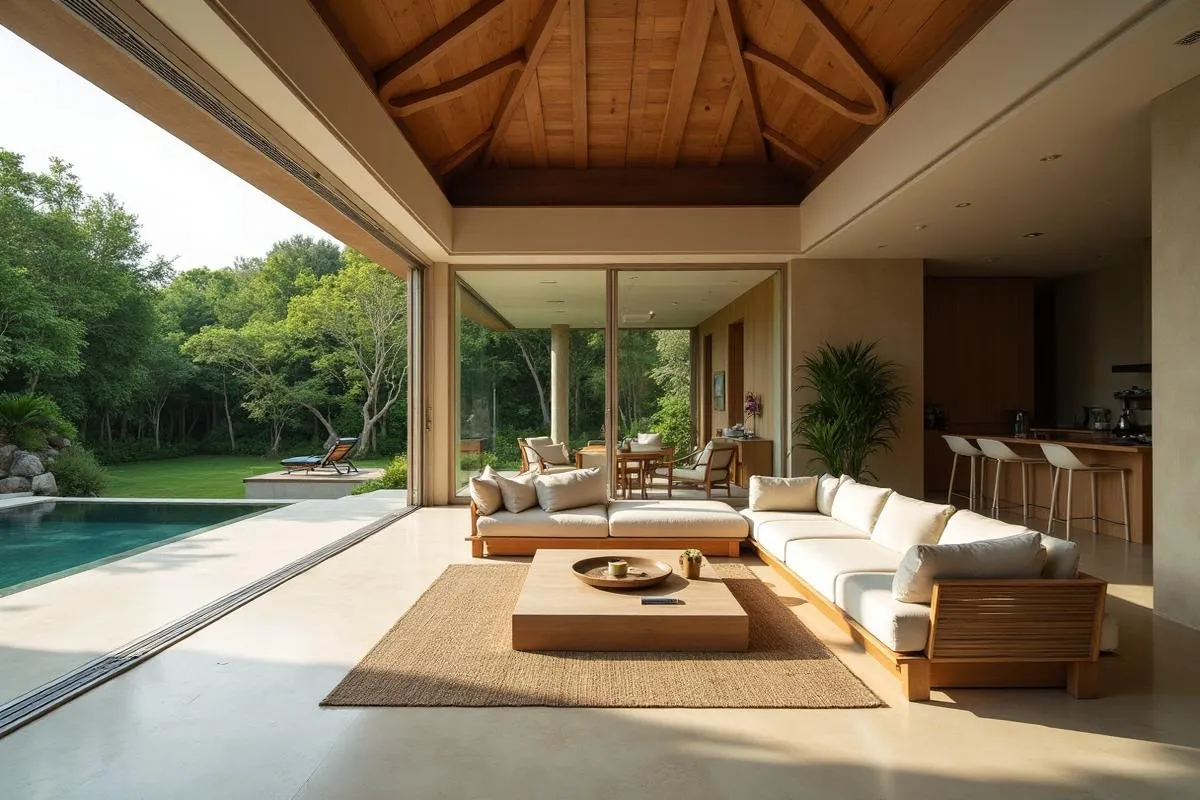
- Dissolving walls: Floor-to-ceiling sliding glass lets entire facades open, turning the living pavilion into a shaded terrace whenever the weather allows.
- The infinity edge: The pool is not decoration but a compositional device, aligning the water plane with the horizon so sea, pool, and terrace read as one continuous surface.
- Honest materials: Board-formed concrete, local stone, and hardwood screens are left exposed. Structure and finish are the same thing.
Designed for the Climate, Not Against It
The style's good looks are a by-product of climate logic. Koh Samui is hot, humid, and bright for most of the year, with a pronounced rainy season — our month-by-month weather guide gives the full picture. Tropical Modernism answers each of these conditions with a design move rather than a machine.
Deep eaves and high ceilings keep direct sun off the glass and let heat rise away from living areas. Pavilions are oriented to the prevailing sea breeze, so cross-ventilation does the work of air-conditioning through the day. Covered terraces provide outdoor rooms that stay usable in a downpour. Bedrooms, which need cool, quiet nights, are the one fully sealed and climate-controlled zone — everything else is allowed to breathe.
This is also why these houses age gracefully here: fewer sealed surfaces, fewer moving parts, and materials like teak and stone that improve with weathering rather than degrading.
Inside: Where Thai Craft Meets the Modernist Shell
A pure modernist interior can feel cold in a holiday setting. The best Samui villas avoid this by layering local craft onto the concrete shell — reclaimed teak ceilings, hand-cut stone bathrooms, woven screens that filter the afternoon light. This is exactly the territory of Thai Minimalism, and the two philosophies complement each other: one shapes the building, the other shapes how it feels to live in.
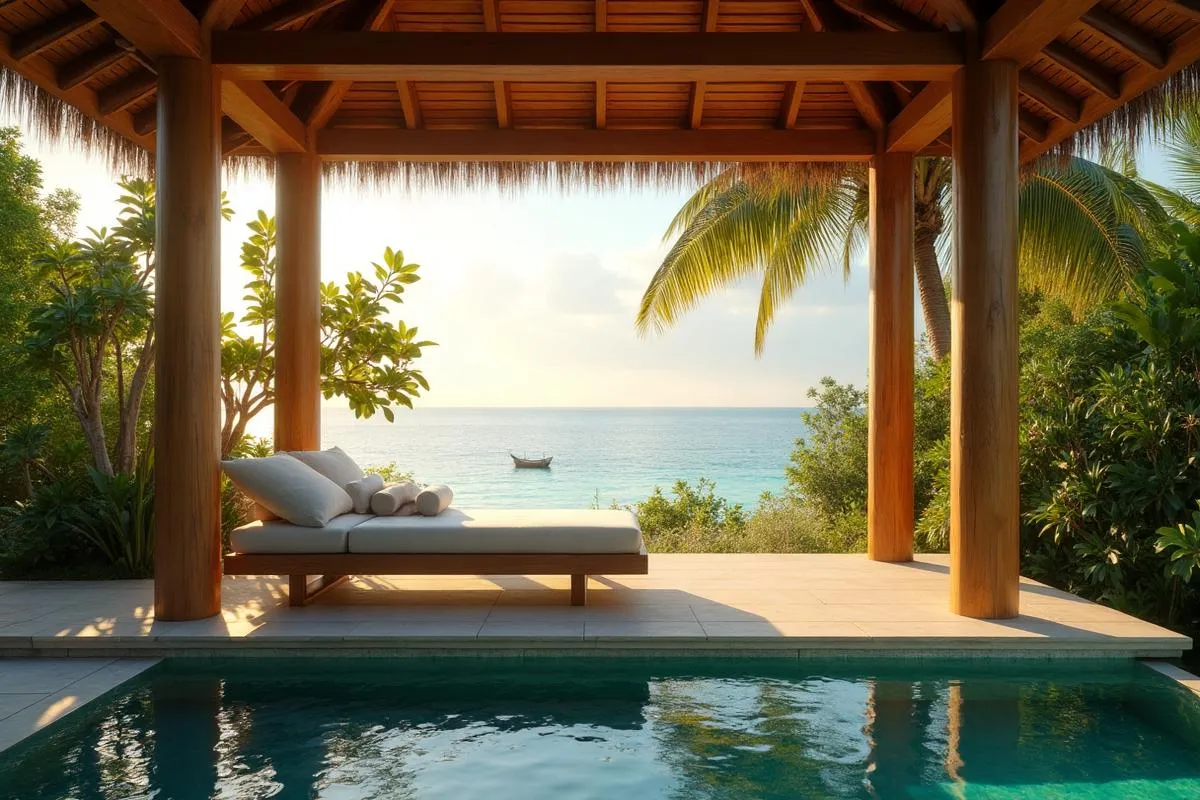
If outdoor space is what draws you to this style, our piece on tropical outdoor living looks at how terraces, salas, and pool decks are arranged in practice.
Villas That Show the Style at Its Best
Several properties in our villa collection are textbook examples. Sky Dream Villa is the most dramatic: a cantilevered living pavilion floating above the treeline, with a razor-edge pool aligned to the Gulf horizon and polished concrete throughout. Villa Ann in Chaweng Noi proves the style works at family scale — five bedrooms, long roof planes, and glass walls that open the entire sea-facing side of the house. Villa Orise, also in Chaweng Noi, takes a softer line, with shaded terraces and gardens that blur the boundary between building and landscape.
How We Do It
Architecture is one of the main reasons we visit every villa in person before adding it to the collection. Photographs flatter almost anything; they cannot tell you whether a cantilevered room actually catches the breeze, whether the west-facing glass becomes a furnace at four in the afternoon, or whether the craft detailing is genuine or cosmetic. We walk through, sit on the terraces, and pay attention to exactly these things — and we are happy to share what we found.
If you would like a shortlist of design-led villas for your dates, send a message — a real person on the island will reply within a working day.
Frequently Asked Questions
Tropical Modernism is an architectural style that adapts the clean lines and open plans of modernist design to hot, humid climates. It relies on deep roof overhangs, cross-ventilation, shaded terraces, and natural materials rather than sealed, air-conditioned boxes. On Koh Samui it has become the defining language of high-end villa design.
Flat and low-pitched roofs suit the modernist aesthetic and handle the island's climate well when engineered correctly, with generous overhangs that shade glass facades from direct sun and shed monsoon rain. They also allow rooftop terraces and keep the building profile low against the hillside, which local building regulations on height and slope encourage.
Tropical Modernism describes the architectural framework — structure, climate response, and spatial flow. Thai Minimalism describes an interior and material philosophy that layers local craft, reclaimed teak, and restrained palettes onto that framework. Many Koh Samui villas combine both: a modernist shell softened by Thai materials and workmanship.
Yes, when designed properly. Open pavilions are oriented to catch sea breezes, deep eaves keep rain out of living areas, and bedrooms remain fully enclosed and air-conditioned. The result is a house that breathes during the day and closes up comfortably at night.
Several villas in our curated collection show the style clearly, with cantilevered living spaces, floor-to-ceiling glass, and infinity pools that merge with the sea view. We have personally visited every villa we represent and can point you to the strongest examples for your dates.