September 16, 2026 · 8 min read · By Tim
Koh Samui's Quiet Art & Design Scene
Koh Samui is not an art destination, and that is precisely what makes looking here enjoyable. There is no gallery quarter, no biennale, no white-cube circuit to work through with a map. What the island has instead is a scattered, mostly unlabelled scene: a woodcarver's workshop behind a ring-road petrol station, a painter selling directly from a shophouse in Nathon, a temple courtyard where four centuries of craft tradition sit under a tin roof, and a handful of hotels and private villas quietly assembling better collections than most public spaces on the island.
It rewards a certain kind of traveller — the one who came for the water but finds three empty afternoons in the middle of the week. If that is you, this piece pairs well with our look at Thai minimalism in villa interiors and our notes on tropical modernism.
The Island's Largest Collection Is Religious
Before any gallery, the temples. Thai Buddhist architecture is a total art form, and Koh Samui's temples carry the full vocabulary in daily use rather than behind glass:
- Woodcarving — gable ends, door panels and roof finials, gilded and re-gilded over generations.
- Mirrored mosaic — thousands of hand-cut glass tesserae used the way a European church uses gold leaf.
- Mural painting — narrative cycles running the length of an ordination hall, usually unsigned.
- Cast bronze and cement modelling — from palm-sized votive figures to the monumental.
Almost all of it is free to see, maintained by the community, and still in use. Dress modestly, remove your shoes where indicated, and drop something in the donation box; that is the entire etiquette. Our temple guide covers which ones are worth the drive and when they are quiet.
Studios, Shophouses and the Informal Circuit
The contemporary scene is small and personal. Expect studios rather than galleries — often the ground floor of the artist's own house, with a hand-painted sign and no fixed hours.
Three places to look:
- Fisherman's Village in Bophut — the highest concentration of artisan shops on the island, plus the Friday walking street. Some of it is tourist stock; some of it is genuinely good ceramics, textiles and photography. Walk the back lanes, not just the seafront. See our Fisherman's Village guide.
- Nathon — the old port town, and the most architecturally intact part of Koh Samui. Sino-Portuguese shophouses, faded signage, a few working studios. Come for the buildings; you will usually find the art.
- The ring road, between towns — signs for woodcarving, stone, and furniture workshops appear without warning. Stopping is expected and welcome.
Openings and pop-ups happen, but they are announced on the maker's own channels a few days ahead rather than on any island-wide calendar. The reliable method is simply to ask. Ask your villa manager, ask the person who sold you a bowl, ask a restaurant owner whose walls you liked.
What to look for
Two categories tend to be worth carrying home. First, work rooted in local material: teak, coconut wood, island clay, natural indigo and mud-dyed cotton. Second, work by resident painters whose subject is the light here — the specific grey-green of a rainy-season sea, the hard white of midday on limestone. Skip anything mass-printed on canvas; you will see the same three images in six shops.
Design You Can Sleep In
The most interesting design on Koh Samui is not hanging on a wall. It is architectural, and much of it is private.
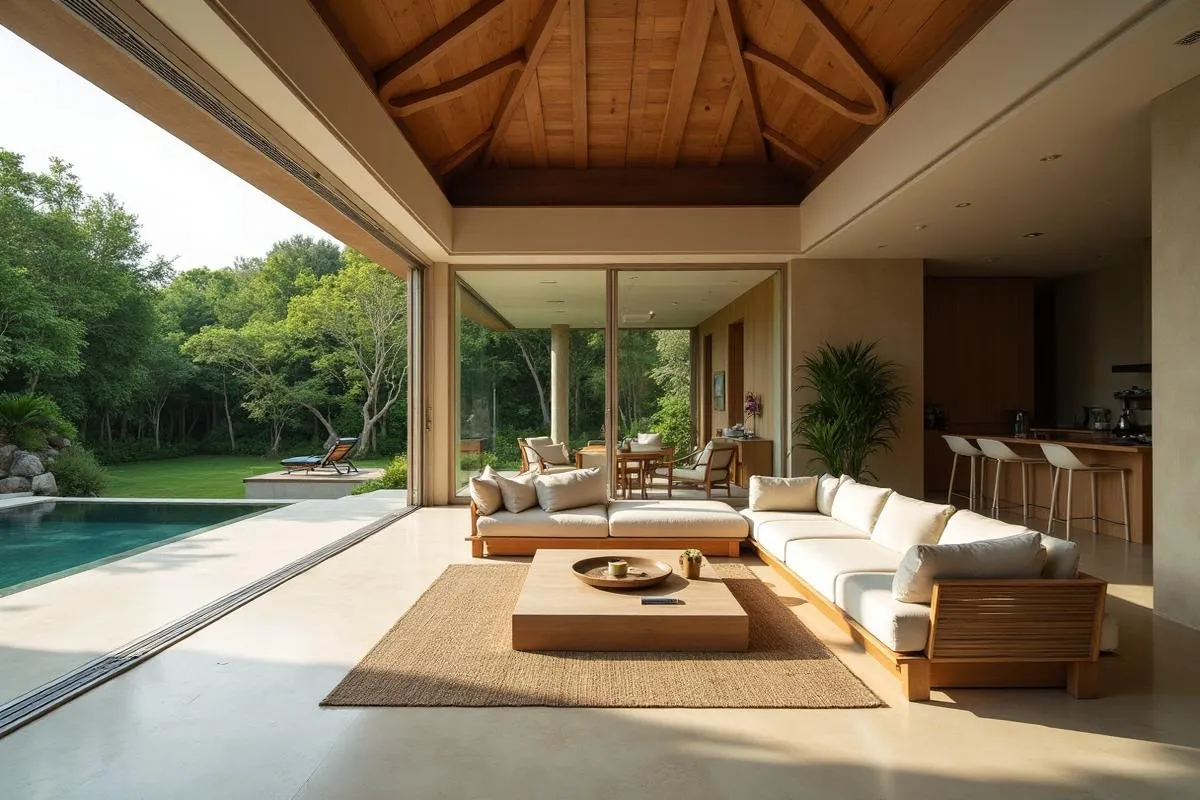
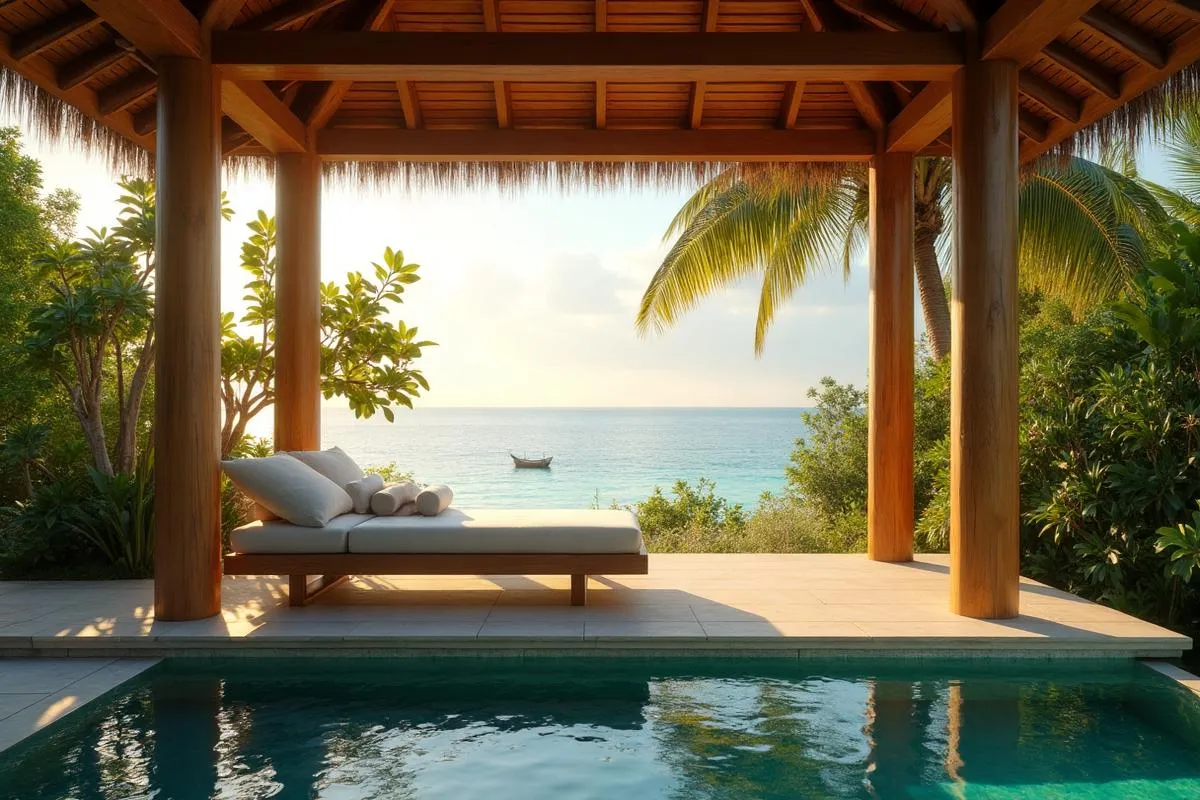
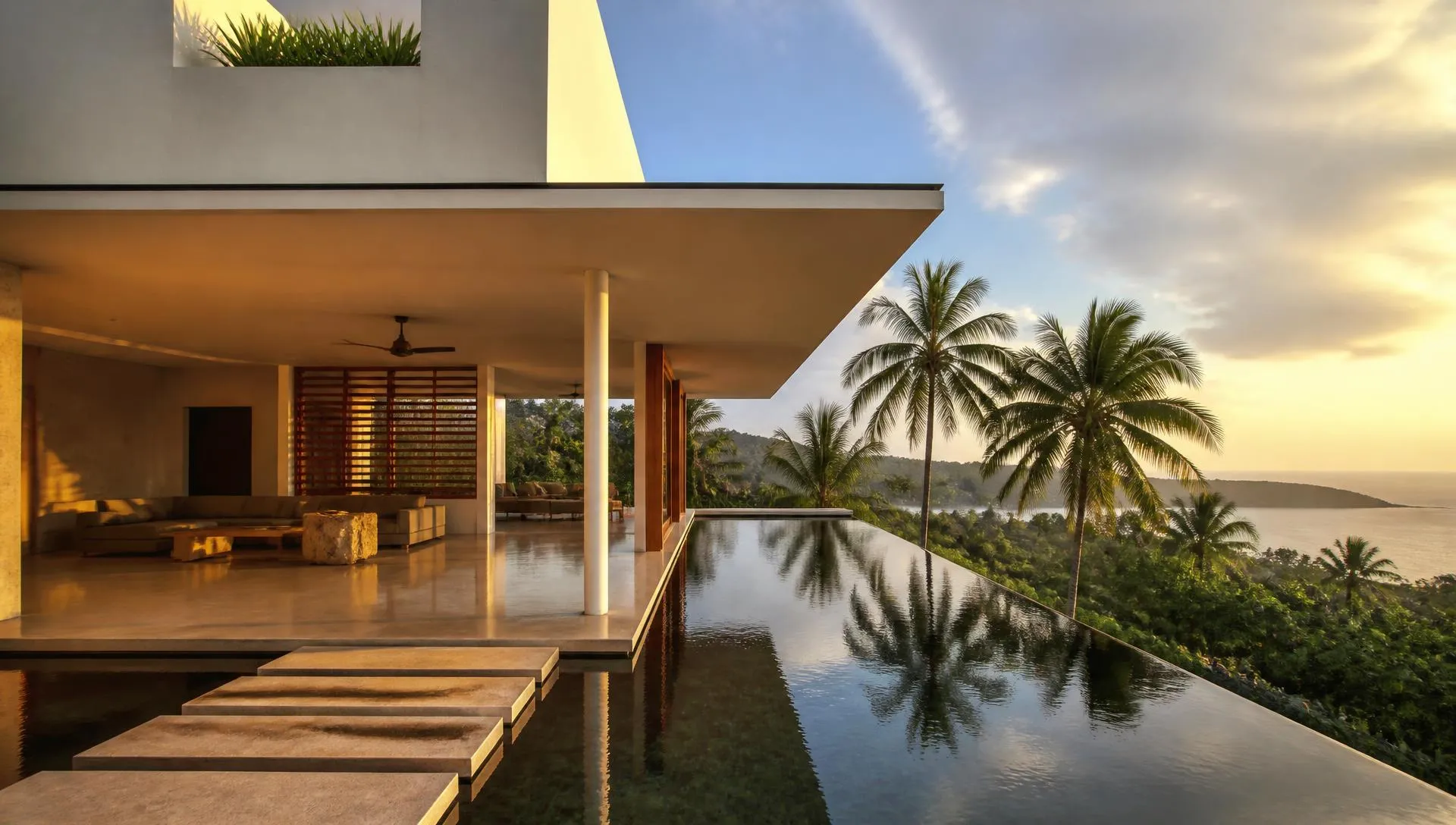
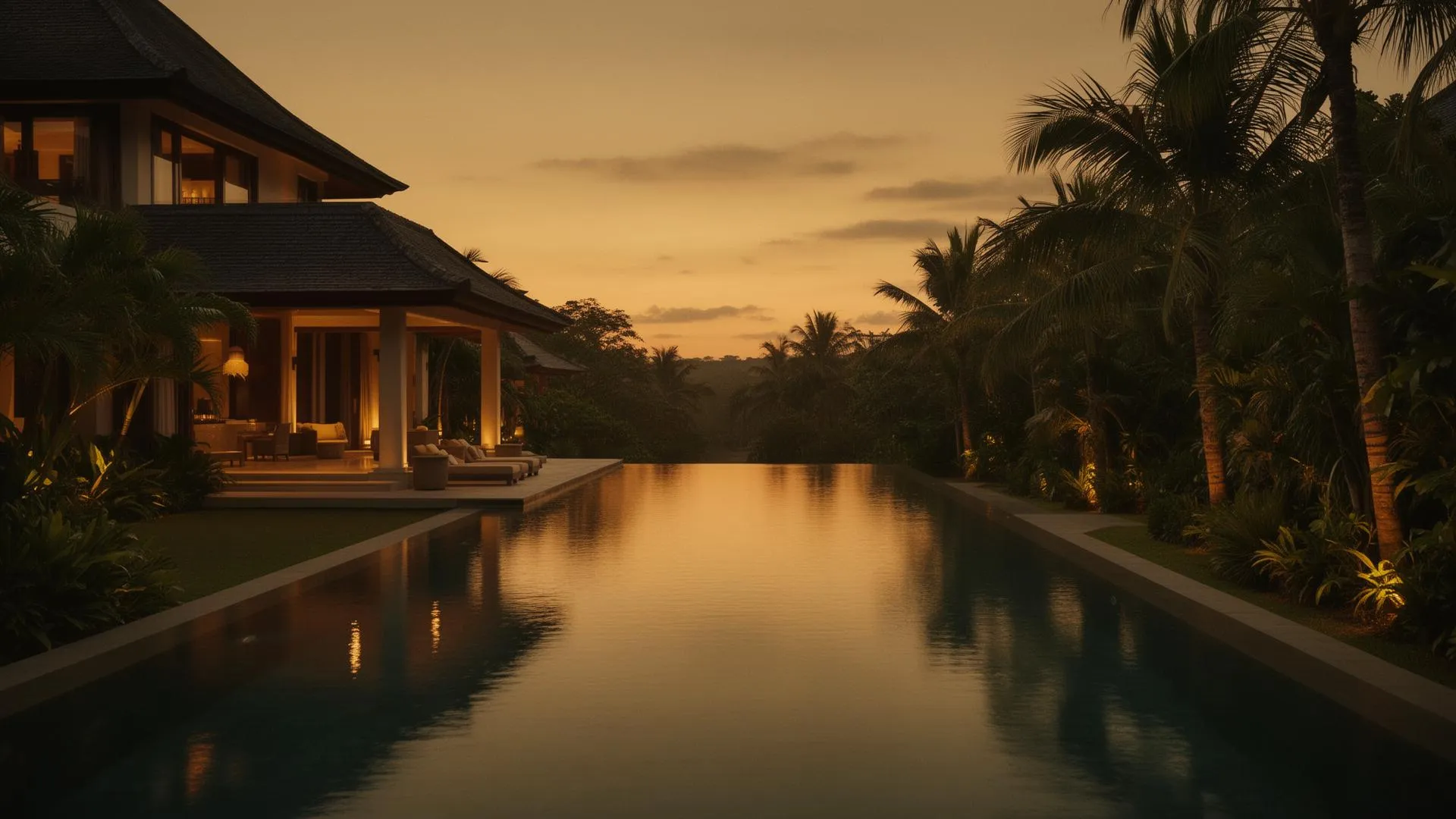
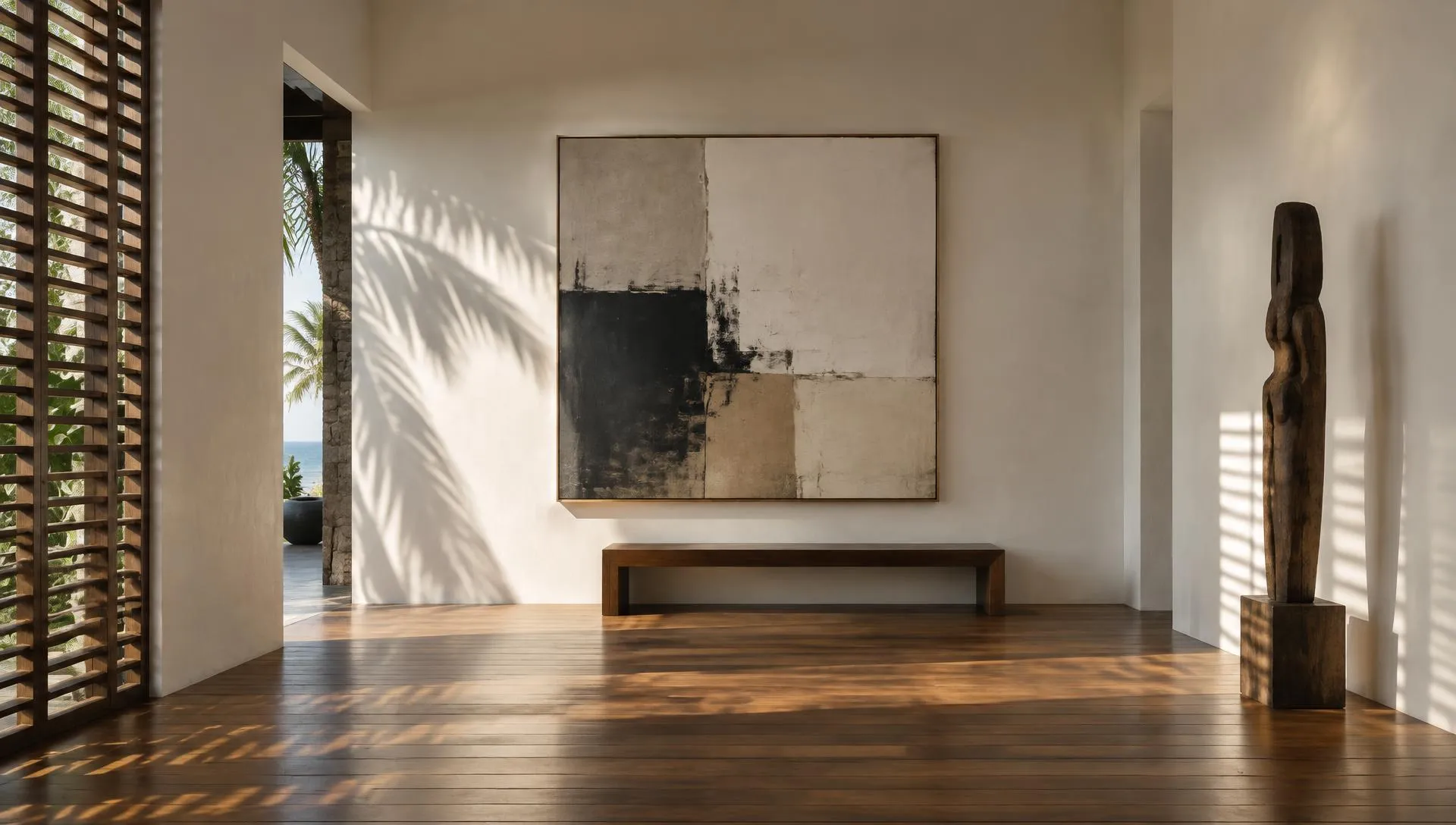
Over the past two decades, the island's better houses have converged on a shared language: deep overhangs, cross-ventilation, oiled hardwood, exposed stone, an infinity edge aimed at a specific horizon rather than the general sea. The good ones are restrained. They give you one framed view per room and resist the urge to fill it.
You see it in Villa Ann, where the material palette does the work rather than ornament, and in Sky Dream Villa, where the whole plan is organised around the drop toward the water. Our piece on outdoor living goes further into why the best rooms on this island have no walls at all.
Hotels play a real part here too. Several of the island's larger properties commission Thai artists for their public spaces, which makes a lobby or a spa corridor a legitimate place to look at art — no ticket, one coffee.
The White Lotus Effect, Two Years On
Koh Samui's brief turn as prestige-television scenery changed the volume of visitors more than the character of the island's art. What it did do is give local makers a wider audience and slightly better prices, and it pushed a handful of design-led restaurants and shops to open in places that previously had none. We wrote about the broader shift in the White Lotus effect.
The scene remains gentle and unbranded. Anyone arriving expecting Bangkok's gallery infrastructure will be disappointed. Anyone willing to spend an afternoon driving with no fixed destination will not.
How We Do It
We visit every villa in the collection in person, which means we have stood in the rooms and looked at the walls. When guests tell us they care about interiors — that they would rather have one good piece and an empty corner than a suite of matching furniture — we can name the two or three houses that suit them, and the ones that do not. Tim also keeps a running list of the studios, workshops and quiet corners he sends people to, collected in his own recommendations.
If you would like a shortlist for your dates, send a message via our contact page — a real person on the island will reply within a working day.
Frequently Asked Questions
Yes, but not a gallery district. Art on Koh Samui is spread across small independent studios, artist-run shops in Fisherman's Village and Nathon, resort and villa collections, and the craft found in the island's temples. Openings are informal and often announced only a few days ahead.
Mostly directly from the maker. Independent studios along the ring road, weekend markets, and artisan shops in Fisherman's Village and Nathon sell paintings, ceramics, textiles and woodwork. Prices are usually negotiable in a polite, unhurried way, and buying from the artist means the money stays on the island.
Yes. Temple architecture is the island's largest permanent collection: gilded woodcarving, mirrored mosaic, mural painting and cast bronze. The temples on the ring road show all four, and entry is generally free with a donation box at the door.
Small works travel easily in hand luggage if you ask for a flat, unframed roll. For larger pieces, arrange packing and shipping through a mainland forwarder rather than at the airport, and keep the receipt — customs in some countries ask for proof of value on original artwork.
The dry, cooler months from January to April bring the most studio openings, markets and festivals. The quieter rainy months are better for unhurried studio visits, when makers actually have time to talk about their work.
To varying degrees. Some are deliberately spare, with the view as the only picture on the wall. Others hold commissioned canvases, local ceramics and antique teak pieces. We can tell you which is which before you book.