April 3, 2026 · 11 min read · By Tim
Temples of Koh Samui 2026: A Guide to the Island's Sacred Sites
Koh Samui is known for its beaches, its palm-fringed coastline, and its luxury villas — but the island also carries a rich spiritual heritage that stretches back centuries. With over 30 Buddhist temples scattered across the island, Koh Samui offers visitors a genuine window into Thai culture, history, and daily life that most beach destinations simply can't match.
Whether you're seeking a contemplative morning away from the pool or a deeper understanding of the island you're staying on, visiting a temple is one of the most rewarding things you can do on Koh Samui. This guide covers the island's most important sacred sites, their history, and everything you need to know to visit respectfully.
A Brief History of Buddhism on Koh Samui
Buddhism arrived on Koh Samui centuries ago, brought by monks and traders moving through the Gulf of Thailand. The island's earliest settlers — fisherfolk and coconut farmers from the southern Thai mainland and Hainan — built modest wooden temples as the spiritual centres of their villages. Each community had its own wat, serving not just as a place of worship but as a school, a meeting point, and a refuge during storms.
During the Ayutthaya period (1351–1767), Theravada Buddhism solidified its presence across southern Thailand, and Koh Samui's temples grew in scale and significance. Many of the island's oldest surviving structures date from the late Rattanakosin era (19th and early 20th centuries), though several have been extensively renovated over the decades.
Today, Koh Samui's temples remain active centres of worship. Monks live, study, and meditate on the grounds. Locals visit regularly to make merit, seek blessings, and observe Buddhist holidays. The temples you see are not museum pieces — they are living, breathing places of faith.
Wat Phra Yai — The Big Buddha
The most iconic landmark on Koh Samui, the 12-metre golden seated Buddha at Wat Phra Yai dominates the small island of Ko Fan, connected to the northeast coast by a causeway. Visible from the air as you fly into Samui Airport, the Big Buddha has become the island's unofficial symbol since its construction in 1972.
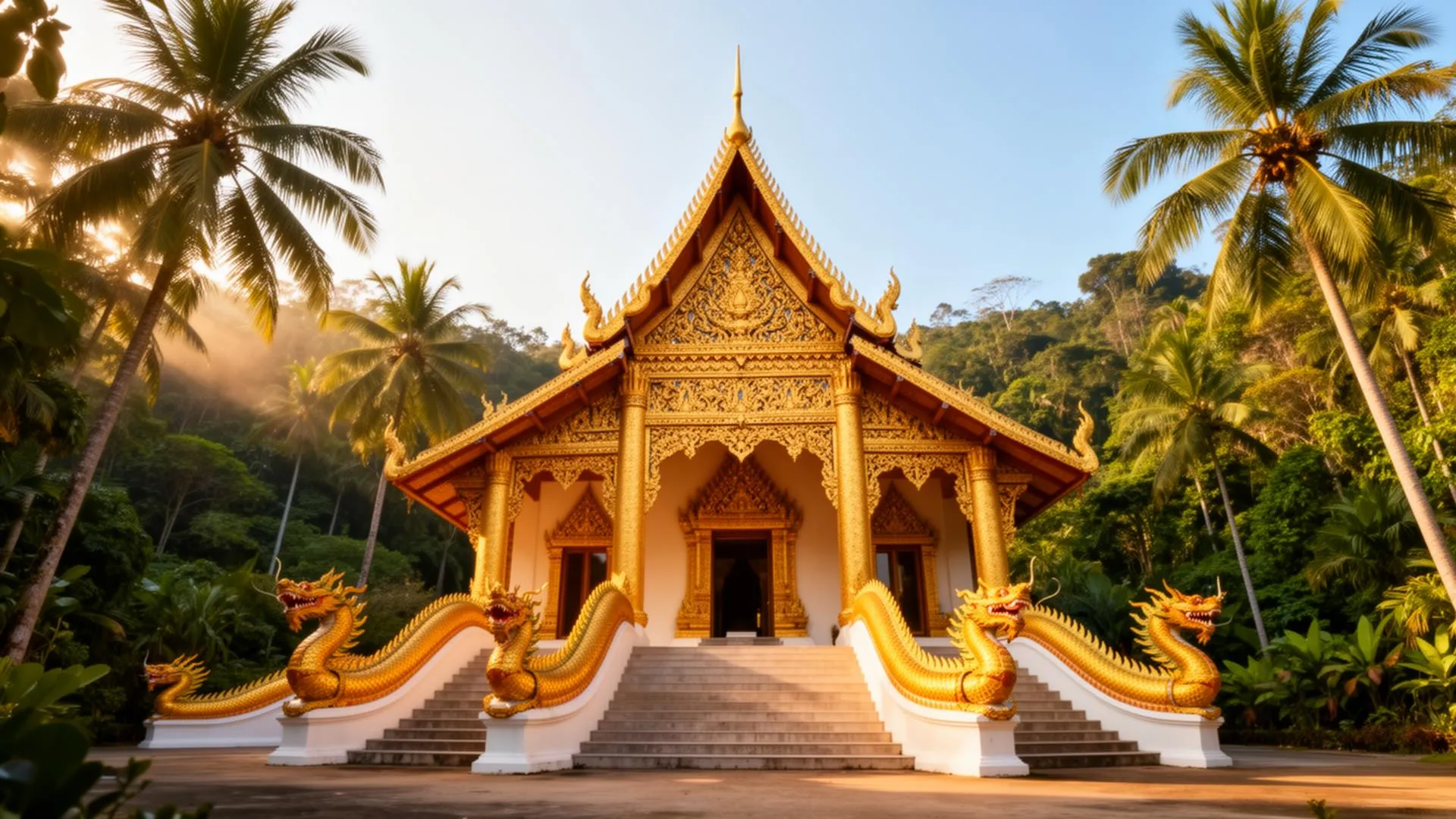
The temple complex surrounding the statue is lively and colourful, with naga serpent staircases leading up to the main platform. From the top, you get sweeping views across the northern coastline and out to Ko Phangan. The site includes smaller shrines, bell towers, and a row of souvenir and food stalls along the base — making it one of the more accessible temple visits for families.
Best time to visit: Late afternoon for warm golden light and sunset views. The temple is open daily from approximately 6 am to 6 pm, but the atmosphere is particularly special around dusk.
Getting there: Wat Phra Yai is located near the airport on the northeast coast. Guests staying at Villa Elysium or in the Bophut area can reach it in under 15 minutes.
Wat Plai Laem
Just a few minutes from the Big Buddha, Wat Plai Laem is arguably the most photogenic temple on the island. Built on a lake with a surrounding walkway, the complex features a striking 18-armed statue of Guanyin (the Chinese goddess of mercy) and a large laughing Buddha. The architecture reflects the Chinese-Thai heritage that runs deep in Koh Samui's coastal communities.
The temple was built relatively recently — construction began in 2004 — but it draws on centuries-old artistic traditions. The murals inside the main hall depict scenes from Buddhist and Chinese mythology, painted by local and international artists. Fish swarm in the lake below, and visitors can buy small bags of food to feed them — a simple ritual believed to bring good merit.
Wat Plai Laem is particularly popular for photography, but remember that it remains an active place of worship. The monks who maintain the temple are welcoming, and you may see locals making offerings at the shrines throughout the day.
Best time to visit: Morning light creates beautiful reflections on the lake. Combine with a Big Buddha visit for a half-morning temple tour of the northeast coast.
Wat Khunaram — The Mummified Monk
For a more contemplative temple experience, Wat Khunaram in the island's interior is unlike anything else on Koh Samui. The temple is known for the remarkably preserved body of Luang Pho Daeng, a revered monk who died in 1973 during meditation. Before his death, he requested that his body be displayed as a teaching tool — a reminder of the Buddhist principle of impermanence.
His mummified remains sit in a glass case inside a small hall, still wearing his original robes and sunglasses (added later to cover his deteriorated eyes). The preservation is extraordinary, and the experience is thought-provoking rather than macabre. Thai Buddhists visit Wat Khunaram to pay respects, and the temple treats the display with quiet dignity.
Our founder Tim considers Wat Khunaram one of his personal recommendations for first-time visitors — it offers a genuine insight into Thai spiritual culture that stays with you long after you leave the island.
Beyond the mummified monk, the temple grounds are peaceful and well-maintained. You may notice a traditional fortune ritual: gently shaking a wooden cylinder of numbered sticks until one falls out, then reading the corresponding message. It's a quiet moment of personal reflection rather than fortune-telling.
Getting there: Wat Khunaram is located inland, south of the ring road between Lamai and Na Thon. It's easily combined with a visit to the Na Muang waterfalls nearby.
Wat Hin Lat — The Jungle Temple
Tucked away in the hills above Na Thon, Wat Hin Lat is the temple for visitors who want to go beyond the usual sightseeing. A short jungle trail leads from the temple entrance to a waterfall — the walk takes about 15 to 20 minutes and passes through lush tropical forest with streams, boulders, and a genuine sense of remoteness.
The temple itself is modest compared to the island's showpiece sites, but that's part of its appeal. Monks have meditated here for decades, and the forest setting creates a natural atmosphere of stillness. During the rainy season (October–November), the waterfall is at its most impressive.
Best for: Visitors who enjoy nature walks and want a quieter, more authentic temple experience away from the tour bus circuit.
Wat Na Phra Lan
One of the oldest temples on Koh Samui, Wat Na Phra Lan sits near the northern coast and is believed to date back several hundred years. The temple houses a small but significant collection of ancient artefacts, including old Buddha images and traditional Srivijaya-influenced carvings that reflect the island's early maritime trading connections.
This temple sees very few tourists, which makes it a worthwhile stop for anyone interested in Samui's deeper history. The grounds are quiet, the architecture is traditional southern Thai, and the resident monks are often happy to chat with respectful visitors.
Getting there: Located between Na Thon and Maenam on the northern coast. Easily combined with a visit to Maenam Beach or a morning at Fisherman's Village in Bophut.
Wat Laem Sor — The Golden Pagoda
At the quiet southern tip of the island, Wat Laem Sor is home to a gleaming golden pagoda that sits right on the waterfront. The setting is dramatic — you're looking out across the Gulf of Thailand towards Ko Tan and Ko Matsum, with fishing boats bobbing in the shallows.
The pagoda was built in the traditional Srivijaya style, a nod to the ancient maritime empire that once connected this region of Southeast Asia. The temple sees very few visitors, which means you'll often have the grounds to yourself. It's a perfect destination for a quiet afternoon drive along the southern coast.
Best for: Photography, solitude, and sunset views. The golden pagoda catches the late afternoon light beautifully.
Dress Code and Temple Etiquette
Thai temples are active places of worship, and dressing respectfully is essential — not optional. Here's what you need to know:
What to Wear
- Shoulders must be covered — no tank tops, spaghetti straps, or bare shoulders
- Knees must be covered — no shorts, short skirts, or above-the-knee dresses
- Lightweight, loose-fitting clothing works best in the tropical heat — think linen trousers, a light cotton shirt, or a maxi dress
- Sarongs can be wrapped over shorts or bare shoulders as a quick solution. Some temples lend sarongs at the entrance, but don't rely on this
- Comfortable closed-toe or easy-to-remove shoes are practical, since you'll take them off frequently
Behaviour Rules
- Remove your shoes before entering any temple building — look for shoe racks or rows of shoes at the entrance
- Never touch a monk — women in particular should not hand objects directly to monks. Place items on a cloth or table instead
- Sit with your feet tucked away — never point the soles of your feet towards a Buddha image or a monk, as feet are considered the lowest part of the body in Thai culture
- Keep your voice low — temples are contemplative spaces. Loud conversation or phone calls are inappropriate
- Ask before photographing inside prayer halls. Outdoor photography is usually fine, but avoid posing with or climbing on Buddha statues
- Don't point — use an open palm or a gentle nod to indicate direction. Pointing at sacred objects or people is considered rude
- Make a small donation if you wish — there's no obligation, but it's appreciated. Even THB 20 or 50 is a meaningful gesture
With Children
Temples are family-friendly, and Thai people generally welcome children warmly. Brief your children beforehand about removing shoes and keeping voices down. The Big Buddha and Wat Plai Laem are particularly well-suited for families, with open spaces and visually engaging statues and architecture.
Planning Your Temple Visits
Most of Koh Samui's major temples can be visited independently by car or scooter. Your villa manager can also arrange a private half-day or full-day temple tour with a local driver, which is the most comfortable option — especially in the midday heat.
A practical itinerary for a half-day cultural tour:
- Morning: Start at Wat Phra Yai (Big Buddha) and Wat Plai Laem on the northeast coast
- Mid-morning: Drive south to Wat Khunaram in the interior
- Late morning: Continue to the Na Muang waterfalls for a refreshing break
For a full day, add Wat Hin Lat in the hills above Na Thon and Wat Laem Sor at the southern tip.
Visiting temples is one of the most enriching experiences you can have on Koh Samui — a chance to slow down, step into the island's deeper story, and return to your villa with a richer understanding of the place you're staying in. Browse our villa collection to find your base on the island, or get in touch with our team for personalised recommendations.
Frequently Asked Questions
Koh Samui has over 30 Buddhist temples (wats), but most visitors focus on the five or six most significant ones. The Big Buddha at Wat Phra Yai, Wat Plai Laem, Wat Khunaram, Wat Hin Lat, and Wat Na Phra Lan are the most popular and accessible.
Most temples on Koh Samui are free to enter. Donations are welcomed and appreciated — you'll usually find a donation box near the entrance. Some temples may charge a small fee (typically THB 20–50) for specific attractions or museum areas.
Cover your shoulders and knees. Avoid shorts, sleeveless tops, and revealing clothing. Some temples offer sarongs to borrow, but it's more respectful to come prepared. Remove shoes before entering any temple building.
Photography is generally permitted in outdoor areas and courtyards. Inside the main prayer halls (ubosot), check for signs or ask before taking photos. Never pose disrespectfully with Buddha statues, and avoid turning your back to a Buddha image for selfies.
Early morning (before 9 am) is ideal — the light is beautiful, the air is cooler, and you'll avoid the tour bus crowds. Late afternoon (after 4 pm) is also pleasant, especially for sunset views at Big Buddha.