July 17, 2026 · 11 min read · By Tim
Street Food on Koh Samui: An Editorial Guide
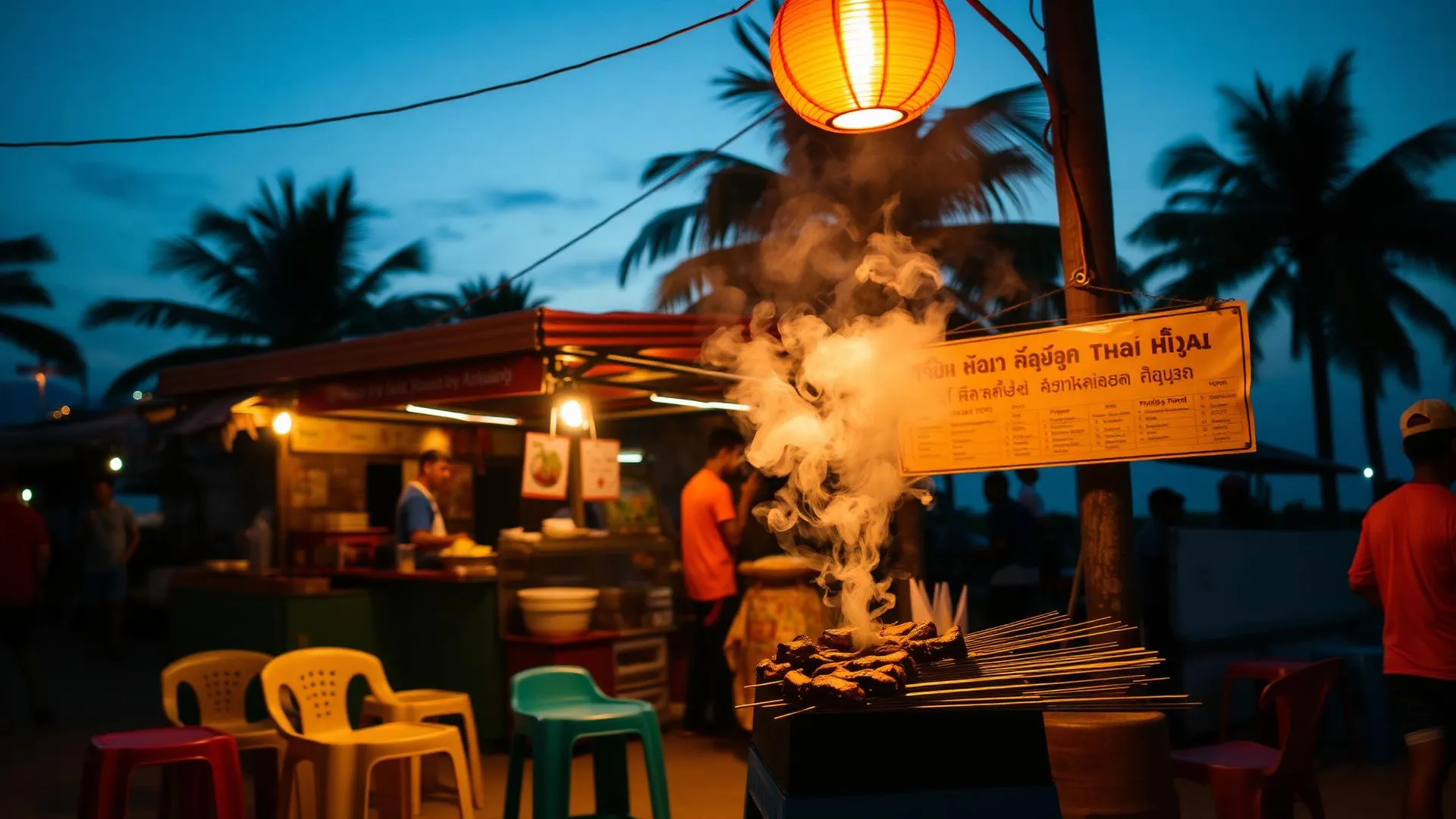
On Koh Samui, the best meals rarely happen in restaurants. They happen at a plastic table under a strip light, on the corner of a lane in Lamai, in front of a woman who has been making the same three dishes for twenty years. This is street food — and on Koh Samui it splits, quietly, into two very different worlds: the Thai classics that travel everywhere, and the deeply local Southern-Thai food that stays here.
This guide is about learning to read both. Where to go, what to order first, how to tell a stall worth queuing for from one worth walking past, and where the truly local flavours hide — the ones that never make it onto a resort menu.
For the wider context of eating on the island, our Thai kitchen and pad kra pao guide goes deeper on one dish and how a Thai kitchen thinks; this piece stays on the street.
How to read a Koh Samui street food stall
A few small signals separate the memorable stalls from the forgettable ones.
- Look for a queue of local Thai customers, not tourists — the food workers, drivers and market staff on lunch break know exactly which stall is best that week.
- Watch for a single specialty. A stall doing one thing (grilled chicken, boat noodles, roti) will almost always beat a stall doing thirty.
- Prefer cooked-to-order over pre-cooked. If the wok is hot and the vendor is moving, you're in good hands.
- Trust turnover. High-volume stalls burn through ingredients before anything sits out too long.
- Notice the setup — clean cutting boards, separate utensils for raw and cooked, ice from sealed bags rather than a scoop and a bucket.
None of this is unique to Koh Samui, but on the island it matters a little more: humidity is high, and the difference between a stall with tight hygiene and one without is the difference between a great memory and a bad twenty-four hours.
Part 1 — The Thai classics worth ordering first
If you've never eaten street food in Thailand before, start with the well-known dishes. They're on almost every menu on the island, and they're a fair benchmark for the rest of what a stall can do.
- Pad thai — stir-fried rice noodles with egg, tofu, dried shrimp, tamarind and peanuts. At a good stall it's smoky from the wok, not sweet and gluey. Add fresh lime and chilli flakes at the table.
- Pad kra pao — minced pork or chicken stir-fried with holy basil, chilli and garlic, served over rice with a crispy fried egg. The Thai working-lunch dish. More on why it matters in our pad kra pao piece.
- Som tam — green papaya salad pounded to order in a wooden mortar. Ask for "som tam Thai" for a milder, peanut-and-dried-shrimp version, or "som tam poo pla ra" for the pungent, fermented Isaan style.
- Moo ping and khao niao — sweet-marinated grilled pork skewers with a bag of sticky rice, cooked over charcoal at almost every morning market. Breakfast for most of Thailand.
- Gai yang — flattened, marinated grilled chicken, usually eaten with sticky rice and a tamarind-chilli dipping sauce.
- Kuay teow — noodle soup with a rich clear broth, pork or beef, morning glory and fried garlic. The Thai comfort dish, best eaten before 11 in the morning.
- Khao man gai — poached chicken over rice cooked in the chicken stock, served with a fierce ginger-chilli sauce. Deceptively simple; hard to do well.
- Mango sticky rice and coconut ice cream — the two desserts that live up to every travel photograph.
If a stall can do three of these well, everything else on its menu is likely worth trying.
Part 2 — The truly local Samui food
Koh Samui belongs to Surat Thani province, which sits in Southern Thailand. Southern-Thai cooking is a distinct regional cuisine — hotter than Bangkok food, heavier on turmeric, fresh herbs and seafood, and often served with a plate of raw vegetables on the side to cool the palate. These are the dishes that were here long before the airport was, and they're still what most locals actually eat at home.
- Khao yam pak tai — a Southern rice salad: cool jasmine rice tossed with shredded lemongrass, kaffir lime leaves, dried shrimp, toasted coconut, long beans, pomelo and a dark, salty budu (fermented fish) sauce. Fresh, complex, and almost never on a resort menu.
- Kanom jeen nam ya pak tai — soft fermented rice noodles topped with a yellow, coconut-and-turmeric fish curry, served with mountains of fresh vegetables and herbs to eat alongside. A morning dish; the best stalls sell out by 11.
- Gaeng tai pla — a fiercely hot Southern curry made from fermented fish innards, turmeric, chillies and vegetables. An acquired taste, but the single most Southern-Thai thing you can order.
- Gaeng som pak ruam — a bright, sour, orange-red curry with vegetables and fish, sharpened with tamarind. Much hotter and less coconut-heavy than a central-Thai curry.
- Hor mok talay — a steamed seafood curry mousse, set in a banana-leaf cup, delicately spiced with red curry and kaffir lime. Look for it at seafood-focused stalls in Nathon and Lamai.
- Roti gluay khai — a Southern Muslim–influenced dessert: fried flatbread with banana and egg, drizzled with condensed milk. Chaweng and Lamai night markets have excellent versions.
- Kanom krok — small coconut-and-rice-flour pancakes cooked in a cast-iron mould, crisp outside, custardy inside. Best eaten straight from the pan.
- Fresh tropical fruit — snakefruit (sala), mangosteen, rambutan, longan, durian in season. The morning markets on the island are where these are cheapest and freshest.
You won't find most of these dishes on Chaweng Beach Road or at the tourist-facing night markets. For the local Southern-Thai layer, you need to go to a working local market — which is where Lamai Fresh Food Market comes in.
Where to eat: markets, nights and everyday
The night markets (best for first-timers)
The four main street food nights on the island are:
- Bophut Walking Street — every Friday, along the wooden shophouses of Fisherman's Village. The most photogenic and the most tourist-oriented of the four. Excellent grilled seafood and Thai desserts.
- Lamai Sunday Night Market — smaller than Bophut but noticeably more local. The boat noodles, crispy pork belly and coconut ice cream here are outstanding — more in our Lamai beach guide.
- Maenam Thursday Night Market — the quietest and most local of the weekly markets, on the north coast; genuinely aimed at residents. Covered in our Maenam guide.
- Chaweng night market — a smaller nightly market near the lake at the southern end of Chaweng Beach Road; grilled meats, som tam, fresh fruit shakes at fair prices.
Lamai Fresh Food Market (best for local Samui food)
If you want to eat where locals actually eat every day, Lamai Fresh Food Market is the single best stop on the island. It's a working produce market, not a night market — busiest before 10 in the morning — and the small food stalls tucked between the fish and vegetable vendors are where the Southern-Thai dishes above are most likely to appear.
Our founder writes about it in more detail as one of his personal picks — see Lamai Fresh Food Market in Tim's Koh Samui Picks. Two practical notes worth repeating: go in the morning, and bring cash.
Everyday roadside stalls
Some of the best meals on the island are not at markets at all. They're the pop-up stalls that appear at the same corner every morning, or the two-table shophouse restaurant that has been on the ring road for a decade. Ask your villa manager where they eat lunch — the answer is usually five minutes' drive from where you're staying, costs 60 THB, and is better than any of the Chaweng restaurants competing for your evening.
What to drink with it
- Cha yen (Thai iced tea) — bright orange, strong, condensed-milk-sweet. Our Thai tea guide has more on why the ChaTraMue version is worth seeking out.
- Nam ma-nao — fresh lime juice with a little salt. The best chaser for anything spicy.
- Fresh coconut — cut open at the stall, drunk with a straw. The single most refreshing thing you can order in 34 °C heat.
- Singha or Chang beer — served over ice, which is normal in Thailand and works better than it sounds when the food is hot and the evening is humid.
- Bottled water — always available; skip the tap. Our guide on drinking water on Koh Samui covers this in detail.
A practical evening from a villa
A good street food evening on Koh Samui usually needs almost no planning. Your villa manager can book a private driver for the night — expect around 1,500–2,500 THB for four to five hours — who'll wait while you eat and bring you home whenever you're ready. That's what makes street food feel effortless from a villa: no navigating scooters after a beer, no queueing for a taxi at the end.
Our villas all sit on the Chaweng Noi headland, a short drive from Lamai Sunday Night Market, Chaweng night market and — a little further — Bophut Walking Street. Properties like Sky Dream Villa, Villa Ann and Paradise Villa Eden put you within a comfortable evening's radius of every market on this page.
If you'd rather stay in, that also works: several villas in our collection can arrange for the villa chef to shop the morning market with you, or to bring a stall-style dinner (skewers, som tam pounded to order, mango sticky rice) back to the pool deck for the evening. Ask on inquiry.
How We Do It
We eat this way ourselves. When guests ask where to go for a first street food night, we don't send them to the biggest, brightest market — we send them to the stall our villa manager's family eats at, the one behind the temple in Lamai, or the noodle shop three doors from the pier in Maenam. That's the Koh Samui worth knowing.
If you'd like a shortlist of villas within easy reach of the island's real food, send us a message — a real person on the island will reply within a working day.
Frequently Asked Questions
Yes, for the vast majority of visitors. Stick to stalls that are busy with locals, where food is cooked to order in front of you and turnover is high. Avoid pre-cooked dishes sitting out unrefrigerated, raw shellfish, and unpeeled fruit from very quiet stalls. Drink bottled or filtered water rather than tap water, and skip ice only at the most rural stalls — most Koh Samui vendors use commercial tube ice, which is safe.
The Thai classics you'll recognise — pad thai, som tam, pad kra pao, mango sticky rice — are eaten across the country and dominate the tourist-facing stalls. Southern Thai food, which is what locals on Koh Samui grew up with, leans hotter, more turmeric-heavy and more seafood-driven: dishes like khao yam (a rice salad with dry shrimp and herbs), kanom jeen nam ya (fermented rice noodles with fish curry), and gaeng tai pla (a very spicy fish-innards curry). You'll find both worlds side by side at markets like Lamai Fresh Food Market.
The best night markets for street food are Bophut Walking Street on Fridays, Lamai Sunday Night Market, Maenam Thursday Night Market, and the smaller Chaweng night market near the lake. For daytime, everyday local food, Lamai Fresh Food Market and Nathon Market are the two most authentic stops.
A single dish typically costs 50–100 THB at a local stall and 80–150 THB at a night market catering more to visitors. A full meal for two with drinks rarely runs above 400 THB. Bring small notes — 20s, 50s and 100s — as change for 1,000 THB notes can be a polite problem.
Yes. The phrase you need is 'mai phet' (not spicy) or 'phet nit noi' (a little spicy). That said, some dishes — som tam, gaeng tai pla, most southern curries — lose much of their character without chilli. If you're heat-sensitive, start with grilled dishes (moo ping, gai yang), noodle soups (kuay teow), and coconut-based sweets.
Yes. Every villa in our collection has a villa manager who can book a private driver for a night-market run, brief you on which stalls are worth queuing for, or arrange for market-bought ingredients to be cooked into a private dinner at the villa. Just mention it when you inquire, or ask on arrival.